150 sourced guides & answers
Everything a spice buyer asks, answered and sourced
Not a blog of opinions — a reference. Every guide is built on the same primary sources as the rest of the site, with an explicit answer, real figures, and an honest note on what it does not cover.
Trust & verification
25Verify a supplier, avoid scams, and read a test dossier before you wire a deposit.
- AnswerHow to Verify an Indian Spice Exporter Is Legitimate
The four documents that separate a registered spice exporter from a broker with a spreadsheet, and how to cross-check them.
- AnswerIs My Spice Supplier Spices Board Registered?
How to tell whether an Indian supplier actually holds CRES, and what registration does and does not guarantee.
- AnswerHow to Avoid Indian Spice Supplier Scams
The recurring red flags in spice-sourcing fraud, from personal bank accounts to sample-and-switch, and how to design them out.
- AnswerWhat Is a CRES Certificate for Spice Exporters?
CRES explained: the Spices Board registration every legitimate exporter of India’s scheduled spices must hold.
- AnswerAre Indian Spices Safe After the ETO Recalls?
What the ethylene oxide recalls actually were, and how to source Indian spices that clear the EU’s 0.1 mg/kg limit.
- AnswerHow to Check Indian Spices for Adulteration
The specific adulterants that get spices rejected — Sudan dye, lead chromate — and the lab tests that catch them.
- AnswerIs There Lead Chromate in Indian Turmeric?
Why lead chromate turns up in turmeric, the health risk it carries, and the heavy-metal testing that keeps it out of your lot.
- AnswerWhat Is Sudan Dye in Chilli, and Why It Matters
The illegal red colourant behind repeat chilli rejections, and the zero-tolerance testing that keeps it out.
- AnswerHow to Vet a Spice Supplier Remotely
A practical remote-verification sequence for buyers who cannot visit the origin: documents, lab reports, samples and references.
- AnswerWhat Documents Prove a Legit Spice Exporter?
The exact document set a genuine Indian spice exporter can produce, from CRES to the phytosanitary certificate.
- AnswerHow to Audit an Indian Spice Supplier
What a real supplier audit checks — registration, traceability, testing regime and references — beyond a glossy brochure.
- AnswerAre Spices Board Registered Exporters Safer?
What CRES registration does and does not de-risk, and why it is a gate rather than a guarantee.
- AnswerHow to Verify Organic Spice Claims
How to tell a genuine organic certification from a marketing label, and what a certificate must let you trace.
- AnswerHow to Verify GI (Geographical Indication) Spice Claims
Why some GI spice claims no longer hold — lapsed registrations, and grades masquerading as GIs like "Alleppey finger" turmeric.
- AnswerWhat Is a Phytosanitary Certificate for Spices?
The plant-health document that clears a spice consignment for import, and where it sits in the export document set.
- AnswerHow to Avoid Aflatoxin Rejection on Spice Imports
The EU aflatoxin limits that get chilli, pepper and turmeric rejected, and the sourcing controls that keep lots inside them.
- AnswerHow to Avoid ETO Rejection in the EU
Ethylene oxide is a banned pesticide in the EU. Here is the sourcing choice that keeps Indian spices under the 0.1 mg/kg limit.
- AnswerHow to Request Spice Lab Reports From Suppliers
What to ask for so a lab report actually protects you: the right tests, an accredited lab, and a report tied to your lot.
- AnswerWhat Lab Tests Do Imported Spices Need?
A spice-by-spice map of the tests that matter — aflatoxin, ETO, Sudan dye, heavy metals — against the limits that get lots rejected.
- AnswerHow to Verify Spices Are Steam Sterilised
Steam sterilisation is the compliant alternative to banned ETO — here is how to confirm a lot was actually steam-treated.
- AnswerIs Advance Payment Safe for Spice Imports?
When a deposit is normal and when full prepayment is a red flag, plus the Incoterms and documents that protect a buyer.
- AnswerHow to Run Spice Supplier Due Diligence
A structured due-diligence checklist for Indian spice sourcing: legal, quality, commercial and logistics, each backed by evidence.
- AnswerWhat Is FSSAI and Does My Spice Exporter Need It?
FSSAI explained for spice buyers, and why it sits underneath a valid CRES registration.
- AnswerHow to Spot Fake Spice Grade Claims
Chilli SHU, ASTA colour, pepper bulk density, cumin purity — which grade claims are verifiable and which are red flags.
- AnswerWhy Were Indian Spices Recalled?
The real drivers behind Indian spice recalls and rejections — ETO, aflatoxin, Salmonella, Sudan dye — and how sourcing avoids them.
How to source
44Step-by-step sourcing: import process, MOQ, cost, documentation and grades.
- AnswerHow to Import Spices from India: The Steps
The buyer-side sequence for importing Indian spices: pick spice and grade, agree Incoterms, clear destination checks, and collect the document set.
- AnswerMinimum Order Quantity for Bulk Spices
The working MOQ ladder for Indian spices, from a 50 kg sample to a full 20ft container, framed as trade practice rather than statute.
- AnswerHow Much Does a Container of Spices Cost?
Why a spice container has no single price, what makes up the landed cost, and how to get a comparable quote.
- AnswerTonnes of Turmeric in a 20ft Container
How much turmeric fits in a 20ft FCL, and why dense spices are weight-limited while light spices cube out.
- AnswerFOB vs CIF for Spice Imports
Under FOB the buyer takes freight and risk at the ship's rail; under CIF the seller pays freight and insurance to the destination port.
- AnswerWill My Cumin Pass EU Border Checks?
Indian cumin faces a 30% EU border check for pesticides; passing means testing to that regime before shipment, not after.
- AnswerHow to Choose an Indian Chilli Grade
Pick an Indian chilli by whether you need heat or colour: Guntur Sannam for heat, Byadgi for colour, Teja for both.
- AnswerHow Long Do Spices Last During Shipping?
Dried spices travel well when moisture is controlled; the real shipping risks are moisture pickup, mould and aflatoxin, not simple ageing.
- AnswerWhat Packaging for Bulk Spices?
Bulk spice packaging has to hold moisture out, meet food-contact rules and use container space efficiently across the sea voyage.
- AnswerWhat Incoterms for Spice Trade?
The Indian spice trade runs mainly on FOB, CFR and CIF; the choice sets who arranges and pays freight and insurance.
- AnswerDo I Need an Import License for Spices (USA)?
The US has no spice import licence, but the FDA regime applies: Prior Notice per shipment and FSVP on the US importer.
- GuideHow to Import Spices From India: A Buyer’s Guide
The full buyer journey for importing Indian spices: define the spec, vet the supplier, order a sample, then scale to a container.
- GuideBulk Spice Sourcing From India: A Step-by-Step Guide
How volume buyers move from sample to full-container loads of Indian spices without losing control of quality or cost.
- GuideHow to Find a Reliable Spice Supplier in India
A practical filter for separating genuine CRES-registered exporters from traders who cannot stand behind a container.
- GuidePrivate Label Spice Sourcing From India: A Guide
How retailers and brands build a private-label spice line from India — spec, MOQ, packaging and compliance — without owning a factory.
- GuideSpice Export Documentation: The Buyer’s Checklist
Every document an Indian spice shipment needs, why it exists, and which side of the deal is responsible for it.
- GuideFirst-Time Spice Importer’s Guide to India
A plain-language walkthrough for a buyer importing Indian spices for the first time, from registrations to your first container.
- GuideHow to Source Bulk Turmeric From India
Choosing curcumin band and origin, testing for lead chromate, and moving from sample to container on Indian turmeric.
- GuideHow to Source Bulk Red Chilli From India
Heat vs colour, Sannam S4 vs Byadgi vs Teja, Sudan-dye testing, and why chilli containers ship light.
- GuideHow to Source Bulk Cumin From India
Purity grades, the Unjha price benchmark, the EU 30% pesticide check, and pyrrolizidine risk on Indian cumin.
- GuideHow to Source Black Pepper From India
MG1 vs Tellicherry grades by bulk density, the EU 50% Salmonella check, and the Kochi benchmark.
- GuideHow to Source Cardamom From India
Green cardamom size grades, auction pricing at Kochi, air-freight economics, and why cardamom has no fixed price.
- GuideHow to Source Organic Spices From India
What organic changes in a sourcing programme, why certification and residue testing still matter, and where the honest gaps are.
- GuideSpice Supplier Vetting Playbook for Importers
A repeatable, document-first process for qualifying an Indian spice exporter before any money moves.
- GuideFrom Sample to Container: A Spice Sourcing Guide
The full path from a 50 kg sample to a 20-tonne container, with the checks that keep the two matching.
- GuideHow to Write a Spice Quality Specification
The parameters a buyer must fix — species, grade, moisture, cleanliness, contaminants — so a container can be judged objectively.
- GuideSpice Sterilisation Methods: A Buyer’s Guide
Why ethylene oxide is banned in the EU, why steam is the compliant route, and what a buyer must verify.
- GuideSpice Packaging for Export: A Sourcing Guide
How pack format protects grade in transit, why density drives container economics, and what the label must carry.
- GuideNegotiating Spice Supply Contracts: A Guide
The terms that decide who carries which risk — Incoterms, quality clauses, testing and rejection — in an Indian spice contract.
- GuideSpice Import Compliance Checklist for Buyers
A market-by-market checklist of the limits, checks and documents that decide whether your spice clears the border.
- GuideUnderstanding Spice Grades: A Buyer’s Guide
What actually separates one grade from the next — curcumin, SHU, ASTA, purity, bulk density, capsule size — across the major Indian spices.
- GuideHow to Source Spice Oleoresins From India
Why oleoresins and spice oils are a major export line, how they differ from whole spice, and what a buyer must specify.
- GuideContract Manufacturing of Spices in India
How to run a blend, grind or pack programme through Indian processors — and how a sourcing desk coordinates it without owning a line.
- GuideHow to Order Spice Samples From India
How to run a sample the right way — size, spec, lab testing and the retained portion — so it actually predicts your container.
- GuideSpice Sourcing Cost Breakdown for Importers
The line items behind a landed spice price — goods, freight, duty, testing, clearance — and why density and Incoterms move the total.
- GuideSeasonal Spice Buying Guide for India
Why harvest timing, market benchmarks and auction cycles shape when to buy Indian spices — and where the honest gaps are.
- GuideSpice Sourcing for Food Manufacturers: a guide
How a food manufacturer builds a spice supply chain that holds spec batch after batch, clears audits and scales with the line.
- GuideSpice Sourcing for Private-Label Brands: a guide
How a private-label brand sources Indian spices that hit the shelf spec, clear the destination border and justify the story on the pack.
- GuideSpice Sourcing for Distributors: a wholesale guide
How a wholesale distributor sources Indian spices at container scale: incoterms, mixed loads, shelf life and margin protection.
- GuideSpice Sourcing for Nutraceutical Buyers: a guide
How nutraceutical buyers source Indian spices on active-content spec, with the heavy-metal and adulteration testing the category demands.
- GuideSpice Sourcing for Oleoresin Extractors: a guide
How extractors source Indian spice feedstock on colour, active and cleanliness, so the extraction yield and downstream spec both hold.
- GuideHow to Verify an Indian Spice Exporter: a checklist
The document, sample and audit checks that separate a reliable Indian spice exporter from a broker who cannot hold spec.
- GuideSpice Sourcing Risk Management: a buyer framework
The adulteration, contaminant, border and supply risks in Indian spice sourcing, and the controls that keep a container moving.
- GuideAyurvedic Spice Sourcing: authenticity and purity
How to source the turmeric, ginger, long pepper and other spices used in Ayurvedic products on authenticity, active content and heavy-metal purity.
Specs & compliance
47The numbers buyers file against — ASTA, SHU, curcumin, EU limits, HS lines.
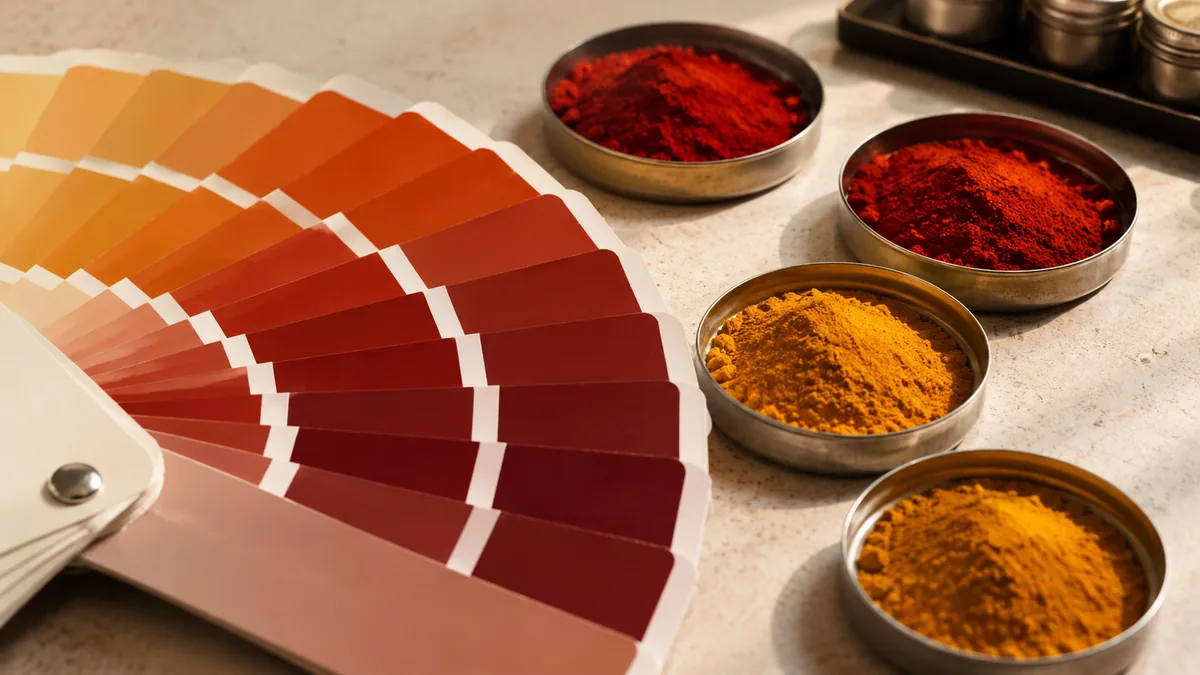
- AnswerWhat Is ASTA Colour Value in Chilli?
ASTA colour is the standard measure of red-chilli and paprika colour strength; higher means deeper extractable red.
- AnswerWhat Is Scoville (SHU) in Chilli?
Scoville Heat Units measure a chilli's pungency; here is where the main Indian grades sit.
- AnswerHow Much Curcumin Should Turmeric Have?
Curcumin content varies by turmeric origin; here are the typical Indian ranges and how to specify them.
- AnswerMG1 vs TGEB Black Pepper: The Difference
Malabar Garbled and Tellicherry Garbled Extra Bold are graded on bulk density; TGEB is the bolder, premium grade.
- AnswerWhat Is Sortex Cleaning in Spices?
Sortex is optical colour-sorting used to lift the purity of cleaned spice by removing discoloured seeds, stones and foreign matter.
- AnswerWhat Does "Garbled" Mean in Black Pepper?
Garbled means cleaned and sorted; ungarbled is as-harvested. The word sits inside grade names like Tellicherry Garbled Extra Bold.
- AnswerWhat Is a Spice Oleoresin?
An oleoresin is a solvent-extracted concentrate of a spice's flavour, colour and pungency; it is a major line in India's export basket.
- AnswerWhat Is ETO in Spices?
Ethylene oxide (ETO) is a sterilant banned as a pesticide in the EU; residues trigger recalls, and the compliant fix is steam sterilisation.
- AnswerWhat Is the EU Ethylene Oxide Limit?
The EU default residue limit for ethylene oxide in spices is 0.1 mg/kg, effectively at the detection floor because ETO is a banned pesticide.
- AnswerWhat Moisture for Export Turmeric?
Export turmeric fingers are typically specified at 12% moisture or below to hold quality through shipping and storage.
- AnswerWhat Is Piperine Content in Black Pepper?
Piperine is the alkaloid that makes black pepper pungent and drives its oleoresin value; it is specified as a minimum percentage.
- AnswerWhat Is Singapore Quality Cumin?
Singapore quality is a cumin purity grade at 99%; Europe quality is the tighter 99.5% grade.
- AnswerWhat Is FDA Prior Notice for Food Imports?
FDA Prior Notice is an advance filing that tells the FDA a food shipment is arriving, required for every spice import into the US.
- AnswerWhat Is FSVP for Imported Spices?
The Foreign Supplier Verification Program puts the duty on the US importer to verify that foreign spice suppliers meet US safety standards.
- DataIndian Chilli Grades: SHU and ASTA Colour Table
Heat (SHU) and extractable colour (ASTA) for Guntur Sannam S4, Byadgi and Teja S17, the three grades most Indian chilli contracts turn on.
- DataTurmeric Curcumin Content by Origin
Curcumin percentage for Alleppey-type finger, Erode and Nizamabad bulb turmeric, the number that sets colour strength and price.
- DataBlack Pepper Grades and Bulk Density
MG1 and TGEB garbled grades by bulk density in g/l, plus the EU Salmonella border check that governs Indian pepper.
- DataGreen Cardamom Grades Explained
The 6mm, 7mm, 8mm and AGEB size grades for Indian green cardamom, an auction-priced spice with no fixed list price.
- DataCumin Purity Grades: Singapore vs Europe
The 99% Singapore and 99.5% Europe purity grades for Indian cumin, plus the EU pesticide border check that governs it.
- DataEU Contaminant Limits for Spices
The EU maximum levels every spice shipment must meet: aflatoxins, ochratoxin A, pyrrolizidine alkaloids, PAH, ethylene oxide and Salmonella.
- DataEU 2019/1793 Check Rates for Indian Spices
The increased official-control rates under Reg. (EU) 2019/1793 that govern Indian cumin and black pepper at the EU border.
- DataAflatoxin Limits for Spices Explained
EU aflatoxin B1 and total-aflatoxin maximums, plus ochratoxin A, for chilli, paprika, pepper, nutmeg, ginger and turmeric.
- DataEthylene Oxide EU Rules for Spices
Ethylene oxide is a banned pesticide in the EU with a 0.1 mg/kg default limit; the compliant route for spices is steam sterilisation and testing.
- DataPyrrolizidine Alkaloids in Cumin
The EU pyrrolizidine alkaloid limit of 400 µg/kg for cumin and dried herbs, and the weed-seed source buyers have to control.
- DataSalmonella Testing for Spices
The absent-in-25g Salmonella standard, the 50% EU border check on Indian black pepper, and rising Salmonella-driven FDA refusals.
- DataPesticide MRLs for Spices in the EU
How EU pesticide controls bite on Indian spices: the ethylene oxide ban, the low default MRL principle, and the cumin border check.
- DataCoriander Grades Explained
What coriander seed is graded on, the EU baseline it must meet, and the order sizes buyers ship, with unverified screen-size bands kept out.
- DataFennel Grades Explained
What fennel seed is graded on, the EU baseline it must meet, and the order sizes buyers ship, with unverified grade bands kept out.
- DataNutmeg and Mace Grades
The EU aflatoxin and OTA limits that govern nutmeg, plus how nutmeg and mace are graded, with unverified count-per-pound bands kept out.
- DataClove Quality and Eugenol
What clove quality is judged on, from headless percentage to volatile oil and eugenol, and the EU baseline every clove lot must meet.
- DataDry Ginger Grades
The EU aflatoxin limits that govern dry ginger, its share of India spice exports, and the axes buyers grade dry ginger on.
- DataSaffron Crocin Grades
How saffron is graded on crocin, picrocrocin and safranal, why Kashmir saffron ranks high in crocin, and the air-freight order size.
- DataPaprika Oleoresin and ASTA Colour
ASTA colour bands for the colour chillies behind paprika and oleoresin, and the export weight of India spice oils and oleoresins.
- DataITC-HS Codes for Spices Explained
The Chapter 9 headings, 0904 to 0910, that classify spices for Indian export and set duty and compliance treatment.
- DataHS 0910.99 Residual Spices Explained
How heading 0910 splits into ginger, saffron, turmeric, mixtures and the 0910.99 residual line for other spices not elsewhere specified.
- DataCassia vs Ceylon Cinnamon: Coumarin Data
Why cassia is high in coumarin and true Ceylon cinnamon is very low, how India schedules them apart, and why both sit under HS 0906.
- DataSpice Moisture and Ash Standards
The verified moisture and purity reference points for Indian spices, and how ash figures flag grit and adulteration on a contract.
- DataCurcumin vs Turmeric Explained
The difference between turmeric the spice and curcumin the compound, with curcumin percentages by origin and the adulteration to screen for.
- DataCapsaicin Heat Scale for Chillies
How the Scoville scale measures capsaicin in Indian chillies, with verified SHU bands for Byadgi and Guntur Sannam S4.
- DataUSA vs China: India's Largest Spice Market?
Both are correct depending on year and metric: USA leads FY2025-26 value share, China leads FY2024-25 absolute value.
- DataIndia vs Vietnam Black Pepper: What Buyers Compare
Verified Indian black-pepper grade specs and EU border controls, with the Vietnam side kept qualitative where we lack sourced figures.
- DataIndian vs Egyptian Cumin: Grades and Compliance
Verified Indian cumin purity grades and EU controls, with the Egyptian side kept qualitative where sourced figures are missing.
- DataGuntur vs Byadgi Chilli: SHU and ASTA Colour Data
The heat-versus-colour split in Indian chilli: Guntur Sannam for pungency, Byadgi for deep ASTA colour, with verified figures.
- DataAlleppey vs Erode Turmeric: Curcumin Data
Curcumin content by Indian turmeric type, plus the trap that "Alleppey finger" is a grade, not the Alleppey GI.
- DataKashmir Saffron vs Iranian: What Buyers Compare
Verified Indian Kashmir Saffron facts, its GI status and air-freight logistics, with the Iranian side kept qualitative.
- DataIndia vs Indonesia Nutmeg: What Buyers Compare
The EU aflatoxin limits any Indian nutmeg must meet, with the Indonesian side kept qualitative where figures are missing.
- DataWhole vs Ground Spice Export: What Buyers Compare
Ground spice carries higher sterilisation and contamination risk than whole; whole chilli cubes out and ships light.
Origins & markets
34Sourcing by origin and destination market, with the real regime for each.
- DataIndia's Spice Export Basket by Value FY2025-26
How India's US$4,430.90 million spice export earnings split across chilli, cumin, oleoresins, cardamom and more in FY2025-26.
- DataTop Spice Export Destinations from India FY2025-26
Where India's spices go: destination shares of export value for FY2025-26, led by the USA, China and the UAE.
- DataIndia Spice Export Value Trend: FY2024-25 to FY2025-26
India's spice export value and volume both eased in FY2025-26, down about 6% in USD and 4% by volume year on year.
- DataChilli Export from India: Value Share and Grades
Chilli is India's single largest spice export at 27% of value in FY2025-26, led by Guntur, Byadgi and Teja grades.
- DataCumin Export Market from India: Data and Grades
Cumin is 12% of India spice export value, concentrated through Unjha, with Singapore and Europe purity grades.
- DataCardamom Export Market from India: Grades and Data
Small cardamom is 9% of India spice export value, sold by bold-size grades and priced at auction, not by fixed list.
- DataTurmeric Export Market from India: Curcumin Data
Turmeric is 7% of India spice export value, sold on curcumin content that ranges from 1.5% bulb to 6% finger.
- DataSpice Oleoresin Export from India: Market Data
Spice oils and oleoresins are 12% of India spice export value, the value-added end of the basket, tied for second place.
- DataUnjha Cumin Market Explained: India's Price Setter
Unjha in Gujarat is Asia's largest seed-spice market, handling about 70% of India's cumin and setting a daily global price.
- DataGuntur Chilli Market Explained: World Price Setter
Guntur in Andhra Pradesh is Asia's largest chilli market and the home of Sannam S4, setting the world red-chilli price.
- DataKochi Pepper Auction Explained: Historic Benchmark
Kochi in Kerala is the historic auction benchmark for black pepper and cardamom, home of the MG1 and TGEB grades.
- DataIndian Spice Growing Regions: A Sourcing Map
A sourced map of where India's key export spices trade, from Unjha cumin to Guntur chilli and Erode turmeric.
- DataIndia-UAE CEPA Spice Duty Explained
Under the India-UAE CEPA, spices enter at 0% duty with a DGFT preferential certificate of origin, else 5%; 5% VAT applies regardless.
- DataImporting Spices to the USA: Duty and Entry Data
US spice duties under HTS 0904-0910 run 0-3%, with FDA prior notice and FSVP on the importer, plus a Nov 2025 exemption.
- DataIndia Spice Sourcing Calendar: What Drives Timing
What actually changes between new-crop and carryover spice: the freshness-sensitive specs by crop and hub, with figures.
- DataGI-Tagged Spices of India: The Verified List
India has 29 GI-tagged spices; here are the anchors, plus the trap that Alleppey GI is cardamom, not turmeric.
- DataLapsed GI Spices in India: Verify Before You Claim
Several Indian spice GIs had lapsed on the 2023 register; a lapsed mark may no longer be protected, so verify before claiming.
- GuideImporting Indian Spices to the USA: a buyer guide
How a US importer clears Indian spices: FDA Prior Notice, FSVP, HTS duties and the food-safety failures that trigger refusals.
- GuideImporting Indian Spices to the UAE under CEPA
The India-UAE CEPA route to 0 percent duty, the DGFT preferential certificate that unlocks it, and why VAT applies either way.
- GuideImporting Indian Spices to the UK: a buyer guide
Post-Brexit the UK runs its own spice border regime; here is what a UK importer should pin down before the first order.
- GuideImporting Indian Spices to Germany: EU rules apply
Germany imports Indian spices under the full EU regime; the differentiator is documentation discipline for a demanding re-distribution market.
- GuideImporting Indian Spices to the EU: compliance guide
The EU is the toughest spice border for Indian exporters: increased controls, contaminant limits, ETO and species-labelling rules explained.
- GuideImporting Indian Spices to Canada: a buyer guide
What a Canadian importer should establish before the first order of Indian spices, and where the specifics need local verification.
- GuideImporting Indian Spices to Australia: a buyer guide
Biosecurity is the defining feature of the Australian spice border; here is the shape of it and where local rules must be verified.
- GuideImporting Indian Spices to Saudi Arabia: buyer guide
Saudi Arabia is a top-five destination for Indian spices; here is the market shape and where SFDA and halal specifics need verification.
- GuideSourcing Spices from Kerala: pepper, cardamom, more
Kerala is the historic heart of the Indian spice trade; here is what it grows best and how to buy it well.
- GuideSourcing Spices from Gujarat: the seed-spice belt
Gujarat and its Unjha market anchor India seed-spice trade; here is what the belt supplies and how to buy cumin, fennel and more.
- GuideSourcing Spices from Andhra Pradesh: chilli country
Andhra Pradesh and its Guntur market set the world red-chilli price; here is what the region supplies and how to buy it.
- GuideSourcing Chilli from Guntur: variety and grade guide
Guntur sets the world red-chilli price; here is how to specify Sannam S4 and Teja, and clear the compliance the crop demands.
- GuideSourcing Cumin from Unjha: the global price setter
Unjha is Asia largest seed-spice market and the daily cumin price benchmark; here is how to specify and buy Indian cumin well.
- GuideSourcing Turmeric from Erode: Turmeric City guide
Erode is India Turmeric City and home of the Erode Manjal GI; here is how to buy Erode turmeric on curcumin and cleanliness.
- GuideSourcing Pepper from Kochi: grades and benchmark
Kochi is the historic pepper auction benchmark; here is how to specify Malabar and Tellicherry pepper and clear the EU Salmonella check.
- GuideBest Turmeric Origin in India: a curcumin guide
Alleppey, Erode or Nizamabad? How to pick the right Indian turmeric origin by curcumin content and end use.
- GuideBest Chilli Origin in India: heat vs colour guide
Guntur, Byadgi or Teja? How to choose an Indian chilli origin by heat, colour and whether you cook it or extract it.