How to Order Spice Samples From India
How to run a sample the right way — size, spec, lab testing and the retained portion — so it actually predicts your container.
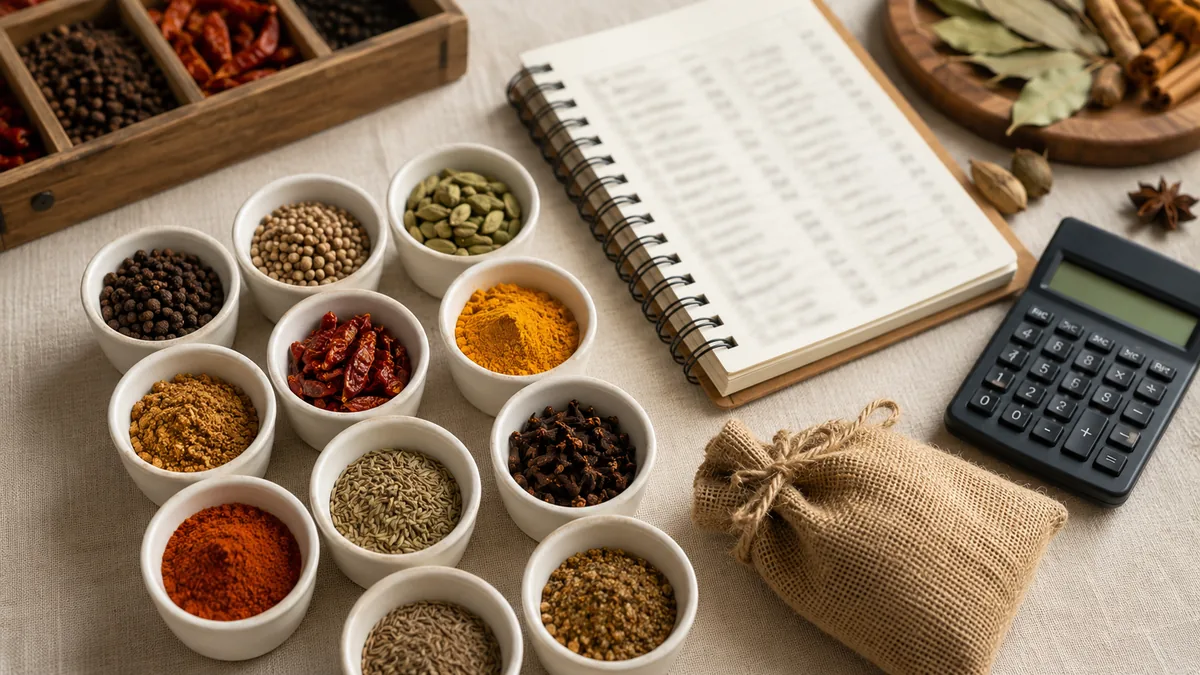
Order a representative, paid sample
A sample only helps if it represents the lot you will buy. Order a paid sample of 50–100 kg drawn from the same grade and origin you intend to purchase, against a written spec. A tiny courier sachet cannot be lab-tested properly or held as a reference, which is why the 50–100 kg range is the working standard.
Attach the spec to the sample request
Tell the supplier exactly what to send: species, grade parameter (curcumin band, SHU/ASTA, purity, bulk density, capsule size), moisture ceiling and form. A sample without a spec is just “something” — you cannot judge it or hold the container to it later.
Test what your market screens
Send the sample to a destination-accredited lab and run the panel your regulator enforces: aflatoxins (B1 5 µg/kg, total 10 µg/kg for the EU), pesticide residues, Salmonella (absent in 25 g), and the spice’s known adulterants — Sudan dye for chilli, lead chromate for turmeric. Test the sample, not just the paperwork.
Seal a retained portion
Split the sample and seal a retained portion once you approve it. This becomes the reference against which the full container is checked at pre-shipment QC. Give the approved sample a number and cite it in the purchase order so “same as sample” becomes enforceable.
How YouPals helps
YouPals arranges representative paid samples from vetted CRES-registered suppliers, attaches your spec, coordinates accredited-lab testing to your destination limits, and holds the sealed retained sample as the QC reference. We run no processing of our own — the sample simply lets you approve a real baseline before you scale.
Frequently asked
How big should a spice sample be?
Trade practice is 50–100 kg — large enough to lab-test properly and to seal a retained portion as the reference the container is later checked against.
Should I test the sample or trust the supplier’s certificate?
Test the sample at a destination-accredited lab. A certificate is a claim; an independent test on the exact sample you approve is the baseline you can enforce.
Sourcing this? Tell us the spice, grade and destination and we return a documented offer — vetted supply, QC oversight, and the test dossier your market needs.
Start a sourcing enquiry →What this page does not tell you
- Sample and lab-test costs
- Paid-sample and accredited-lab pricing vary by spice, lab and market; we do not publish a fixed figure.
Reviewed 16 July 2026.
Sources
- CBI — Entering the European market for spices and herbs· Tier 2, retrieved 2026-07-16
- Reg. (EU) 2023/915 — maximum levels for certain contaminants· Tier 1, retrieved 2026-07-16