How to Source Organic Spices From India
What organic changes in a sourcing programme, why certification and residue testing still matter, and where the honest gaps are.
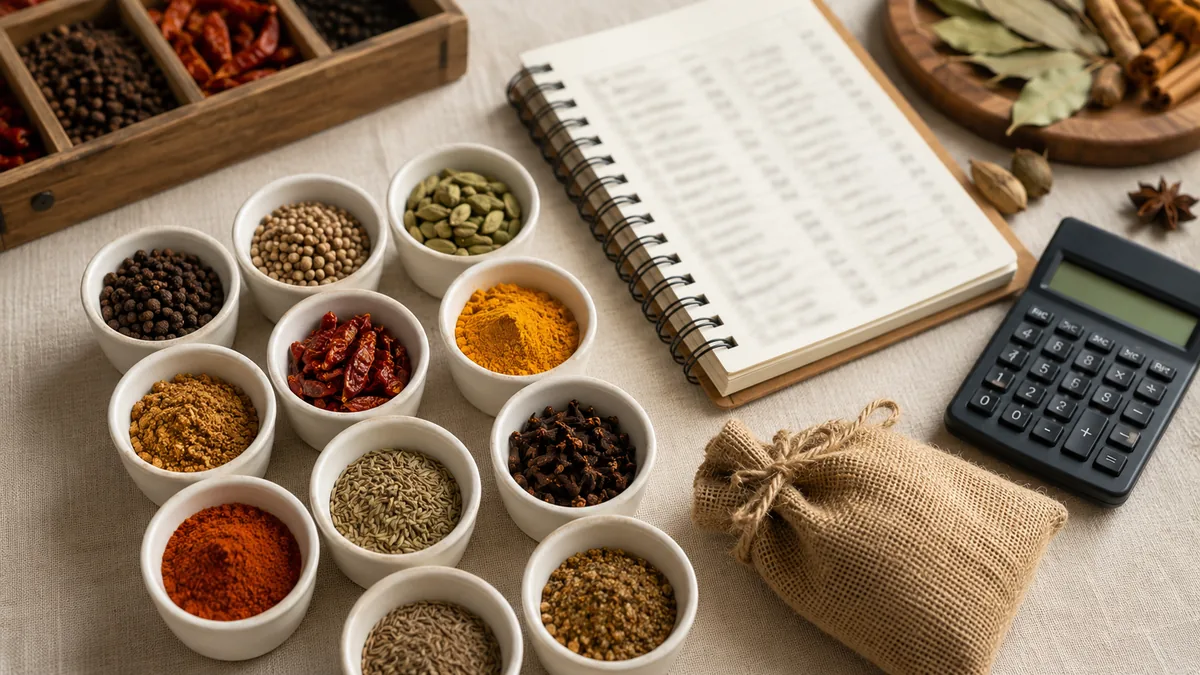
Organic is a certification claim, not a quality claim
Organic describes how a spice was grown — without prohibited synthetic inputs — and is only meaningful if it is certified against the destination’s organic standard and carried through an unbroken certified chain. It is not, by itself, a guarantee of low aflatoxin or the right grade. Treat organic as an additional layer on top of your normal specification, not a replacement for it.
The compliance limits still apply
Organic spices face the same food-safety law as conventional. For the EU that means aflatoxin B1 5 µg/kg and total aflatoxins 10 µg/kg, Salmonella absent in 25 g, and the same border-control regime — Indian cumin at a 30% pesticide check, black pepper at a 50% Salmonella check. Organic status does not exempt a consignment from any of these; it adds a certification requirement.
Sterilisation is the organic pinch point
The hardest part of organic spice is microbiological safety without prohibited treatments. Ethylene oxide is a banned pesticide in the EU (since 1991, screened at 0.1 mg/kg) and is incompatible with organic anyway. Steam sterilisation is the compliant route, but the process and its validation must be confirmed with a vetted processor so the organic certification is not broken by the treatment step.
Residue testing proves the claim
Because organic is a process claim, buyers protect themselves with residue testing that shows the absence of prohibited pesticides, alongside the usual aflatoxin, heavy-metal and micro panel. Pair the certificate with test data; a certificate without testing is weaker than a certificate plus a clean residue report.
How YouPals helps
YouPals sources organic spices as a desk and holds no certification of its own — organic certificates belong to the certified operators in the chain. We shortlist CRES-registered suppliers with valid organic certification, coordinate steam sterilisation through vetted processors so the organic chain stays intact, and arrange residue and contaminant testing that backs the organic claim before shipment.
Frequently asked
Does organic certification reduce aflatoxin or pesticide checks at the border?
No. Organic spices face the same contaminant limits and border-control checks as conventional; organic adds a certification requirement rather than removing food-safety obligations.
Can organic spices be sterilised?
Yes, with steam sterilisation. Ethylene oxide is a banned EU pesticide and incompatible with organic, so validated steam treatment through a certified processor is the compliant route.
Sourcing this? Tell us the spice, grade and destination and we return a documented offer — vetted supply, QC oversight, and the test dossier your market needs.
Start a sourcing enquiry →What this page does not tell you
- Organic certification standards and bodies
- NPOP, USDA-NOP and EU organic rules and their certifiers are outside our cited source list; we verify each operator’s certificate rather than assert the standard.
- Organic price premium
- The premium varies by spice, certifier and season; we do not publish a fixed figure.
Reviewed 16 July 2026.
Sources
- Reg. (EU) 2023/915 — maximum levels for certain contaminants· Tier 1, retrieved 2026-07-16
- Reg. (EU) 2019/1793 — temporary increase of official controls· Tier 1, retrieved 2026-07-16