Turmeric export from India
Curcuma longa · Zingiberaceae · Rhizome
Curcumin is an origin fact, not a grade you can dial up — Alleppey finger’s 4–6% floor sits above Nizamabad’s ceiling.
Curcumin is an origin fact, not a grade you dial up
Each bar is a turmeric type's curcumin range, drawn to scale. The Alleppey-type floor sits above the Nizamabad ceiling — you change curcumin by changing origin, not by asking for 'higher grade'.
- Alleppey Finger Turmeric4–6%
- Erode Finger Turmeric2.5–3%
- Nizamabad Bulb Turmeric1.5–2.25%
Show the data as a table
| Turmeric | Curcumin % |
|---|---|
| Alleppey Finger Turmeric | 4–6 |
| Erode Finger Turmeric | 2.5–3 |
| Nizamabad Bulb Turmeric | 1.5–2.25 |
Curcumin % ranges by origin, per Spices Board grade practice. Alleppey-type is a traded grade, not a GI — the Alleppey GI is the green cardamom.
Turmeric at a glance
- Botanical name
- Curcuma longa
- Family
- Zingiberaceae
- Part used
- Rhizome
- Also known as
- Haldi, Manjal, Indian saffron
- Forms exported
- Dried, Ground, Oleoresin, Extract
- ITC-HS
- 0910 30 10, 0910 30 20
- Spices Board schedule
- #5
- Export basket share
- 7% (FY2025-26)
What is Turmeric and how is it exported from India?
Turmeric is the boiled, dried rhizome of Curcuma longa, graded as "finger" and "bulb" and specified by curcumin content. Curcumin varies by origin: Alleppey-type 4–6%, Erode 2.5–3%, Nizamabad 1.5–2.25%.
Overview
Turmeric is the boiled, dried and polished rhizome of Curcuma longa, and the number the trade lives by is curcumin content, the yellow curcuminoid pigment that carries both colour and the compound nutraceutical buyers want. The crucial point is that curcumin is largely an origin fact, not a processing dial you can turn up. It is set by variety and growing conditions: Alleppey-type finger turmeric runs 4–6 per cent, Erode around 2.5–3 per cent, and high-volume Nizamabad bulb sits nearer 1.5–2.25 per cent.
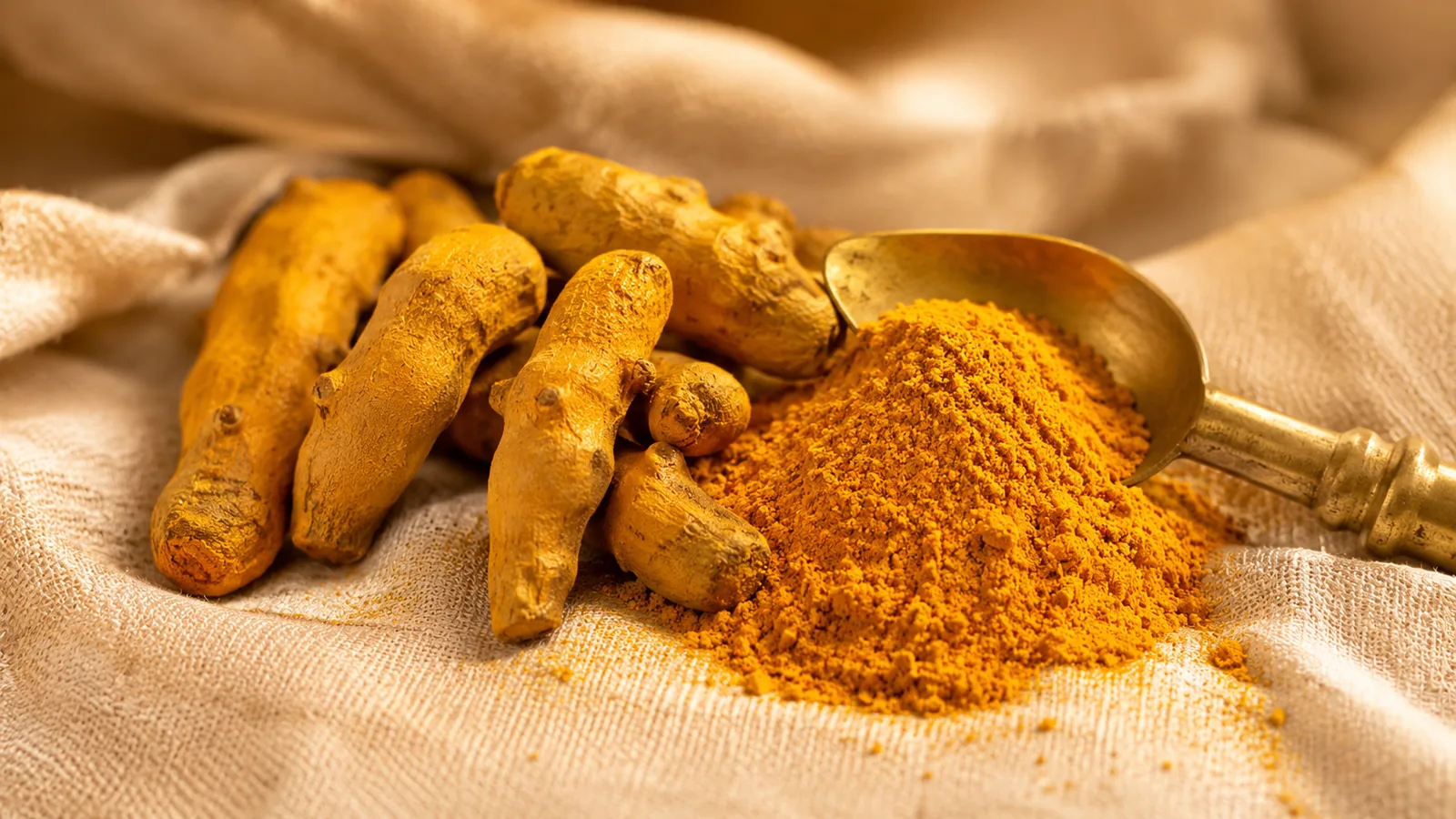
The rhizome is graded into finger and bulb. Fingers are the secondary rhizomes, longer and generally higher in curcumin, and are the premium; bulbs (the central rhizome) are rounder and typically lower. Beyond curcumin, buyers specify moisture (export finger is typically held at or below about 12 per cent), colour, and the polish and cleanliness of the cured rhizome. Value-added streams are turmeric powder, and turmeric oleoresin and curcumin extract for the colour and nutraceutical industries.
Turmeric is about 7 per cent of India’s spice export basket by value, and its export earnings have grown on price and product mix as much as on volume, helped by the global wave of curcumin nutraceutical demand. India is the dominant world producer and its named markets, Erode (“Turmeric City” and a GI origin), Nizamabad and Sangli, anchor the trade. A key labelling point: “Alleppey finger” is a traded grade, not a GI, whereas Erode, Sangli, Waigaon and Kandhamal are the GI turmerics.
The compliance risk that dogs turmeric is adulteration with lead chromate, an illegal yellow brightener that both defrauds on colour and introduces a serious heavy-metal hazard. Because of this, accredited lead and heavy-metal testing on every consignment is a standing buyer requirement, alongside pesticide-residue screening; Indian turmeric also sits within the scope of increased EU controls where relevant.
The read
Turmeric is ~7% of the basket and the export figure has grown on price and mix, not volume. The specification buyers care about is curcumin percentage, and it is set by origin, not by processing — the highest-curcumin finger turmeric comes from Kerala (Alleppey-type, up to ~6.5%), while high-volume Nizamabad bulb sits nearer 2%. The compliance risk that dogs turmeric is lead chromate adulteration (an illegal yellow brightener), so heavy-metal testing is a standing buyer requirement.
Forms & export grades
Cured, polished finger and bulb rhizome graded by curcumin and appearance.
Turmeric powder milled to a specified colour and mesh.
Solvent-extracted oleoresin carrying concentrated colour for industrial use.
Standardised curcumin extract for the nutraceutical trade.
- Alleppey Finger Turmeric
The high-curcumin finger — 4–6%, the grade nutraceutical and colour buyers target. (A traded grade, not a GI.)
- Erode Finger Turmeric
The GI Erode finger — 2.5–3% curcumin, bright colour, the Tamil Nadu benchmark.
- Nizamabad Bulb Turmeric
High-volume Telangana bulb at 1.5–2.25% curcumin — the commodity tier, priced below the fingers.
Varieties & types
- Alleppey-type finger
- A high-curcumin (4–6%) finger grade prized by colour and nutraceutical buyers; a traded grade, not a GI.
- Erode
- The classic Tamil Nadu turmeric at ~2.5–3% curcumin; Erode is a GI origin and the trade’s pricing hub.
- Nizamabad bulb
- High-volume Telangana bulb turmeric nearer 1.5–2.25% curcumin, the workhorse of bulk supply.
- Sangli / Rajapuri
- A bold, well-cured Maharashtra market type; Sangli is a GI turmeric.
- Salem / Duggirala types
- Regional cultivar streams feeding the finger and powder trade at varying curcumin levels.
Growing regions
Telangana (Nizamabad), Tamil Nadu (Erode, Salem) and Maharashtra (Sangli) are the principal producing and trading centres, with Andhra Pradesh, Karnataka and Odisha (Kandhamal) adding volume. The crop is long-duration, planted before the monsoon and harvested in the following winter and spring, then boiled, dried and polished before grading. Erode, Sangli, Waigaon and Kandhamal are GI turmerics.
Uses & applications
- Turmeric powder for retail, foodservice and the ethnic-foods trade
- Natural yellow colouring of processed foods, sauces, snacks and ready meals
- Curcumin extract and turmeric oleoresin for the nutraceutical and dietary-supplement industry
- Standardised colourant (curcumin) for beverages, dairy and confectionery
- Curry powder, masala and seasoning-blend manufacturing
- Golden-milk, wellness-beverage and functional-drink formulations
- Cosmetic, skincare and personal-care preparations
- Ayurvedic and traditional-medicine products
- Textile and natural-dye applications for niche buyers
Sourcing & export considerations
- Available as finger and bulb whole rhizome, powder, and as oleoresin and curcumin extract
- Specify curcumin percentage, finger vs bulb, moisture (export finger typically ≤12%), colour and polish, with the test method stated
- Curcumin is origin-driven, so buyers targeting high curcumin should specify an Alleppey-type/high-curcumin grade rather than expect processing to raise it
- Cleaned and polished; powder is milled to a specified mesh and colour; extracts are bought on standardised curcumin content
- Compliance flags: lead chromate adulteration (heavy-metal/lead testing required), pesticide residues, and increased EU controls where relevant
- Distinguish traded grade names (e.g. “Alleppey finger”) from GI origins (Erode, Sangli, Waigaon, Kandhamal); verify GI status before claiming it
- Buyers favour current-crop, well-cured, mould-free material; dense dry turmeric ships efficiently
- Sample and blend-scale MOQs follow standard trade practice; require lead/heavy-metal and residue test dossiers for regulated markets
ITC-HS classification
- 0910 30 10 — Turmeric (Curcuma), fresh/whole
- 0910 30 20 — Turmeric (Curcuma), powder
- 3301 90 16 — Spice oleoresins
Compliance that applies
Frequently asked
How much curcumin should export turmeric have?
It depends on origin and use. Alleppey-type finger turmeric runs 4–6% curcumin (nutraceutical/colour buyers target this); Erode is ~2.5–3%; high-volume Nizamabad bulb is ~1.5–2.25%. The curcumin figure and test method should be stated on the contract.
What is lead chromate in turmeric and how is it avoided?
Lead chromate is an illegal yellow pigment sometimes added to brighten turmeric. It is avoided by sourcing traceable lots and requiring accredited heavy-metal (lead) test reports on every consignment.
Can curcumin content be increased by processing?
No. Curcumin is set by variety and origin, not by milling or polishing. To buy high curcumin you must specify a high-curcumin grade such as Alleppey-type finger (4–6%), rather than expect processing to lift a low-curcumin bulb lot.
Is Alleppey finger turmeric a GI?
No. Alleppey finger is a traded quality grade denoting high-curcumin finger turmeric. The recognised GI turmerics are Erode, Sangli, Waigaon and Kandhamal. Do not present Alleppey finger as a GI on labels or documents.
How is lead chromate adulteration controlled?
Lead chromate is an illegal yellow brightener that adds a heavy-metal hazard. It is controlled by sourcing traceable lots and requiring accredited lead and heavy-metal test reports on every consignment, which serious EU and US buyers treat as mandatory.
Related spices
Sources
- Spices Board of India — Export statistics· Tier 1, retrieved 2026-07-16
- Spices Board Act, 1986 — Schedule of spices· Tier 1, retrieved 2026-07-16
- Geographical Indications Registry, India — Registered GIs· Tier 1, retrieved 2026-07-16
- Reg. (EU) 2019/1793 — temporary increase of official controls· Tier 1, retrieved 2026-07-16
- Reg. (EU) 2023/915 — maximum levels for certain contaminants· Tier 1, retrieved 2026-07-16