From Sample to Container: A Spice Sourcing Guide
The full path from a 50 kg sample to a 20-tonne container, with the checks that keep the two matching.
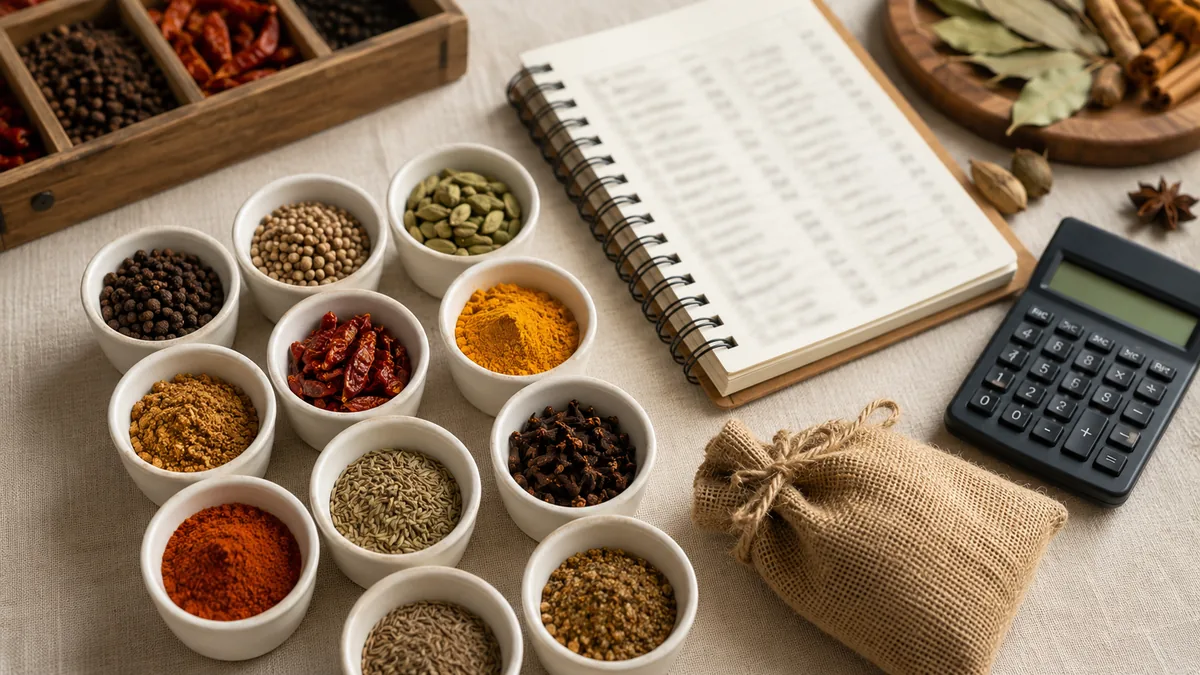
Step 1 — the paid sample
Begin with a paid sample of 50–100 kg drawn against a written spec. Send it to a destination-accredited lab and test what your regulator actually screens — aflatoxins, pesticide residues, Salmonella, and the spice’s known adulterants. Crucially, seal and keep a retained portion of the approved sample; it is the reference the container will be judged against.
Step 2 — climb the volume ladder
Do not jump from sample to FCL. Trade practice steps through roughly 100 kg per variant for a private-label trial, 300 kg for a standard blend, 500 kg for a custom blend, then sea LCL at 1–5 MT before a full 20ft FCL of about 18–22 MT for dense seed spice. Each rung lets you validate quality and logistics before you increase exposure.
| Rung | Quantity |
|---|---|
| Sample | 50–100 kg |
| Private-label trial | ~100 kg / variant |
| Blend | ~300 kg |
| Custom blend | ~500 kg |
| Sea LCL | 1–5 MT |
| 20ft FCL (dense seed spice) | ~18–22 MT |
Step 3 — lock the PO to the sample
Write the purchase order so it references the approved sample number and the exact spec figures. Fix the Incoterm (FOB, CFR or CIF) and the document set. This turns a vague “same as sample” into an enforceable standard.
Step 4 — pre-shipment QC and re-test
Before the container leaves, check the goods against the retained sample and re-run the critical tests — the ones your destination will catch, such as Salmonella for EU pepper (50% check) or pesticides for EU cumin (30% check). Catching drift in India is far cheaper than a hold or refusal at the destination port.
How YouPals helps
YouPals runs the whole ladder as your desk. We arrange the sample and lab work, hold the retained reference, step you up the volume rungs with vetted CRES-registered suppliers, tie the PO to the approved sample, and run pre-shipment QC and re-testing so the container matches what you signed off. We run no processing of our own; any treatment is coordinated through vetted partners.
Frequently asked
Why keep a retained sample?
The sealed retained portion of the approved sample is the reference your container is checked against, turning “same as sample” into an enforceable, testable standard.
Can I skip straight from sample to a full container?
You can, but climbing the volume ladder lets you validate quality and logistics at lower exposure before committing to an 18–22 MT container.
Sourcing this? Tell us the spice, grade and destination and we return a documented offer — vetted supply, QC oversight, and the test dossier your market needs.
Start a sourcing enquiry →What this page does not tell you
- Sample cost
- Paid-sample pricing varies by spice and supplier; we do not publish a fixed figure.
Reviewed 16 July 2026.
Sources
- CBI — Entering the European market for spices and herbs· Tier 2, retrieved 2026-07-16
- Reg. (EU) 2019/1793 — temporary increase of official controls· Tier 1, retrieved 2026-07-16