Spice Sourcing Risk Management: a buyer framework
The adulteration, contaminant, border and supply risks in Indian spice sourcing, and the controls that keep a container moving.
Four risk families
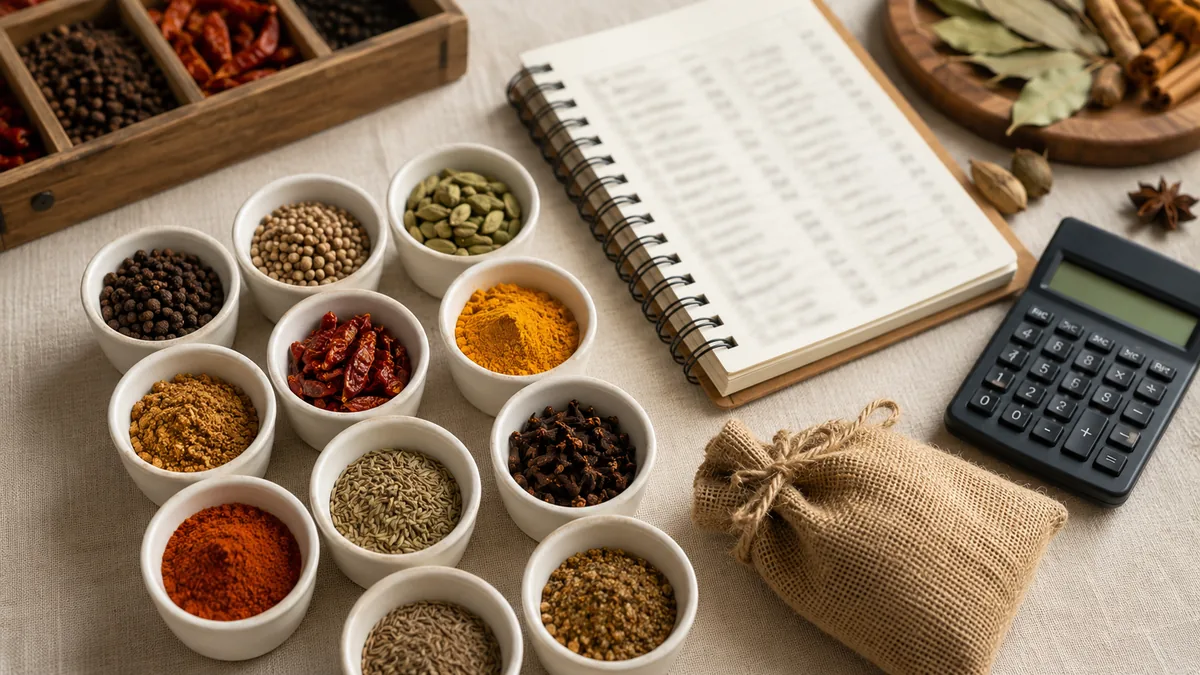
Spice sourcing risk sorts into four families: deliberate adulteration, natural contamination, border and regulatory failure, and supply or price disruption. A serious buyer manages all four, because any one of them can detain a container, trigger a recall or stop a production line.
Adulteration: zero-tolerance hazards
The deliberate hazards carry the harshest consequences. Sudan dyes are illegal red colourants in chilli with zero tolerance. Lead chromate is an illegal yellow brightener in turmeric that adds heavy metals. Both are intentional, so they are a supplier-trust problem as much as a testing problem: screen every lot and buy from exporters with a clean record.
- Sudan dye in chilli: zero tolerance, screen every lot
- Lead chromate in turmeric: heavy-metal testing essential
- Species fraud: do not accept cassia sold as cinnamon
Contamination and border risk
Natural contamination and border rules interact. Aflatoxins (EU limit 5 µg/kg for B1), pyrrolizidine alkaloids (400 µg/kg in cumin), pesticide residues and Salmonella are the recurring culprits. The EU physically checks Indian cumin at 30 percent for pesticides and black pepper at 50 percent for Salmonella, and ethylene oxide, banned in the EU since 1991, remains a leading rapid-alert trigger. Steam treatment plus pre-shipment testing is the core control.
| Risk | Key limit / rate | Control |
|---|---|---|
| Aflatoxin B1 | 5 µg/kg (EU) | clean sourcing, testing |
| Cumin pesticides | 30 % EU check | residue screening in India |
| Pepper Salmonella | 50 % EU check | steam treatment + testing |
| Ethylene oxide | 0.1 mg/kg, banned EU | never fumigate; steam instead |
Supply and price risk
Spice prices move with harvest, and origins concentrate (Unjha sets cumin, Guntur sets chilli). Single-source dependence is a real exposure. Qualify a second exporter, track the harvest calendar for your key crops, and hold buffer stock so a price spike or a rejected lot does not halt your operation.
How YouPals helps
YouPals is a sourcing desk and owns no facility. We run the risk framework on your behalf: shortlist CRES-registered exporters with clean records, screen every lot for the zero-tolerance adulterants and the contaminant limits your market enforces, and coordinate steam treatment and accredited testing at third parties. We qualify second sources and watch origin price benchmarks so supply and border risk are managed before they reach your line.
Frequently asked
What are the biggest risks in sourcing Indian spices?
Deliberate adulteration (Sudan dye in chilli, lead chromate in turmeric), natural contamination (aflatoxins, pesticides, Salmonella), border failures (EU checks cumin at 30 percent, pepper at 50 percent; ETO banned) and supply or price disruption from harvest and single-source dependence.
How do I reduce spice rejection risk at the border?
Screen every lot for the zero-tolerance adulterants, steam-treat and pathogen-test whole spices, run pesticide and aflatoxin screening in India before shipment, and never use ethylene oxide for EU-facing product.
Sourcing this? Tell us the spice, grade and destination and we return a documented offer — vetted supply, QC oversight, and the test dossier your market needs.
Start a sourcing enquiry →What this page does not tell you
- Price forecasting
- We flag price volatility and origin concentration but do not forecast prices, which move with harvest and market.
Reviewed 16 July 2026.
Sources
- Reg. (EU) 2023/915 — maximum levels for certain contaminants· Tier 1, retrieved 2026-07-16
- Reg. (EU) 2019/1793 — temporary increase of official controls· Tier 1, retrieved 2026-07-16
- RASFF Window — EU rapid alert for food and feed· Tier 1, retrieved 2026-07-16
- Spices Board of India — Export statistics· Tier 1, retrieved 2026-07-16
- Spices Board — Certificate of Registration as Exporter of Spices (CRES)· Tier 1, retrieved 2026-07-16