What Lab Tests Do Imported Spices Need?
A spice-by-spice map of the tests that matter — aflatoxin, ETO, Sudan dye, heavy metals — against the limits that get lots rejected.
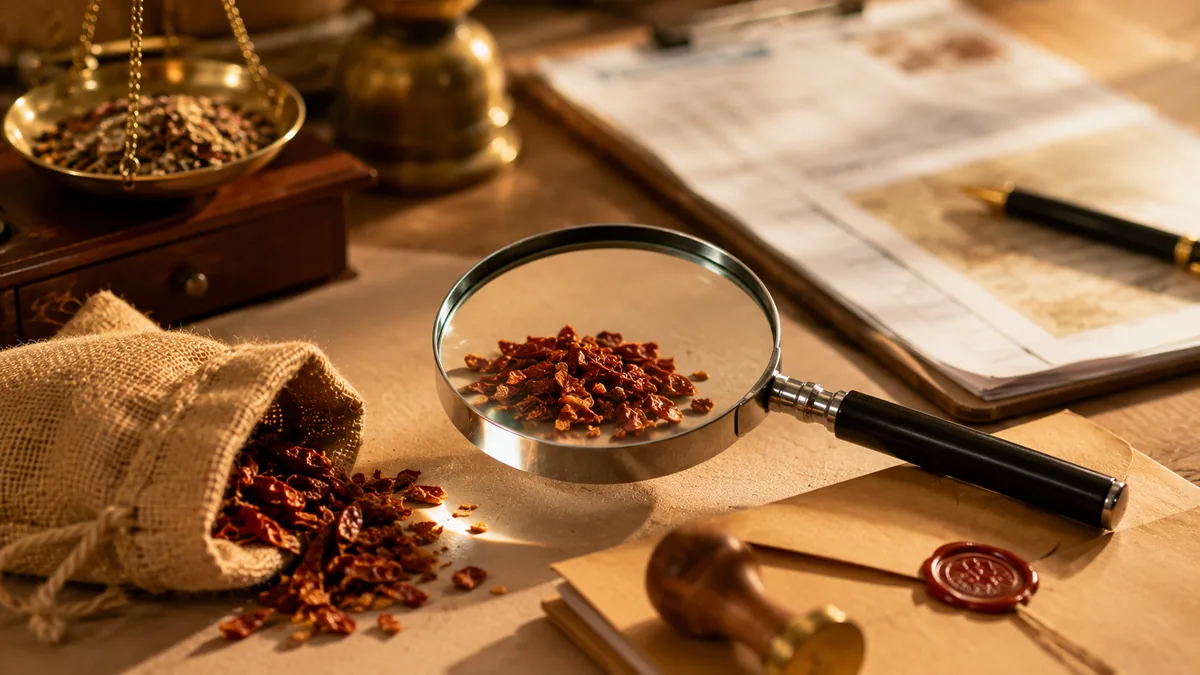
What lab tests do imported Indian spices need?
Match the test to the spice and market: aflatoxin and ochratoxin for most dried spices, ETO for EU lots, Sudan dye for chilli and paprika, heavy metals for turmeric, and Salmonella where microbial spec applies. Test the specific lot against the destination’s limits.
- EU pyrrolizidine alkaloids limit
- 400 µg/kg
- Reg. (EU) 2023/915 — maximum levels for certain contaminants
Tests by hazard and limit
| Test | Applies to | EU limit / rule |
|---|---|---|
| Aflatoxin B1 / total | Chilli, paprika, pepper, nutmeg, ginger, turmeric | 5 / 10 µg/kg |
| Ochratoxin A | Dried spices | 15 µg/kg (20 for dried chillies) |
| Ethylene oxide (ETO) | EU-bound lots | 0.1 mg/kg (banned pesticide) |
| Sudan dye | Chilli, paprika | Zero tolerance |
| Heavy metals (lead) | Turmeric | Screen for lead chromate adulteration |
| Salmonella | Pepper and others | Absent in 25 g |
How to apply it
Pick the tests from the risk, not a fixed template: a turmeric buyer prioritises heavy metals and aflatoxin; a chilli buyer adds a Sudan dye screen; an EU importer adds ETO. Remember the pyrrolizidine alkaloid limit (400 µg/kg) for cumin and dried herbs, and benzo[a]pyrene (PAH) at 10 µg/kg.
Whatever the panel, tie the report to the export lot and, for high value, verify with an independent accredited test on arrival.
Frequently asked
Do all spices need the same tests?
No. The panel is hazard-driven: chilli needs Sudan dye, turmeric needs heavy metals, EU lots need ETO, and most dried spices need aflatoxin. Match the test to the spice and destination.
Sourcing this? Tell us the spice, grade and destination and we return a documented offer — vetted supply, QC oversight, and the test dossier your market needs.
Start a sourcing enquiry →What this page does not tell you
- Pesticide residue MRLs per compound
- We do not list individual pesticide MRLs; there are hundreds and they change, so buyers should confirm against the current EU residue database for their destination.
Reviewed 16 July 2026.
Sources
- Reg. (EU) 2023/915 — maximum levels for certain contaminants· Tier 1, retrieved 2026-07-16
- Reg. (EU) 2019/1793 — temporary increase of official controls· Tier 1, retrieved 2026-07-16
- RASFF Window — EU rapid alert for food and feed· Tier 1, retrieved 2026-07-16