Spice Import Compliance Checklist for Buyers
A market-by-market checklist of the limits, checks and documents that decide whether your spice clears the border.
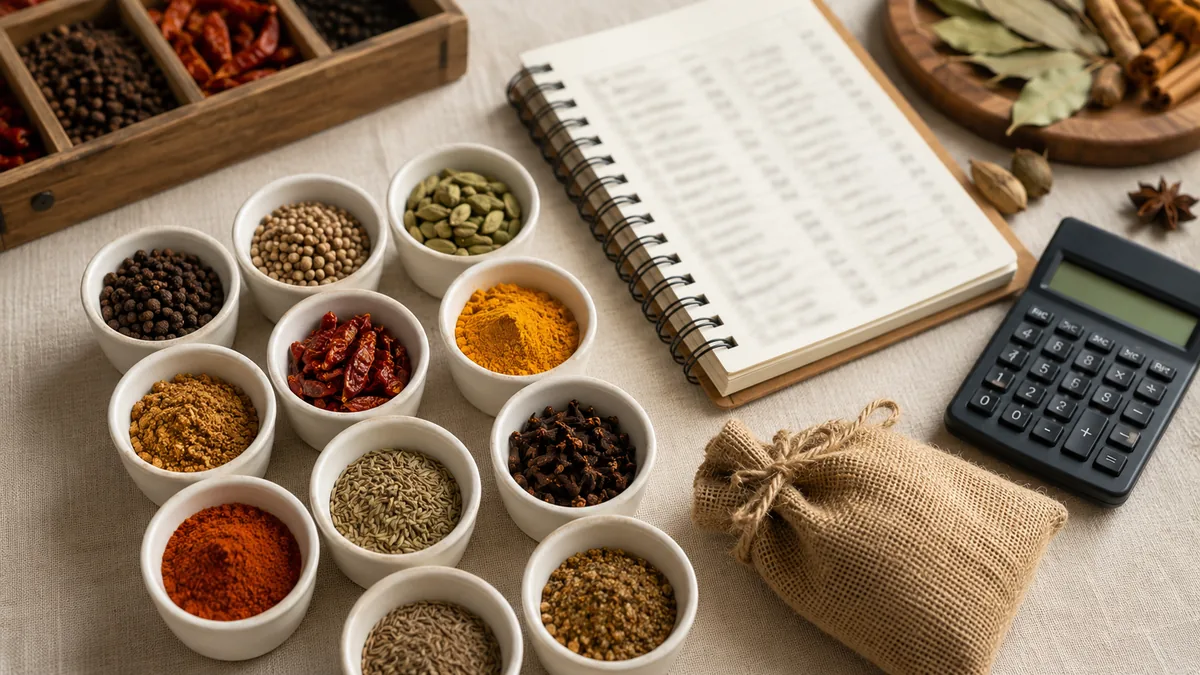
EU contaminant limits to design to
- Aflatoxin B1 5 µg/kg; total aflatoxins 10 µg/kg (chillies, paprika, pepper, nutmeg, ginger, turmeric).
- Ochratoxin A 15 µg/kg (20 for dried chillies).
- Pyrrolizidine alkaloids 400 µg/kg (cumin, dried herbs).
- Benzo[a]pyrene (PAH) 10 µg/kg.
- Ethylene oxide 0.1 mg/kg default — banned; use steam sterilisation.
- Salmonella absent in 25 g.
EU border-control rates
Under Reg. (EU) 2019/1793, Indian cumin sits at a 30% pesticide check rate (raised January 2025) and Indian black pepper at a 50% Salmonella check rate. These are physical-check probabilities on entry, so for these spices testing before shipment is a practical necessity, not a nicety.
US requirements
For the United States, file an FDA Prior Notice for each shipment and satisfy the Foreign Supplier Verification Program, which puts the supplier-verification duty on you as importer. HTS 0904–0910 duties run 0–3%, and a November 2025 executive order exempted Indian pepper, cumin and turmeric from the top reciprocal duties. Salmonella-driven FDA refusals rose across 2024–25.
UAE and adulterant screens
For the UAE, the India-UAE CEPA (in force 1 May 2022) gives 0% duty with a DGFT preferential Certificate of Origin, otherwise 5%, with 5% VAT regardless. Across all markets, run the spice-specific adulterant screen: Sudan dye in chilli (zero tolerance), lead chromate in turmeric (heavy metals), and coumarin control by not selling cassia as cinnamon.
Document set
- CRES-backed commercial invoice and packing list.
- Phytosanitary certificate.
- Certificate of origin (preferential via DGFT for CEPA, else non-preferential).
- Destination test dossier covering the screened parameters.
How YouPals helps
YouPals runs this checklist as your desk. We map your spice and destination to the exact limits and checks, coordinate the right tests at an accredited lab before shipment, and assemble a document dossier that matches your duty position. We issue no statutory certificates ourselves and process nothing — we make sure the ones from the exporter and authorities line up.
Frequently asked
Which Indian spices face the toughest EU border checks?
Cumin, at a 30% pesticide check rate (raised January 2025), and black pepper, at a 50% Salmonella check rate, under Reg. (EU) 2019/1793.
Do Indian spices get a US duty break?
HTS 0904–0910 duties are already low at 0–3%, and a November 2025 executive order exempted Indian pepper, cumin and turmeric from the top reciprocal duties.
Sourcing this? Tell us the spice, grade and destination and we return a documented offer — vetted supply, QC oversight, and the test dossier your market needs.
Start a sourcing enquiry →What this page does not tell you
- Non-EU/US/UAE market rules
- Import rules for other destinations vary and are outside the limits we can source here; verify per market.
Reviewed 16 July 2026.
Sources
- Reg. (EU) 2023/915 — maximum levels for certain contaminants· Tier 1, retrieved 2026-07-16
- Reg. (EU) 2019/1793 — temporary increase of official controls· Tier 1, retrieved 2026-07-16
- USITC — Harmonized Tariff Schedule· Tier 1, retrieved 2026-07-16
- India–UAE CEPA — text and tariff schedules· Tier 1, retrieved 2026-07-16
- FDA — Foreign Supplier Verification Programs· Tier 1, retrieved 2026-07-16
- Spices Board — Certificate of Registration as Exporter of Spices (CRES)· Tier 1, retrieved 2026-07-16