Sourcing mechanics
Order sizes, packing, Incoterms and documents — the practical questions that decide whether a first order actually ships.
The order-size ladder, sample to container
From a 50 kg sample to a full container is two orders of magnitude. Bars are on a log scale so every rung is legible — MOQ is trade practice, not a YouPals-quoted minimum.
- Sample50–100 kg
- Private label / variant~100 kg
- Blend~300 kg
- Custom blend~500 kg
- Sea LCL1–5 MT
- 20ft FCL~18–22 MT
Show the data as a table
| Order tier | Typical size |
|---|---|
| Sample | 50–100 kg |
| Private label / variant | ~100 kg |
| Blend | ~300 kg |
| Custom blend | ~500 kg |
| Sea LCL | 1–5 MT |
| 20ft FCL | ~18–22 MT |
Indicative trade practice (CBI; industry norms). MOQ varies by supplier and season; these are typical rungs, not quoted minimums.
- Minimum order quantity (MOQ)
The real MOQ ladder — samples 50–100 kg, private-label ~100 kg/variant, blends ~300 kg, up to a 20ft FCL.
- Container loading (how much fits a 20ft)
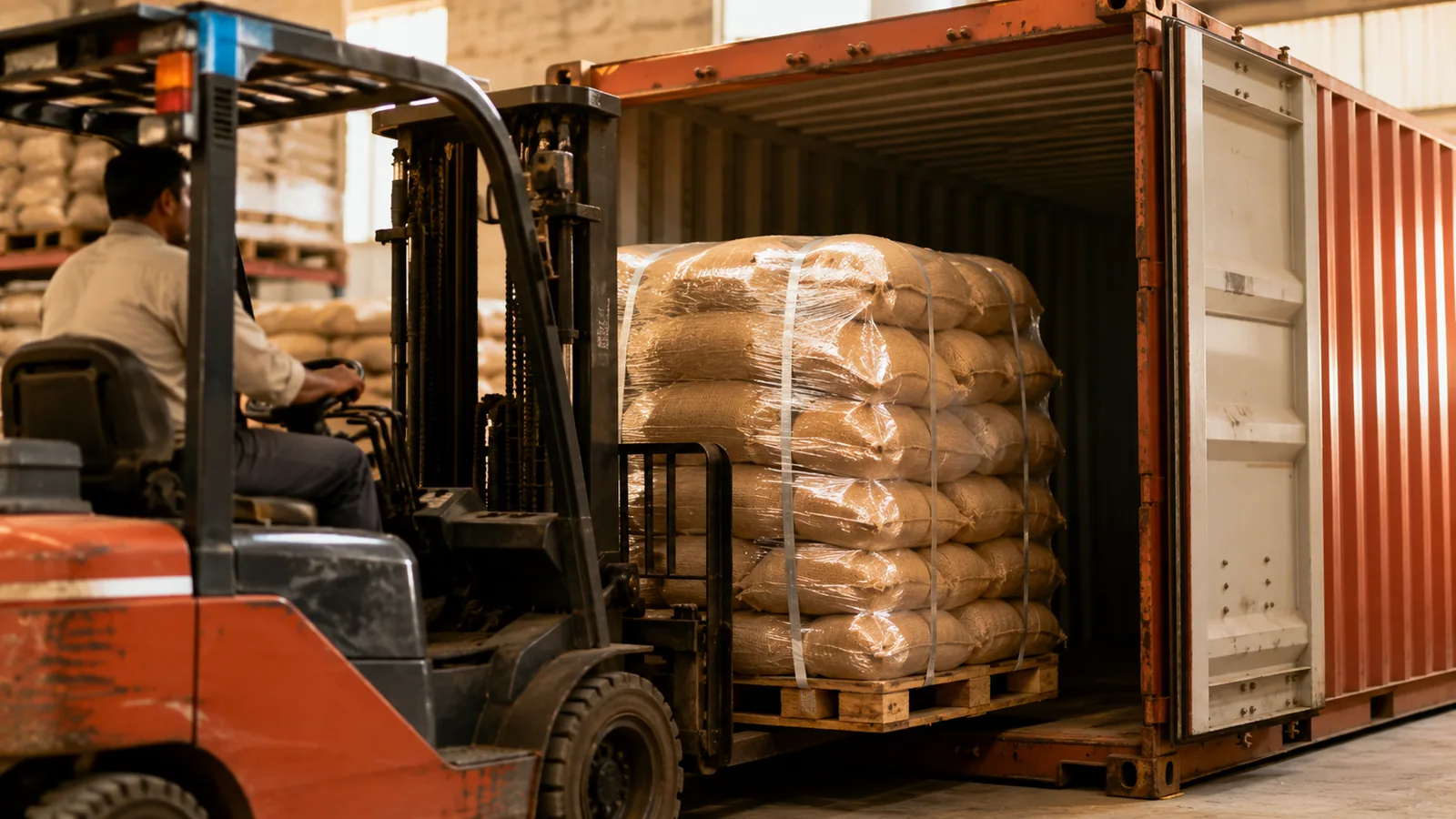
Roughly how much spice fits a 20ft container — a question asked constantly and answered badly everywhere.
- Bulk spice packaging
Jute vs PP vs vacuum, and why the choice is a shelf-life and compliance decision.
- Incoterms for spice trade (FOB/CIF/CFR)
What FOB, CFR and CIF actually shift between exporter and buyer — and where the risk sits.
- Spice export documentation
The document set an Indian spice shipment travels with — CRES, phytosanitary, CoO and the test dossier.