Indian Chilli Grades: SHU and ASTA Colour Table
Heat (SHU) and extractable colour (ASTA) for Guntur Sannam S4, Byadgi and Teja S17, the three grades most Indian chilli contracts turn on.
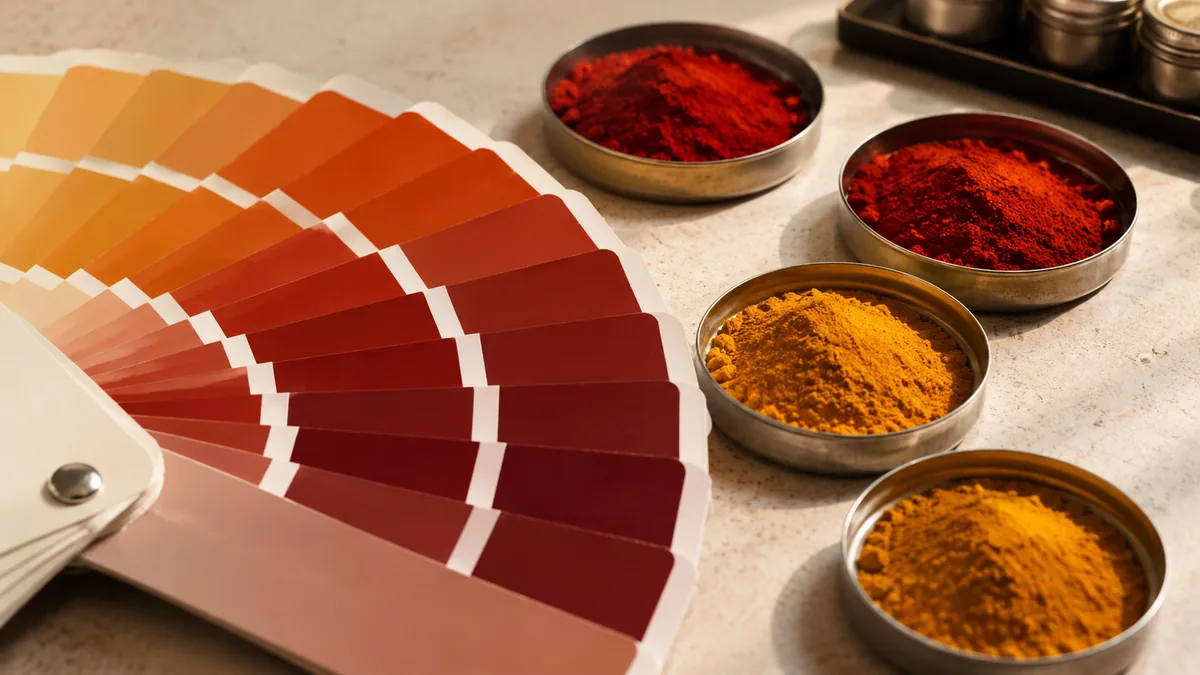
Grade table: heat and colour
Indian chilli is bought on two independent axes: pungency, measured in Scoville Heat Units (SHU), and extractable red colour, measured on the ASTA colour scale. A chilli can rank high on one and low on the other, so a buyer specifies both.
| Grade / variety | SHU (heat) | ASTA colour | Bought mainly for | Origin |
|---|---|---|---|---|
| Guntur Sannam S4 | 35,000-45,000 | 100-120 | Heat with usable colour | Guntur, Andhra Pradesh |
| Byadgi | 8,000-15,000 | 130-150 | Deep colour, low heat | Byadgi, Karnataka |
| Teja S17 | See note below | 110-130 | Very high heat, oleoresin | Khammam belt, Telangana |
How to read the two scales
- SHU measures capsaicinoid content (pungency). Guntur Sannam S4 is the market workhorse, high enough in heat to carry a blend and still holding ASTA 100-120.
- ASTA colour measures extractable red pigment. Byadgi sits at ASTA 130-150 and is deliberately low in heat, which is why it is bought for colour, paprika-style use and oleoresin, not fire.
- Teja S17 is prized for very high heat and oleoresin yield and carries ASTA 110-130. Its Scoville figure is widely quoted very high but we have no Board or lab-verified number, so we do not print one.
What to fix on the contract
Bands are variety references, not lot guarantees. Delivered heat and colour move with crop year, curing, blending of pods and storage. Name the target SHU range, the minimum ASTA, moisture and a Sudan-dye clause on every purchase order, and hold the lot to a pre-shipment lab report.
Frequently asked
What is the difference between SHU and ASTA colour in chilli?
SHU measures heat (capsaicin); ASTA measures extractable red colour. They move independently. Byadgi is high colour and low heat; Teja is high heat with mid colour.
Which Indian chilli has the most colour?
Byadgi, at ASTA 130-150, which is why it is bought for colour and oleoresin rather than heat.
Sourcing this? Tell us the spice, grade and destination and we return a documented offer — vetted supply, QC oversight, and the test dossier your market needs.
Start a sourcing enquiry →What this page does not tell you
- Teja S17 Scoville rating
- Quoted very high across trade sources but we have no Spices Board or lab-verified SHU figure, so no number is printed.
- Lot-level colour and heat
- Bands are variety references; delivered ASTA and SHU vary by crop year, curing and storage and must be confirmed per lot.
Reviewed 16 July 2026.
Sources
- Spices Board of India — Export statistics· Tier 1, retrieved 2026-07-16