Cassia export from India
Cinnamomum cassia · Lauraceae · Bark
The higher-coumarin bark the trade often sells as "cinnamon" — a separate species India schedules in its own right.
Cassia at a glance
- Botanical name
- Cinnamomum cassia
- Family
- Lauraceae
- Part used
- Bark
- Also known as
- Chinese cinnamon, Taj
- Forms exported
- Whole, Ground
- ITC-HS
- 0906 11 10
- Spices Board schedule
- #16
What is Cassia and how is it exported from India?
Cassia is the bark of Cinnamomum cassia, higher in coumarin than true cinnamon. It is a distinct scheduled spice; the coumarin difference is material for EU labelling and intake limits.
Overview
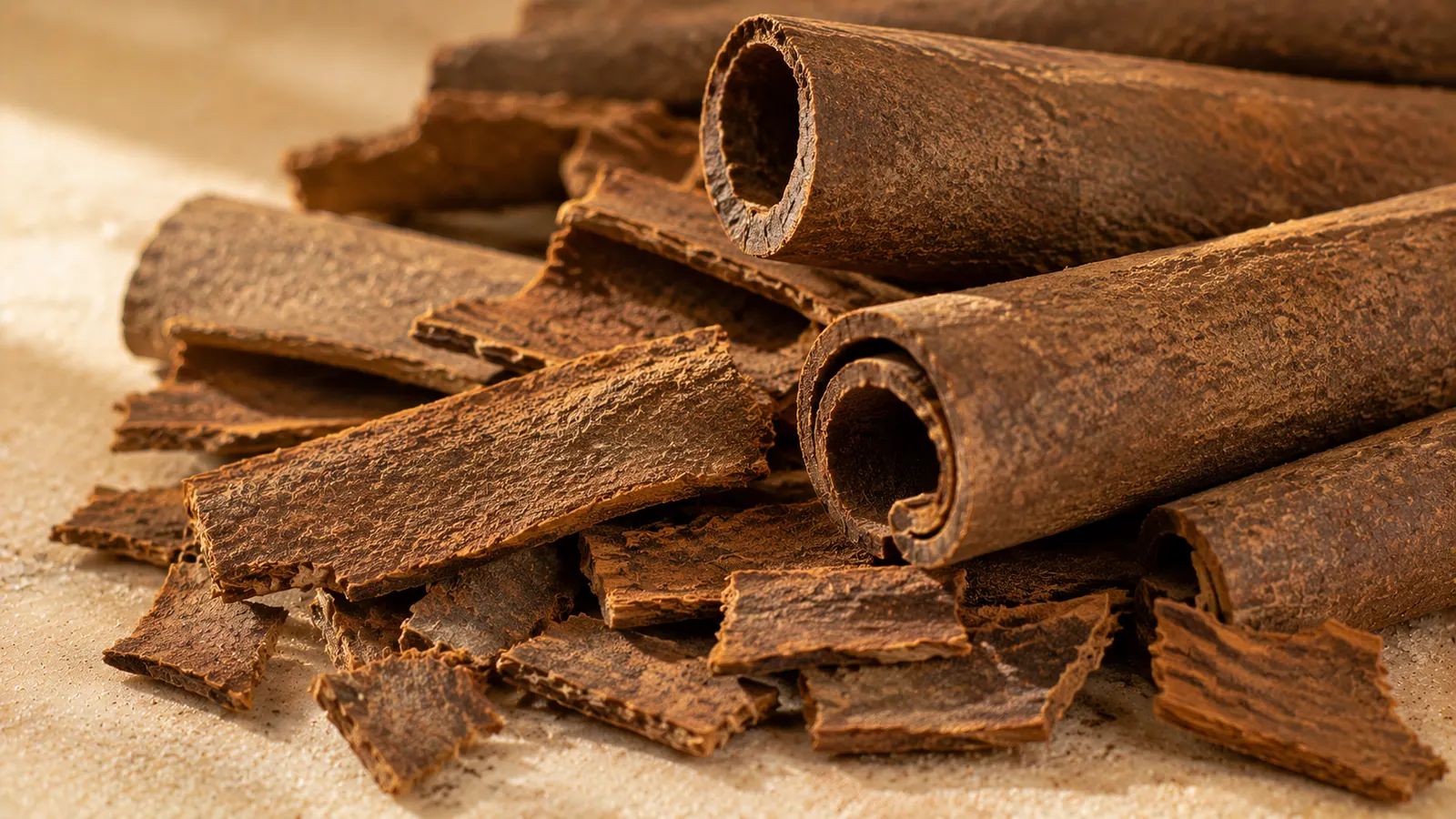
Cassia is the bark of Cinnamomum cassia (and closely related Cinnamomum species), and although the trade routinely sells it as "cinnamon", it is a different spice from true cinnamon in every way that matters to a formulator. Physically it is thick, hard, dark reddish-brown bark that curls into a single tight scroll rather than the thin, papery, multi-layered quill of the Ceylon-type; its aroma is hot, sweet and blunt, driven by a very high cinnamaldehyde content, which is exactly why it dominates the mass-market cinnamon supply where a strong, cheap, punchy note is wanted.
The commercially decisive difference is coumarin. Cassia is naturally high in coumarin, the compound the EU regulates in cinnamon-containing foods for liver-toxicity concerns at high chronic intake, and this is the reason true cinnamon and cassia cannot be treated as interchangeable for a coumarin-sensitive market. Under the EU contaminant framework, coumarin carries defined maximum levels in the relevant food categories, so a manufacturer using cassia has to manage dosage and testing to stay compliant, or switch to true cinnamon (eurlex915).
India schedules cassia separately from cinnamon for this reason, and the label discipline is genuine: selling cassia as "cinnamon" into the EU without regard to the coumarin position is a real compliance and mislabelling exposure, not a pedantic distinction. India is a modest cassia origin against the Southeast-Asian producers, and cassia shares a tariff line with cinnamon, so there is no clean species-level bilateral trade series; buyers should verify species and origin rather than infer them from the common name.
Forms & export grades
Hard single-curl bark scrolls, the traditional savoury-blend cassia; bulky, so they can cube out on freight.
Milled powder, the mass-market "cinnamon" powder of much of the food trade.
Cinnamaldehyde-rich cassia oil for flavour, fragrance and functional use.
Solvent-extracted oleoresin for high-intensity, standardised flavour dosing.
Varieties & types
- Whole cassia bark
- Thick, hard single-curl scrolls of C. cassia, the traditional savoury-blend bark; blunt, hot and cinnamaldehyde-rich.
- Broken bark / chips
- Fragmented bark for grinding and extraction, a lower-cost form than selected whole scrolls.
- Cassia oil / oleoresin
- High-cinnamaldehyde distilled oil and solvent oleoresin for concentrated flavour and fragrance use.
Growing regions
Cassia-type Cinnamomum is handled in the humid south of India and, as tejpat-adjacent Cinnamomum barks, in parts of the northeast and hills, but India is a modest origin against the major Southeast-Asian cassia producers. Much cassia in Indian trade is therefore imported or re-exported, so grown-in-India origin should be verified rather than assumed. Bark is harvested and dried so the scrolls cure hard, and grade turns on bark thickness, colour and cinnamaldehyde strength.
Uses & applications
- Mass-market ground "cinnamon" for bakery, cereal and confectionery manufacturing where a strong, economical note is wanted
- Savoury blend manufacturing: garam masala, biryani and Chinese five-spice, where cassia is the traditional bark
- Beverage and syrup flavouring needing a bold, hot-sweet cinnamon character
- Cassia bark (whole scrolls/broken) for the retail and HORECA spice trade
- Cassia oil (cinnamaldehyde-rich) for flavour, fragrance and functional applications
- Cassia oleoresin for standardised, high-intensity flavour dosing in food manufacturing
- Cinnamaldehyde feedstock for the flavour and specialty-chemical trade
- Nutraceutical and herbal preparations (where the coumarin position is managed for the market)
Sourcing & export considerations
- Available as whole bark scrolls, broken bark/chips, ground powder, and cassia oil and oleoresin through the extraction trade
- The first sourcing decision is species and labelling: cassia (C. cassia) is not true cinnamon (C. zeylanicum), and it must not be sold as "cinnamon" into markets that treat them differently
- For EU-bound cassia products, specify coumarin testing against the applicable food-category limits and keep the certificate of analysis on file, since cassia is naturally high in coumarin (eurlex915)
- Whole scrolls are bulky and can cube out on freight; broken bark and ground forms load denser, so match the form to freight economics
- Cleaning, sorting and any microbial-reduction (steam) treatment are coordinated with vetted third-party facilities, not performed in-house
- MOQ follows trade practice: sample lots around 50-100 kg, private-label from about 100 kg per variant, larger runs by tonnage (cbi)
- Confirm grown-in-India versus imported/re-exported origin, since India is a minor cassia origin and Southeast Asia dominates supply
- Cassia reports under HS 0906 alongside cinnamon, so a clean species-level bilateral volume is not cleanly separable
- For EU and US buyers, specify pesticide-residue and microbial testing in addition to the coumarin and species requirements
ITC-HS classification
- 0906 11 10 — Cinnamon (Cinnamomum zeylanicum), neither crushed nor ground
Compliance that applies
Compare
Frequently asked
Can I sell cassia as "cinnamon"?
The common name is used loosely, but for a coumarin-sensitive market, and on EU-facing labels, cassia and true cinnamon are treated as different spices with different coumarin profiles. Pin the species on the label and manage the coumarin position rather than relying on the generic name.
Why is cassia cheaper and stronger than true cinnamon?
Cassia bark is thick and high in cinnamaldehyde, giving a bold, hot-sweet punch at low cost, whereas true cinnamon is delicate and labour-intensive to roll. That intensity and price is why cassia dominates mass-market ground cinnamon.
How do I keep a cassia product within EU coumarin limits?
Coumarin has defined maximum levels in cinnamon-containing food categories under EU contaminant rules (eurlex915). Manage cassia dosage, test each lot for coumarin, keep the certificate of analysis, or switch the sensitive lines to low-coumarin true cinnamon.
What this page does not tell you
- Volume
- Shares HS 0906 with cinnamon; not cleanly separable.
Related spices
Sources
- Spices Board of India — Export statistics· Tier 1, retrieved 2026-07-16
- Spices Board Act, 1986 — Schedule of spices· Tier 1, retrieved 2026-07-16
- Reg. (EU) 2023/915 — maximum levels for certain contaminants· Tier 1, retrieved 2026-07-16
- CBI — Entering the European market for spices and herbs· Tier 2, retrieved 2026-07-16