Tejpat export from India
Cinnamomum tamala · Lauraceae · Leaf, bark
The true "Indian bay leaf" — a Cinnamomum leaf, botanically distinct from Mediterranean Laurus bay.
Tejpat at a glance
- Botanical name
- Cinnamomum tamala
- Family
- Lauraceae
- Part used
- Leaf, bark
- Also known as
- Indian bay leaf, Malabar leaf
- ITC-HS
- 0910 99 99
- Spices Board schedule
- #26
What is Tejpat and how is it exported from India?
Tejpat is the leaf of Cinnamomum tamala, used as "Indian bay leaf". It is a different species from Laurus nobilis (true bay) and carries a cinnamon-clove aroma. Uttarakhand tejpat is GI-tagged.
Overview
Tejpat is the dried leaf of Cinnamomum tamala, the "Indian bay leaf" of North Indian cooking, and it is botanically a cinnamon relative rather than a true bay. This matters on a label: true bay is Laurus nobilis, a Mediterranean laurel, whereas tejpat is a Lauraceae cinnamon-family leaf carrying a warm, sweet, clove-and-cinnamon aroma quite unlike the resinous, eucalyptus-tinged smell of Laurus bay. The two are routinely conflated in trade, so specifying the botanical name protects a buyer from getting the wrong leaf.
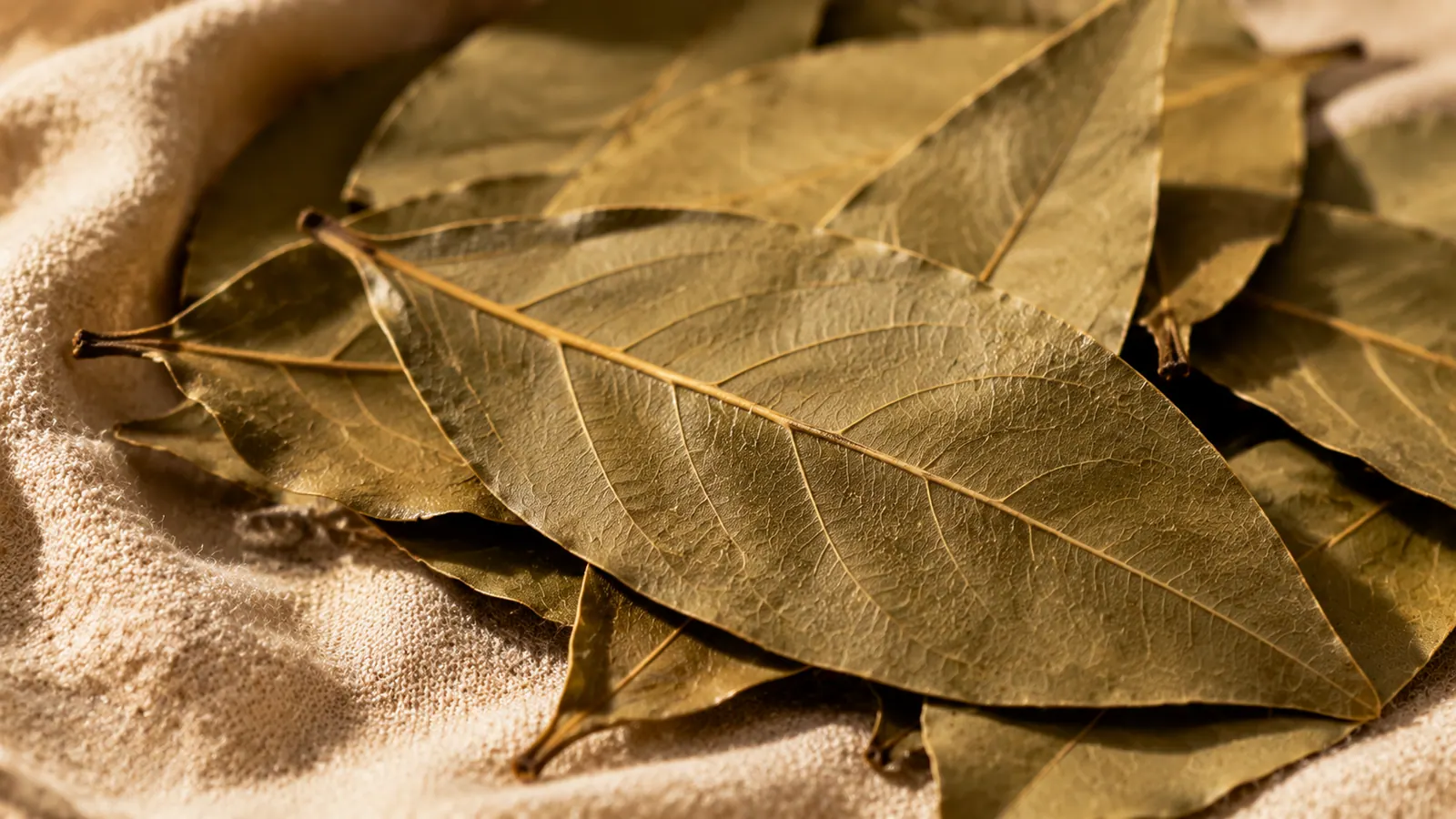
The distinctive tejpat leaf is large, elongated and three-veined (three prominent longitudinal veins run its length), a visual fingerprint that separates it from the single-midrib Laurus bay. Its aroma comes from a cinnamon-clove volatile-oil profile, and quality is judged on leaf size, intact whole leaves, green-to-brown colour, and the strength and cleanliness of the aroma. Uttarakhand tejpat holds a GI registration, and the Himalayan foothill forests are the traditional supply.
In cooking tejpat is used whole, dropped into the oil at the start of a dish or into the pot of a biryani or garam-masala preparation, where it lends background warmth rather than a sharp note. It is a niche export item reporting under the residual HS 0910 99 basket, so it carries no separable bilateral trade data, and the Indian offer rests on genuine C. tamala identity, whole-leaf grade and aroma rather than on scale.
For an export buyer the practical concerns are botanical authenticity (true tejpat versus Laurus bay or other look-alike leaves), whole-leaf percentage and leaf size, aroma strength, and clean drying free of mould and excessive breakage.
Forms & export grades
Whole dried tejpat leaf graded by size and whole-leaf percentage, the principal traded form.
Tejpat leaf oil in niche volumes for the flavour and fragrance trade.
Growing regions
Tejpat is gathered from Cinnamomum tamala trees in the Himalayan foothill forests and plantations, notably in Uttarakhand (whose tejpat is GI-tagged), with supply also from the eastern Himalaya and the Northeast. It is a collected/plantation leaf rather than an annual field crop, harvested and shade- or sun-dried, so quality turns on careful drying and handling to keep leaves whole and aromatic.
Uses & applications
- Whole leaf as "Indian bay leaf" in North Indian curries, biryani, pulao and garam-masala cooking
- Component of whole-spice garam-masala and biryani-masala blends for the food-manufacturing and diaspora trade
- Seasoning of dals, rice dishes and slow-cooked meat preparations in food service
- Aromatic leaf for the traditional-medicine (Ayurvedic) and herbal trade
- Source material for tejpat leaf oil in the flavour and fragrance trade
- Retail-pack whole leaf for the diaspora and gourmet spice markets
- Speciality and single-origin (Uttarakhand GI) ranges for premium buyers
Sourcing & export considerations
- Available as whole dried leaf (graded by leaf size and whole-leaf percentage) and, in niche volumes, as tejpat leaf oil
- Graded on leaf size, proportion of intact whole leaves versus broken/crushed, colour and, above all, aroma strength and cleanliness
- Botanical authenticity is the key flag: specify Cinnamomum tamala to avoid substitution with Laurus bay or other look-alike leaves; the three-veined leaf is a useful visual check
- Uttarakhand tejpat holds a GI registration; specify GI origin where single-origin provenance matters
- Reports under residual HS 0910 99, so it lacks separable bilateral trade data
- Dried leaf is light and bulky and cubes out in a container; packed in lined cartons or multi-wall bags with moisture barriers to protect aroma and prevent mould
- Cleaning, grading and any decontamination are coordinated with vetted third-party processors; pesticide-residue and microbial testing should accompany food-use lots
- Specify botanical (C. tamala), leaf size, whole-leaf percentage, aroma expectation and packaging on the contract
ITC-HS classification
- 0910 99 99 — Spices — other, not elsewhere specified (residual basket line)
Frequently asked
Is tejpat the same as bay leaf?
No. Tejpat is Cinnamomum tamala, a cinnamon relative with a sweet clove-cinnamon aroma and three prominent longitudinal veins. True bay is Laurus nobilis, a Mediterranean laurel with a single midrib and a different, resinous aroma. They are often confused; specify the botanical name.
What makes Uttarakhand tejpat notable?
Uttarakhand tejpat holds a GI registration, tying it to a defined Himalayan-foothill origin. Buyers wanting single-origin provenance can specify GI-tagged Uttarakhand material, though most tejpat trades on leaf grade and aroma rather than on origin alone.
What this page does not tell you
- Volume
- HS 0910 99.
Related spices
Sources
- Spices Board of India — Export statistics· Tier 1, retrieved 2026-07-16
- Spices Board Act, 1986 — Schedule of spices· Tier 1, retrieved 2026-07-16