Cinnamon export from India
Cinnamomum zeylanicum · Lauraceae · Bark
True cinnamon (C. zeylanicum) — the low-coumarin species, distinct from the cassia India also lists separately.
Cinnamon at a glance
- Botanical name
- Cinnamomum zeylanicum
- Family
- Lauraceae
- Part used
- Bark
- Also known as
- Dalchini, Ceylon cinnamon (species)
- Forms exported
- Whole, Ground
- ITC-HS
- 0906 11 10, 0906 20 00
- Spices Board schedule
- #15
What is Cinnamon and how is it exported from India?
Cinnamon is the inner bark of Cinnamomum zeylanicum ("true"/Ceylon-type cinnamon), low in coumarin. India lists it separately from cassia (C. cassia); the two are different species and must not be conflated on a label.
Overview
Cinnamon in the strict sense is the inner bark of Cinnamomum zeylanicum (also written C. verum), the "true" or Ceylon-type species, and its most commercially important feature is what it lacks: it is very low in coumarin, the naturally occurring compound that is regulated in food because of liver-toxicity concerns at high chronic intake. This is the single fact that separates true cinnamon from cassia in a serious sourcing conversation, and under EU contaminant rules coumarin carries defined maximum levels in cinnamon-containing foods, which is why the species on the label is not a cosmetic distinction (eurlex915).
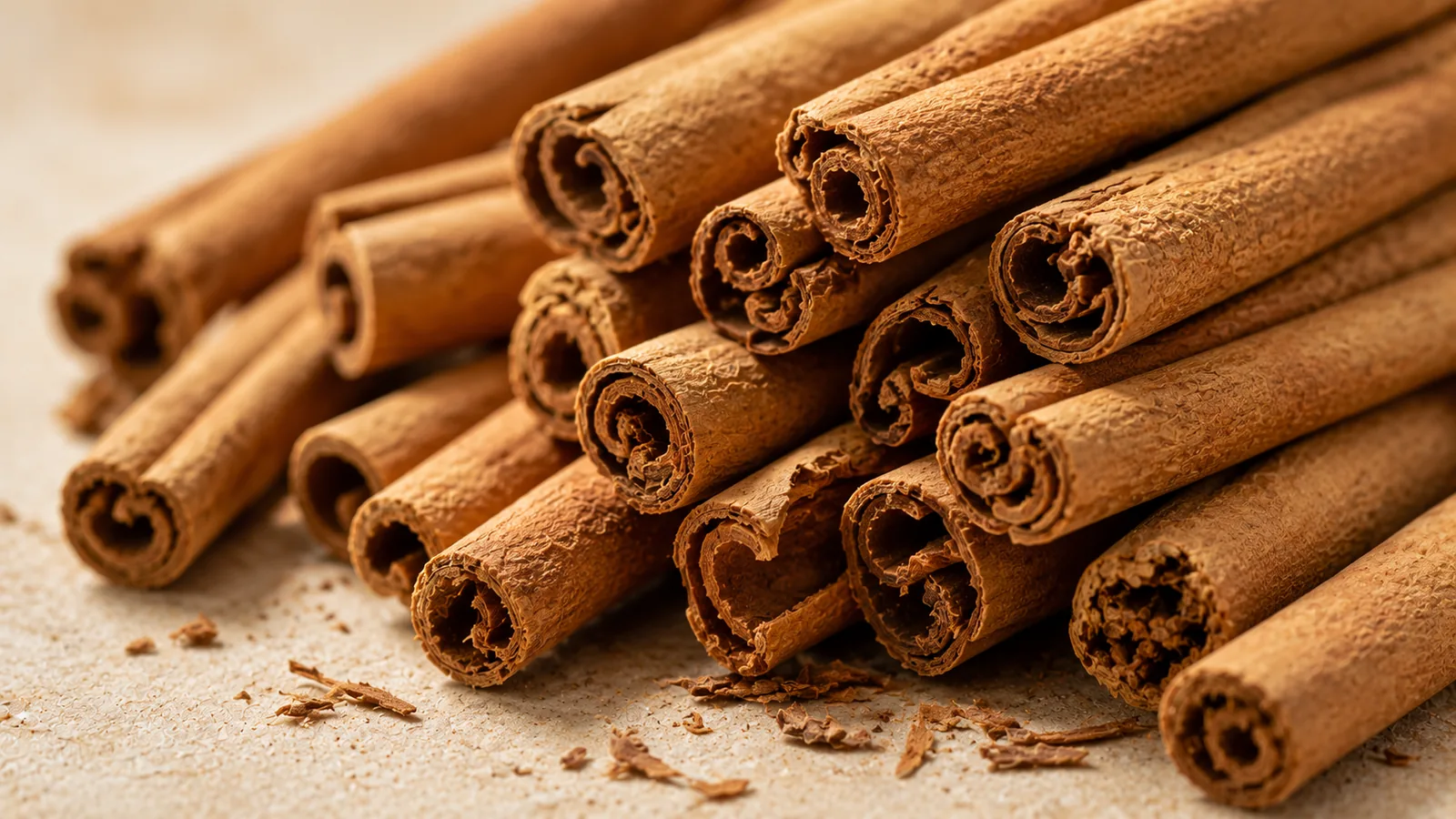
True cinnamon is also physically distinct. The bark is harvested from young shoots and the thin, papery inner bark is rolled by hand into fragile, multi-layered "quills" that are tan-brown, brittle and easily crumbled, quite unlike the thick, hard single-curl bark of cassia. The aroma is delicate, sweet and citrus-floral rather than the hot, blunt punch of cassia, and the quills are graded on the traditional grade ladder of the Ceylon-type trade (the finer, paler, more tightly rolled grades sitting above the coarser ones).
India is a minor cinnamon origin against Sri Lanka, which dominates true-cinnamon supply, and much of the true cinnamon moving through Indian trade is grown in the far south or handled alongside re-exported material, so origin should be verified rather than assumed. India lists cinnamon and cassia as two separate scheduled spices precisely because they are different species with different coumarin profiles, and a buyer specifying "cinnamon" for a coumarin-sensitive market must pin the species, not rely on the common name.
Forms & export grades
Rolled quills/sticks of true cinnamon, the premium presentation; fragile and bulky, so they cube out on freight.
Milled powder from quills or quillings for blends and bakery use.
Distilled cinnamon bark oil (cinnamaldehyde-rich) and leaf oil (eugenol-rich) for flavour and fragrance.
Solvent-extracted oleoresin for standardised flavour dosing in manufacturing.
Varieties & types
- Ceylon-type quills
- Thin, papery, multi-layered rolled bark of C. zeylanicum, graded on the traditional fineness ladder; the classic true-cinnamon presentation.
- Quillings, featherings and chips
- Broken quill fragments and trimmings, a lower-cost true-cinnamon form used mainly for grinding and extraction.
- Cinnamon bark oil / leaf oil
- Distilled oils; bark oil is cinnamaldehyde-rich for flavour, leaf oil is eugenol-rich for fragrance and functional use.
Growing regions
True cinnamon in India is grown mainly in the humid south, in pockets of Kerala and Tamil Nadu, on a much smaller scale than Sri Lanka. Harvest centres on the wet season when the bark peels cleanly from the young shoots, and the quality of the peel and hand-rolling determines the grade. Because Indian true-cinnamon volumes are limited, some material in Indian trade is re-exported, so grown-in-India origin should be confirmed where it matters.
Uses & applications
- Premium bakery, dessert and confectionery flavouring where the delicate sweet-floral note of true cinnamon is wanted
- Coumarin-sensitive food manufacturing that must use true cinnamon to stay within EU coumarin limits
- Beverage and hot-drink flavouring (chai, mulled and spiced drinks, cinnamon syrups)
- Quill/stick retail packs for the premium and gourmet spice trade
- Ground cinnamon for blends, breakfast cereals and dairy products
- Cinnamon bark oil and leaf oil (cinnamaldehyde and eugenol streams) for flavour and fragrance houses
- Cinnamon oleoresin for standardised flavour dosing in food manufacturing
- Nutraceutical and herbal preparations that specify the low-coumarin true species
Sourcing & export considerations
- Available as quills (rolled sticks), quillings/featherings/chips, ground powder, and bark and leaf oil and oleoresin through the extraction trade
- The decisive sourcing decision is species: for a coumarin-sensitive market, contract explicitly for Cinnamomum zeylanicum (true/Ceylon-type) and require it not be substituted with cassia
- For EU-bound cinnamon products, specify coumarin testing against the applicable food-category limits and keep the certificate of analysis on file (eurlex915)
- Quills are fragile and bulky and cube out (fill volume before weight), so packaging and careful loading protect grade and margin; chips and ground forms ship denser
- Cleaning, sorting and any microbial-reduction (steam) treatment are coordinated with vetted third-party facilities, not performed in-house
- MOQ follows trade practice: sample lots around 50-100 kg, private-label from about 100 kg per variant, larger runs by tonnage (cbi)
- Confirm grown-in-India versus re-exported origin on the contract, since India is a minor true-cinnamon origin and Sri Lanka dominates supply
- Cinnamon reports under HS 0906 alongside cassia, so a clean species-level bilateral volume is not consistently separable
- For EU and US buyers, specify pesticide-residue and microbial testing in addition to the coumarin and species requirements
ITC-HS classification
- 0906 11 10 — Cinnamon (Cinnamomum zeylanicum), neither crushed nor ground
- 0906 20 00 — Cinnamon and cinnamon-tree flowers, crushed or ground
Compliance that applies
Compare
Frequently asked
What actually distinguishes true cinnamon from cassia?
True cinnamon (C. zeylanicum) has thin, papery, easily crumbled quills, a delicate sweet-floral aroma, and very low coumarin. Cassia has thick, hard bark, a blunt hot note, and much higher coumarin. The species and coumarin profile are the real difference, not the common name.
Why does coumarin matter for cinnamon buyers?
Coumarin is regulated in food for liver-toxicity concerns at high chronic intake, and the EU sets maximum levels in cinnamon-containing foods (eurlex915). True cinnamon is naturally very low in coumarin, so it clears those limits far more easily than cassia.
Is the cinnamon in Indian trade grown in India?
Often only partly. India is a minor true-cinnamon origin and Sri Lanka dominates supply, so some material handled in Indian trade is re-exported. If grown-in-India origin matters to you, confirm it on the contract.
What this page does not tell you
- Volume
- India is a minor cinnamon exporter; partner splits are thin.
Related spices
Sources
- Spices Board of India — Export statistics· Tier 1, retrieved 2026-07-16
- Spices Board Act, 1986 — Schedule of spices· Tier 1, retrieved 2026-07-16
- Reg. (EU) 2023/915 — maximum levels for certain contaminants· Tier 1, retrieved 2026-07-16
- CBI — Entering the European market for spices and herbs· Tier 2, retrieved 2026-07-16