Greater Galangal export from India
Alpinia galanga · Zingiberaceae · Rhizome
A ginger-family rhizome supplied to Southeast-Asian cuisine and the extract trade.
Greater Galangal at a glance
- Botanical name
- Alpinia galanga
- Family
- Zingiberaceae
- Part used
- Rhizome
- Also known as
- Kulanjan, Thai ginger
- ITC-HS
- 0910 99 99
- Spices Board schedule
- #30
What is Greater Galangal and how is it exported from India?
Greater galangal is the rhizome of Alpinia galanga, related to ginger, used in Southeast-Asian cooking and for its aromatic extract.
Overview
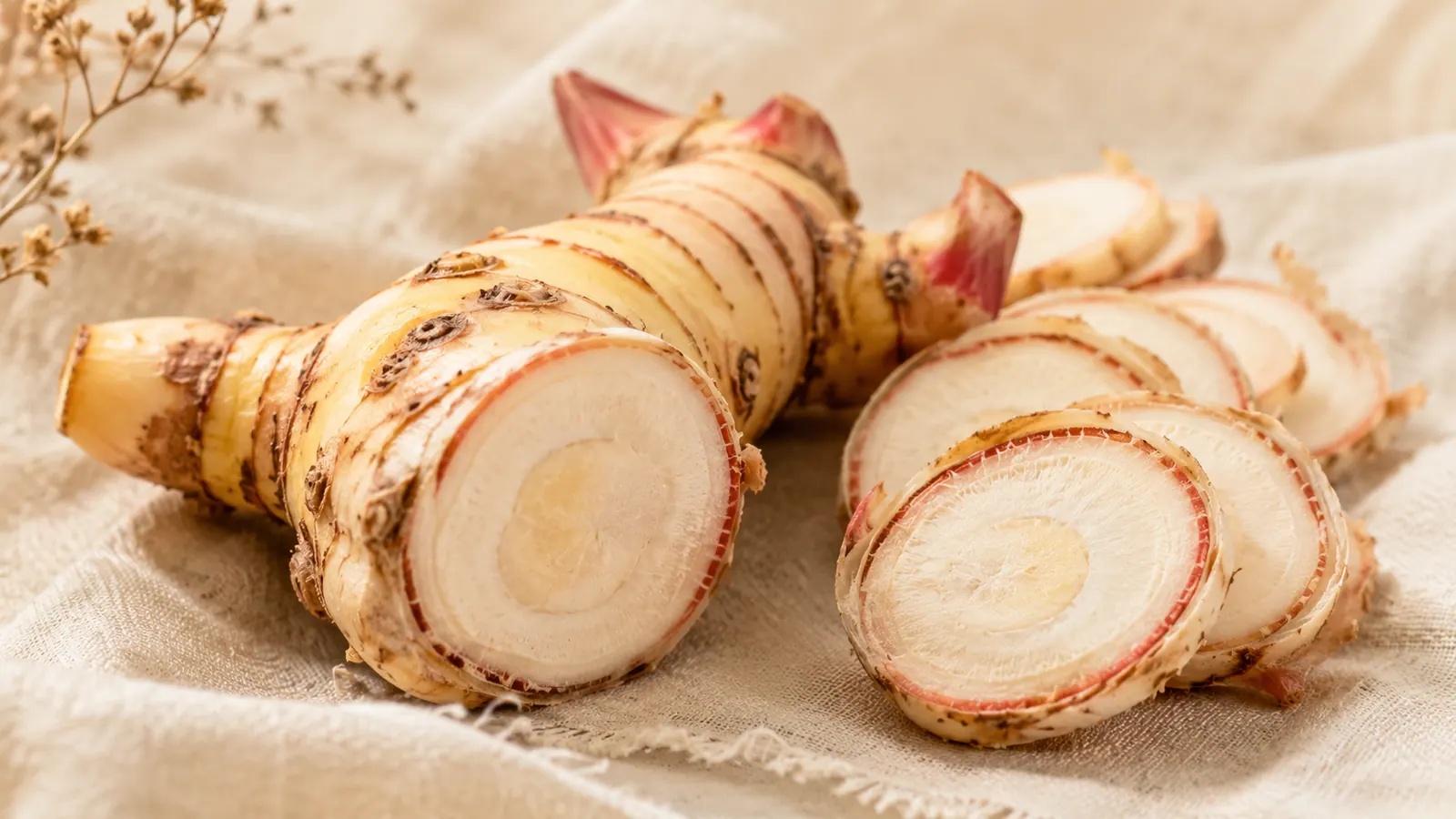
Greater galangal is the rhizome of Alpinia galanga, a member of the ginger family (Zingiberaceae) sometimes called "Thai ginger" or, in India, kulanjan. Though it resembles ginger, it is a distinct spice: the rhizome is firmer, paler and more fibrous, with a sharp, piney, citrus-and-pine aroma and a peppery, faintly medicinal bite quite different from ginger's warmth. It is a defining aromatic of Southeast-Asian cooking, essential to Thai curry pastes, tom yum and tom kha, and is also used in Indian traditional medicine.
The spice is traded fresh, as dried slices, and as powder, with the dried and powdered forms being the practical export items for spice manufacturers and the flavour trade. Its aroma rests on a resinous, cineole-and-terpene-rich volatile oil, so quality turns on aroma strength, and dried galangal is prized when it holds its sharp pine-citrus character rather than fading to a woody blandness. Because the rhizome is hard and fibrous, cutting, drying and milling quality strongly affect the usable grade.
Greater galangal (Alpinia galanga) should be distinguished from lesser galangal (Alpinia officinarum), a smaller, hotter, more pungent rhizome used more in medicine, so botanical identity is worth specifying. Demand is driven both by the growing Southeast-Asian and pan-Asian food trade and by the extract and traditional-medicine markets. It is a niche item reporting under the residual HS 0910 99 basket, with no separable bilateral trade data.
For an export buyer the practical concerns are botanical identity (greater vs lesser galangal), form (dried slice vs powder), aroma strength and dryness, and clean, mould-free material given a rhizome that must be well dried to store.
Forms & export grades
Dried galangal slices graded by dryness and aroma, the principal export form for the spice trade.
Galangal powder for curry-paste, seasoning and blend manufacturing.
Galangal extract and oleoresin for the flavour, fragrance and nutraceutical trade.
Varieties & types
- Greater galangal (Alpinia galanga, kulanjan / Thai ginger)
- The larger, milder, pine-citrus rhizome central to Southeast-Asian cooking, the main culinary galangal.
- Lesser galangal (Alpinia officinarum)
- A smaller, hotter, more pungent rhizome used more in traditional medicine; a different species, so specify which is required.
Growing regions
Alpinia galanga is grown in the humid South and the Northeast, including Kerala and the eastern/northeastern hill regions, in the warm, moist, partly shaded conditions the ginger family favours. The rhizome is lifted after the growing season and either sold fresh or sliced and dried; it is a rhizome crop handled much like ginger, with drying quality decisive for the exported grade.
Uses & applications
- Dried slices and powder for Southeast-Asian cuisine (Thai curry pastes, tom yum, tom kha) in the food-service and manufacturing trade
- Component of Asian curry-paste and marinade manufacturing
- Traditional-medicine (Ayurvedic and allied) use of kulanjan rhizome
- Galangal extract and oleoresin for the flavour and fragrance trade
- Herbal-tea, tonic and nutraceutical preparations
- Seasoning and aromatic blends for the diaspora and speciality retail trade
- Fresh rhizome supply, where logistics allow, to Asian-cuisine buyers
Sourcing & export considerations
- Available fresh, as dried slices (graded by dryness and aroma), and as powder; also as galangal extract/oleoresin
- Graded on aroma strength (sharp pine-citrus character preferred), colour, dryness and freedom from mould, grit and excessive fibre
- Botanical identity is a flag: specify Alpinia galanga (greater galangal) versus the smaller, hotter Alpinia officinarum (lesser galangal)
- The rhizome is hard and fibrous, so slice thickness, drying and milling quality strongly affect usable grade; specify form (fresh/slice/powder) and cut on the contract
- Reports under residual HS 0910 99, so it lacks separable bilateral trade data
- Dried slices and powder packed in lined bags or cartons with moisture barriers; a well-dried rhizome stores adequately, but mould risk rises if drying is incomplete, and powder loses aroma faster than slices
- Cleaning, slicing, drying and any decontamination or milling are coordinated with vetted third-party processors; pesticide-residue and microbial testing should accompany food-use lots
- Specify botanical (A. galanga), form and cut, aroma expectation, moisture ceiling and packaging on the contract
ITC-HS classification
- 0910 99 99 — Spices — other, not elsewhere specified (residual basket line)
Frequently asked
How is galangal different from ginger?
Greater galangal (Alpinia galanga) is a ginger relative but a distinct spice: firmer, paler and more fibrous, with a sharp, piney, citrus aroma and a peppery, faintly medicinal bite rather than ginger's warm sweetness. It is central to Thai and Southeast-Asian cooking.
What is the difference between greater and lesser galangal?
Greater galangal (Alpinia galanga) is the larger, milder, pine-citrus culinary rhizome. Lesser galangal (Alpinia officinarum) is smaller, hotter and more pungent, used more in traditional medicine. They are different species, so specify which is required on the contract.
What this page does not tell you
- Volume
- HS 0910 99; niche.
Related spices
Sources
- Spices Board of India — Export statistics· Tier 1, retrieved 2026-07-16
- Spices Board Act, 1986 — Schedule of spices· Tier 1, retrieved 2026-07-16