Marjoram export from India
Origanum majorana · Lamiaceae · Leaf
Sweet marjoram grown for the dried-herb and essential-oil trade.
Marjoram at a glance
- Botanical name
- Origanum majorana
- Family
- Lamiaceae
- Part used
- Leaf
- ITC-HS
- 1211 90 99
- Spices Board schedule
- #40
What is Marjoram and how is it exported from India?
Marjoram is the herb Origanum majorana, milder and sweeter than oregano, exported dried and as oil for seasoning and flavouring.
Overview
Sweet marjoram is the herb Origanum majorana, a tender perennial of the Lamiaceae closely related to oregano but distinctly milder, sweeter and more floral. Where oregano is pungent and assertive, marjoram is delicate and warm, with a woody-sweet, faintly citrus aroma carried by an essential oil in which terpinen-4-ol and related terpenes feature rather than the sharp carvacrol that dominates oregano. That gentleness makes it a finishing herb that is often added late in cooking, since prolonged heat drives off its softer volatiles.
The trade handles marjoram mostly as a dried leaf and as an essential oil. Dried-leaf quality is judged on bright green colour, aroma retention, a high leaf-to-stem ratio and clean drying, with rubbed (destemmed) leaf commanding a premium over cut-and-sift material that carries more stalk. As an oil crop it is qualified on yield and terpene profile. The recurring pitfall for buyers is species and label discipline, because marjoram and oregano are close cousins that are frequently confused or substituted.
In India marjoram is a herb of the seasoning and essential-oil trade rather than a bulk staple, grown in suitable temperate and hill zones for dried leaf and oil. It reports under herb and plant HS lines rather than the seed-spice chapter, so there is no separable marjoram trade figure. For a sourcing desk the value lies in specifying the true species, the leaf form and the aroma grade rather than accepting a generic "marjoram" line.
Forms & export grades
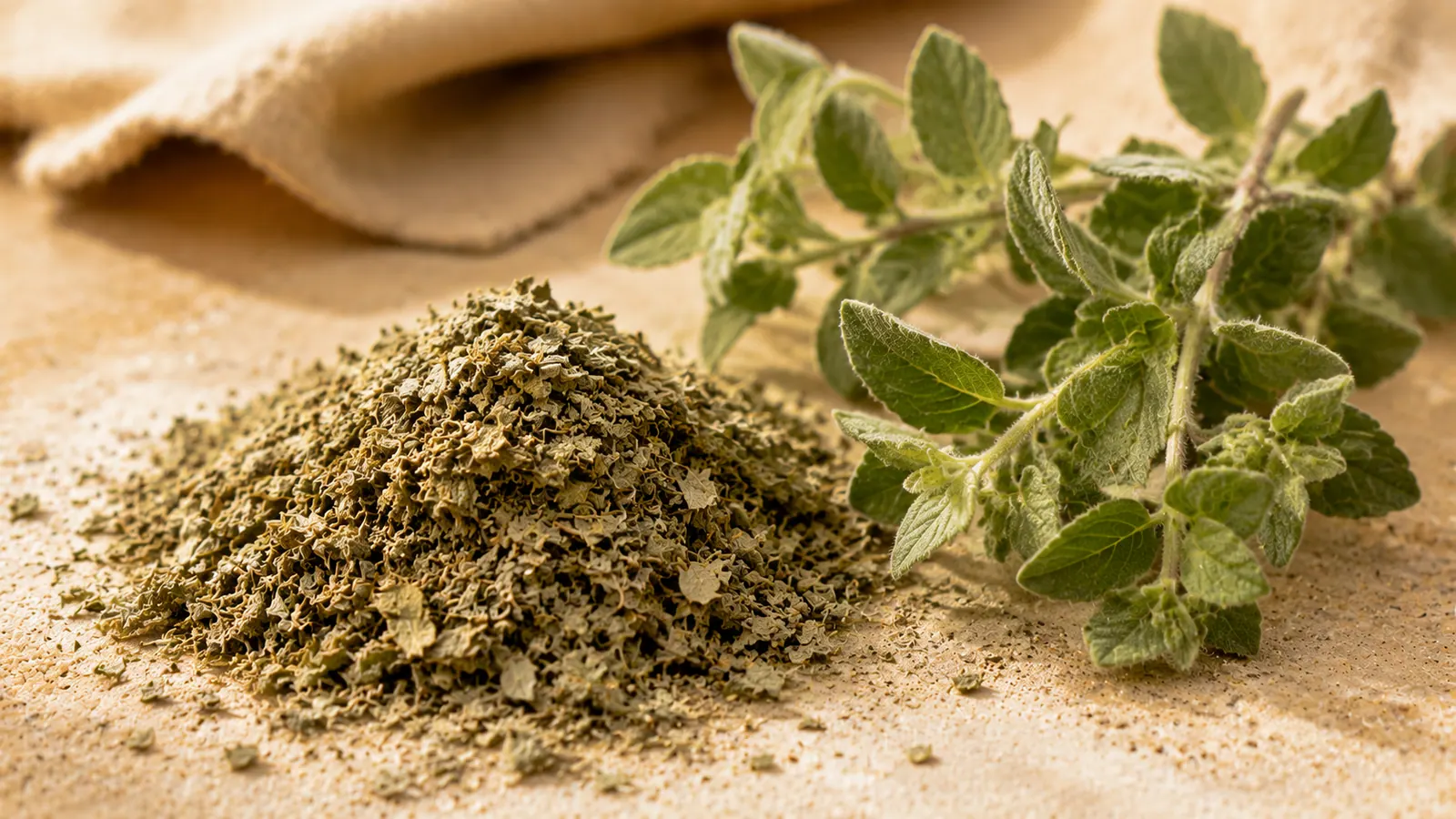
Dried rubbed or cut-and-sift leaf, the main seasoning form.
Steam-distilled marjoram oil for flavour and fragrance.
Varieties & types
- Sweet marjoram (Origanum majorana)
- The true, mild, sweet-floral marjoram, distinct from pungent oregano.
- Rubbed leaf
- Destemmed, fluffy leaf with a high leaf-to-stem ratio; the premium dried presentation.
- Cut-and-sift leaf
- Sized cut leaf carrying more stalk; a lower, more economical grade.
Growing regions
Marjoram is grown in India in suitable temperate and hill-climate pockets for the dried-herb and essential-oil trade rather than as a plains staple. Leafy aromatic herbs are cut around peak vegetative growth, before or at early flowering, when leaf aroma is strongest, and are dried carefully to hold colour and volatile oil. Production is modest and oriented to seasoning and oil buyers rather than commodity volume.
Uses & applications
- A finishing herb for Mediterranean and Continental dishes, added late to preserve its delicate aroma
- Sausage, charcuterie and meat seasoning, where it is a classic component
- A defining herb in blends such as herbes de Provence and poultry and stuffing seasonings
- Dried-herb seasoning for soups, tomato dishes, dressings and marinades
- Marjoram essential oil for flavour and fragrance houses
- Ready-meal, snack and processed-food herb seasoning bases
- Herbal tea and traditional preparations
Sourcing & export considerations
- Available as dried leaf (rubbed or cut-and-sift) and as essential oil; dried leaf is the mainstream contract form
- Grade on green colour, aroma retention, leaf-to-stem ratio and clean, mould-free drying; rubbed leaf outranks cut-and-sift
- Keep species discipline: sweet marjoram (Origanum majorana) is not oregano (Origanum vulgare) and should not be substituted on a marjoram contract
- Cleaning, destemming and sizing are coordinated with vetted third-party herb processors rather than owned lines
- Packaging: light- and moisture-barrier lined cartons or pouches; the delicate oil fades quickly with air, heat and light
- Shelf life is aroma-driven rather than a fixed figure; dried leaf holds best cool, dark and sealed and loses character faster than seed spices
- Reports under herb/plant HS lines (1211 90), not Chapter 9, so there is no separable marjoram trade figure to plan against
- Specify on contract: true species, rubbed vs cut, cut/mesh size, aroma grade and any steam-treatment requirement for the destination
ITC-HS classification
- 1211 90 99 — Plants/parts used in perfumery/pharmacy — other (culinary herbs)
Frequently asked
What is the difference between marjoram and oregano?
They are close cousins with opposite temperaments. Sweet marjoram (Origanum majorana) is mild, sweet and floral and best added late; oregano (Origanum vulgare) is pungent and carvacrol-driven. They are frequently confused, so specify the botanical name on the contract.
What does rubbed marjoram mean versus cut-and-sift?
Rubbed marjoram is destemmed, fluffy leaf with a high leaf-to-stem ratio and a cleaner aroma, so it commands a premium. Cut-and-sift is sized cut leaf carrying more stalk, cheaper but weaker per gram. State which grade you need.
What this page does not tell you
- Volume
- Reports under herb/plant lines; not separable.
Related spices
Sources
- Spices Board of India — Export statistics· Tier 1, retrieved 2026-07-16
- Spices Board Act, 1986 — Schedule of spices· Tier 1, retrieved 2026-07-16