Nutmeg export from India
Myristica fragrans · Myristicaceae · Seed
The Kerala-grown seed half of the nutmeg-and-mace pair, sold shelled/unshelled and by count per pound.
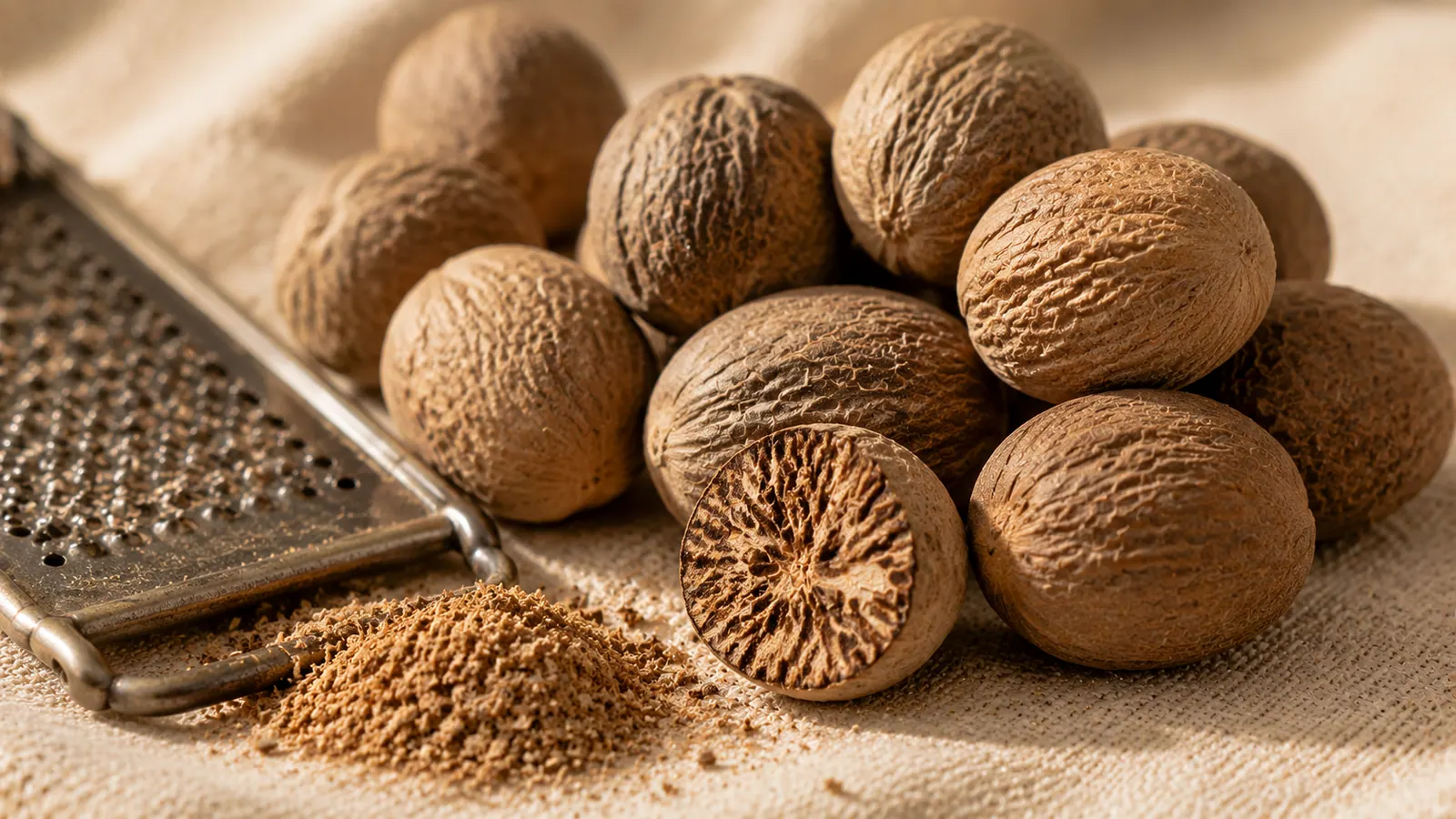
Nutmeg at a glance
- Botanical name
- Myristica fragrans
- Family
- Myristicaceae
- Part used
- Seed
- Also known as
- Jaiphal
- Forms exported
- Whole, Ground, Oleoresin
- ITC-HS
- 0908 11 00, 0908 12 00
- Spices Board schedule
- #41
What is Nutmeg and how is it exported from India?
Nutmeg is the seed kernel of Myristica fragrans, grown in Kerala. It is graded shelled/unshelled and by count; the same fruit yields mace (the aril). Aflatoxin control applies.
Overview
Nutmeg is the hard, oval seed kernel of Myristica fragrans, an evergreen tree of the Myristicaceae, and one half of the only spice pairing where two distinct commercial products come from a single fruit: the seed is nutmeg, and the lacy crimson aril wrapping it is mace. The kernel carries a warm, sweet, woody-aromatic profile from a fixed and volatile oil rich in myristicin and sabinene. A good nutmeg is dense, oily and sound; it is graded on size (count of nuts per pound, so a lower count means bigger nuts), on shelled versus unshelled presentation, and on the split between sound whole nuts and defective grades.
The classic grading language separates sound nuts from BWP (broken, wormy, punky) nuts, the defective fraction that is discounted and often steered to grinding or oleoresin rather than whole-nut sale. Because the kernel is fatty and slow-drying inside its shell, moisture and cure are decisive quality factors, and they connect directly to the spice’s single biggest compliance exposure.
That exposure is aflatoxin. Nutmeg is a warm, humid-climate crop whose slow-drying, oily kernel is prone to Aspergillus mould and aflatoxin formation if harvesting, drying and storage are not tightly controlled, and it is one of the spices named in the EU contaminant regime. Buyers into the EU work to aflatoxin B1 of 5 micrograms per kilogram and total aflatoxins of 10 micrograms per kilogram, and treat accredited testing as standard. India grows nutmeg in Kerala and also re-exports it against a world market led by Indonesia and Grenada, so origin status and aflatoxin control are the two things a sourcing desk pins down first.
Forms & export grades
Sound whole nuts, shelled or in-shell, sorted by count per pound.
Milled nutmeg for bakery and blends; often uses the defective/BWP fraction and fades faster than whole.
Steam-distilled nutmeg oil for flavour, fragrance and personal care.
Solvent-extracted nutmeg oleoresin for standardised flavour dosing.
Varieties & types
- Sound whole nuts (by count)
- Premium grade sorted by nuts per pound; a lower count means larger, higher-value nuts.
- Shelled vs unshelled (in-shell)
- Sold with the hard shell removed or intact; in-shell protects the kernel but adds weight.
- BWP (broken, wormy, punky)
- The defective fraction, discounted and typically directed to grinding, oil or oleoresin.
- Ground / oil / oleoresin grades
- Processed forms for manufacturers wanting dosable, standardised nutmeg flavour.
Growing regions
Indian nutmeg is a crop of humid Kerala (with adjacent Tamil Nadu pockets), typically grown in mixed spice and plantation gardens where the fruit is harvested as it splits open to reveal the mace-wrapped seed. The warm, wet growing and drying environment makes careful, prompt drying essential to limit mould and aflatoxin risk. India-grown volume is modest against the Indonesian and Grenadian majors, so a share of nutmeg in Indian trade is re-exported.
Uses & applications
- Ground nutmeg for bakery, confectionery, custards, sauces (bechamel) and spice blends
- Beverage flavouring for eggnog, chai, mulled drinks and coffee toppings
- Whole nutmeg for retail grating and food-service use
- Nutmeg essential oil for flavour, fragrance and personal-care applications
- Nutmeg oleoresin for standardised flavour dosing in food manufacturing
- Processed-meat, sausage and ready-meal seasoning where warm sweet-spice depth is wanted
- Garam-masala and sweet-spice blend manufacturing alongside its own mace
- Traditional and Ayurvedic preparations
Sourcing & export considerations
- Available whole (shelled or in-shell, sorted by count), ground, as essential oil and as oleoresin; sound whole nuts are the premium format
- Aflatoxin is the defining compliance flag: EU limits are aflatoxin B1 5 micrograms per kilogram and total aflatoxins 10 micrograms per kilogram, and accredited testing is standard for EU-bound lots
- Prompt, thorough drying and dry storage are the frontline defence against Aspergillus mould and aflatoxin formation in the oily kernel
- Grading separates sound nuts (by count/size) from BWP (broken, wormy, punky) defective fractions steered to grinding or extraction
- Cleaning, sorting, any steam sterilisation and testing are coordinated with vetted, accredited third parties rather than owned lines
- Packaging: moisture-barrier lined sacks with humidity control; whole nuts hold aroma far better than pre-ground nutmeg, which oxidises quickly
- Reports under HS 0908 (nutmeg/mace); because India both grows and re-exports, confirm whether a lot is India-origin before certifying origin
- Specify on contract: whole vs ground, count/size grade, shelled/in-shell, aflatoxin ceiling and test dossier, sterilisation requirement and origin status
ITC-HS classification
- 0908 11 00 — Nutmeg, neither crushed nor ground
- 0908 12 00 — Nutmeg, crushed or ground
Compliance that applies
Frequently asked
Why is aflatoxin the key concern with nutmeg?
Nutmeg’s oily kernel dries slowly in a warm, humid climate, which favours Aspergillus mould and aflatoxin formation. The EU caps aflatoxin B1 at 5 micrograms per kilogram and total aflatoxins at 10, so prompt drying, dry storage and accredited testing are essential.
What does the nutmeg "count" grade mean?
Count is the number of nuts per pound: a lower count means larger nuts. Sound whole nuts are graded by count and command a premium, while broken, wormy or punky (BWP) nuts are discounted and usually go to grinding, oil or oleoresin.
Is Indian nutmeg always India-grown?
No. India grows nutmeg in Kerala but also re-exports material against an Indonesia- and Grenada-led world market. India-origin volume is modest, so we confirm and state whether a lot is genuinely India-grown before certifying origin.
Whole or ground nutmeg?
Whole nutmeg holds its warm, sweet aroma far longer and is more verifiable on grade; ground nutmeg is convenient but oxidises quickly and often uses the defective fraction. For flavour retention buy whole; for dosing consistency consider oil or oleoresin.
Related spices
Sources
- Spices Board of India — Export statistics· Tier 1, retrieved 2026-07-16
- Spices Board Act, 1986 — Schedule of spices· Tier 1, retrieved 2026-07-16
- Reg. (EU) 2023/915 — maximum levels for certain contaminants· Tier 1, retrieved 2026-07-16