Kokam export from India
Garcinia indica · Clusiaceae · Rind
A Konkan souring fruit rind — GI-tagged, and the source of edible kokum butter.
Kokam at a glance
- Botanical name
- Garcinia indica
- Family
- Clusiaceae
- Part used
- Rind
- Also known as
- Kokum, Amsul
- ITC-HS
- 0910 99 99
- Spices Board schedule
- #19
What is Kokam and how is it exported from India?
Kokam is the dried rind of Garcinia indica, a Western-Ghats fruit used as a souring agent. It is GI-tagged (Sindhudurg & Ratnagiri) and yields kokum butter.
Overview
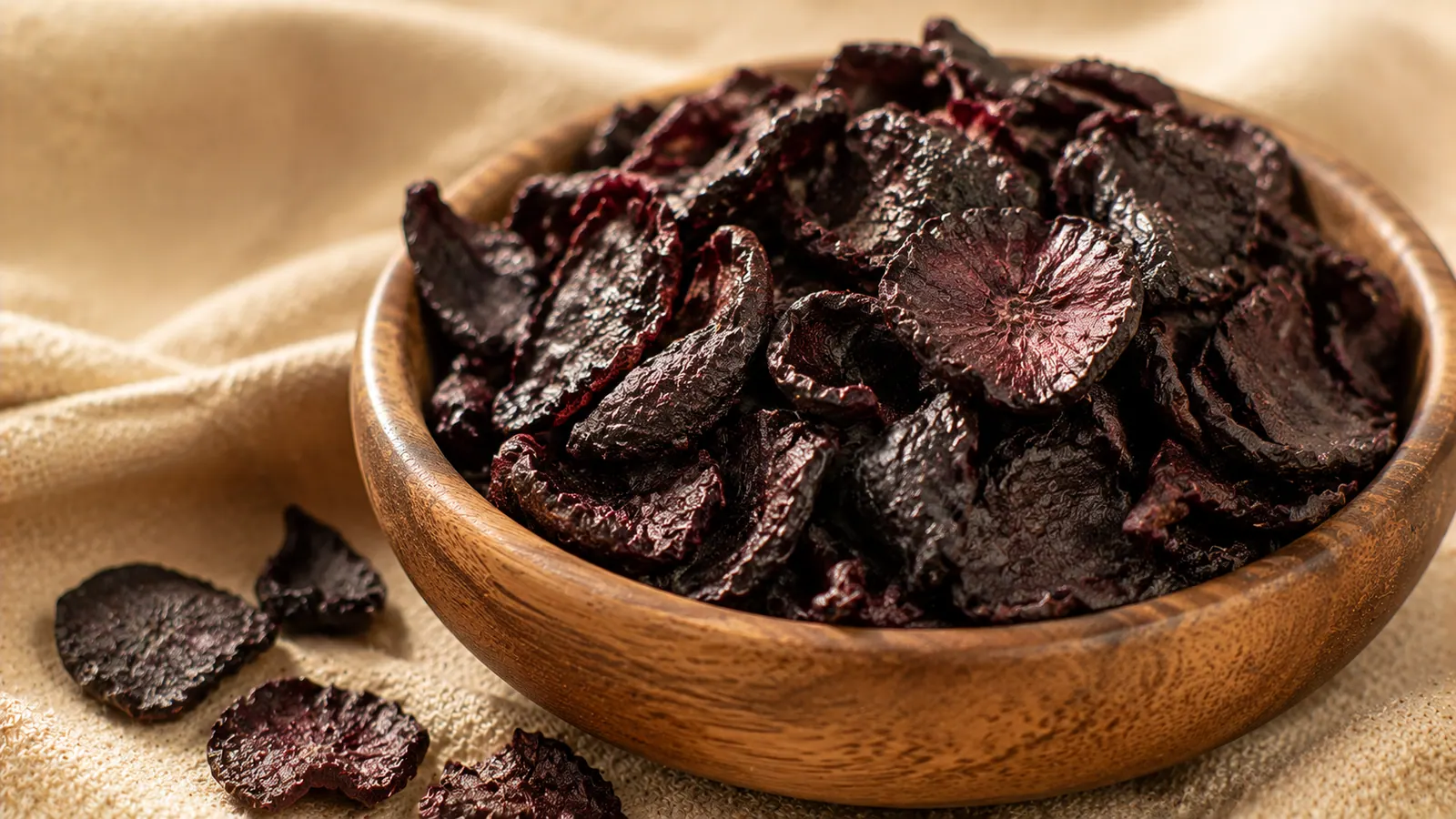
Kokam is the dried rind of Garcinia indica, a slender evergreen tree of the Western Ghats, and it is a souring agent rather than an aromatic spice: the deep purple-black, sticky, leathery rind delivers a clean, fruity-sour tang from hydroxycitric and other fruit acids, without the sharpness of tamarind or the fermented edge of amchur. It is used in Konkan and coastal-Karnataka cooking as the souring and colouring agent of choice, and increasingly beyond it as food formulators discover a natural acidulant with a distinctive berry-like note and a purple pigment.
The rind is graded on colour, moisture and cleanliness. The best kokam is a dark, glossy near-black with good pliability and a strong sour taste, sun-dried and often rubbed with its own juice during drying to deepen colour and preserve it; poorly dried rind goes brittle, pale and mouldy. A salted "wet" kokam and an unsalted form both exist, and buyers should specify which, because salt content matters to downstream formulation.
The fruit is also the source of two valued by-products. Kokum butter, the fat pressed from the seed, is a stable edible and cosmetic fat prized for its emollient properties, and kokum syrup/concentrate (agal) is a ready-to-use souring and beverage base. Kokam from the Sindhudurg and Ratnagiri districts of the Konkan is recognised on the GI register, which supports origin-led positioning (giRegistry). As a niche crop reporting under a residual tariff line, kokam has no separable bilateral trade series.
Forms & export grades
Dark sun-dried rind, salted or unsalted, the mainstream souring-spice form.
Kokum concentrate/syrup (agal) and hydroxycitric-acid-bearing extracts for beverage and nutraceutical use.
Kokum butter, the pressed seed fat, for edible and cosmetic use (a distinct finished product from the rind).
Varieties & types
- Sindhudurg & Ratnagiri kokum (GI)
- Konkan-origin kokam recognised on the GI register, supporting origin-led premium positioning (giRegistry).
- Unsalted dried rind
- Plain sun-dried rind, the mainstream culinary and food-ingredient form; specify moisture and colour.
- Salted / wet kokam
- Rind cured with salt for extra preservation; salt content must be declared for downstream formulation.
- Kokum butter and agal (concentrate)
- The pressed seed fat and the ready-to-use souring syrup, sold as separate finished products.
Growing regions
Kokam is native to and grown along the Western Ghats coastal belt, principally the Konkan of Maharashtra (Sindhudurg, Ratnagiri) and adjoining Goa and coastal Karnataka. The fruit ripens through the pre-monsoon summer, roughly April to June, and the rind is sun-dried in that hot dry window before the rains, so new-crop rind comes forward from early summer. It remains a smallholder and agro-forestry crop rather than a large plantation commodity, which keeps volumes limited and quality variable between lots.
Uses & applications
- A natural souring and colouring agent for Konkan and coastal curries, solkadhi and fish preparations
- Kokum sharbat, coolers and ready-to-drink beverage bases for the drinks trade
- A natural food acidulant and purple-pigment source for the food-manufacturing and clean-label trade
- Kokum butter (seed fat) for confectionery, edible-fat and bakery applications
- Kokum butter for the cosmetic and personal-care trade as an emollient in balms, lotions and soaps
- Kokum syrup/concentrate (agal) as a souring and flavouring base for food service
- Hydroxycitric-acid-bearing extracts for the nutraceutical and weight-management trade
- Ayurvedic and traditional-medicine preparations using the rind and its extracts
Sourcing & export considerations
- Available as dried rind (salted and unsalted), as kokum syrup/concentrate (agal), as kokum butter, and as hydroxycitric-acid-bearing extract
- Grade the rind on colour (a dark, glossy near-black), pliability, moisture and cleanliness; declare salted vs unsalted, since salt content affects formulation
- Good rind is sun-dried in the pre-monsoon window and holds well cool, dry and in barrier packaging; poorly dried rind goes brittle, pale and mould-prone
- Specify whether you want GI Sindhudurg/Ratnagiri origin, and verify the GI status and traceability on the register before making a GI claim (giRegistry)
- Kokum butter buyers should specify a food or cosmetic grade and the relevant fat specifications; extract buyers should specify the HCA assay and test method
- Any cleaning or microbial-reduction step is coordinated with vetted third-party facilities, not performed in-house
- MOQ follows trade practice: sample lots around 50-100 kg of rind, private-label from about 100 kg, larger runs by tonnage; butter and concentrate move as separate finished-product lots (cbi)
- As a niche crop reporting under residual HS 0910 99, kokam has no separable bilateral trade series, so buyers should not plan against an invented volume
ITC-HS classification
- 0910 99 99 — Spices — other, not elsewhere specified (residual basket line)
Frequently asked
How is kokam different from tamarind or amchur as a souring agent?
Kokam gives a clean, fruity-berry sourness and a purple colour without tamarind sharpness or amchur fermented tang. It also brings a natural pigment, so formulators use it where both mild acidity and colour are wanted.
What is kokum butter and is it part of the spice trade?
Kokum butter is the stable fat pressed from the kokam seed, used as an edible fat and as a cosmetic emollient. It is a distinct finished product from the dried souring rind, sold and specified separately by food or cosmetic grade.
Does kokam have GI protection?
Kokam from the Sindhudurg and Ratnagiri districts of the Konkan is recognised on the GI register, which supports origin-led positioning (giRegistry). Verify current GI status and traceability before making a GI claim on a contract or label.
What this page does not tell you
- Volume
- Niche; reports under HS 0910 99.
Related spices
Sources
- Spices Board of India — Export statistics· Tier 1, retrieved 2026-07-16
- Spices Board Act, 1986 — Schedule of spices· Tier 1, retrieved 2026-07-16
- Geographical Indications Registry, India — Registered GIs· Tier 1, retrieved 2026-07-16
- CBI — Entering the European market for spices and herbs· Tier 2, retrieved 2026-07-16
- UN Comtrade — reporter India, Chapter 09· Tier 1, retrieved 2026-07-16