Vanilla export from India
Vanilla planifolia · Orchidaceae · Pod
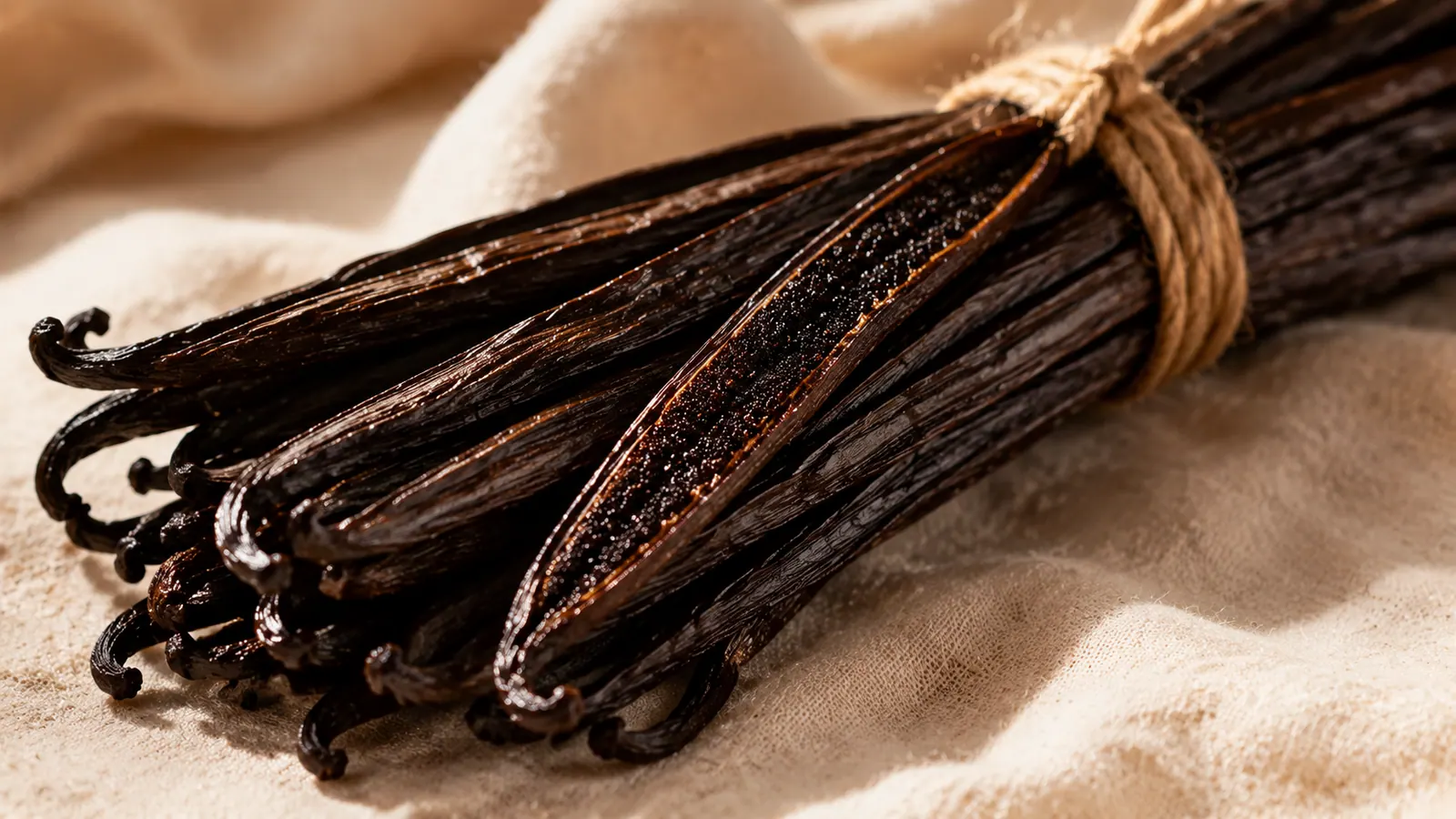
A cured South Indian orchid pod — a small, quality-sensitive origin in a Madagascar-dominated world market.
Vanilla at a glance
- Botanical name
- Vanilla planifolia
- Family
- Orchidaceae
- Part used
- Pod
- ITC-HS
- 0905 10 00, 0905 20 00
- Spices Board schedule
- #25
What is Vanilla and how is it exported from India?
Vanilla is the cured pod of the orchid Vanilla planifolia. India grows and cures vanilla in the south; it is a minor origin globally, sold on vanillin content and pod grade.
Overview
Vanilla is the cured pod (bean) of the climbing orchid Vanilla planifolia, and India is a small, quality-sensitive origin in a world market dominated by Madagascar and the Bourbon-vanilla belt. The plant is hand-pollinated flower by flower, and the green pod carries almost no flavour until it is cured: a months-long cycle of killing, sweating, slow drying and conditioning that develops vanillin and the hundreds of trace aromatics behind vanilla's rounded, sweet, floral character. What a buyer sources is therefore as much a product of curing craft as of cultivation.
Quality is judged on pod length, appearance (dark, supple, oily, flexible beans grade highest), moisture, and vanillin content, together with the absence of mould and splits for gourmet grades. The trade distinguishes premium whole "gourmet" beans, sold on length and appearance for culinary and speciality use, from "extraction" grade beans destined for vanilla extract and flavour manufacturing, where vanillin yield matters more than looks.
India's vanilla is grown and cured mainly in the humid South, and the origin has passed through boom-and-bust price cycles that make consistency and curing quality, rather than volume, its selling point. Because global vanilla prices are volatile and adulteration (synthetic vanillin passed as natural, or under-cured beans) is a known issue, buyers lean on vanillin assay and physical grading.
For an export buyer India is a minor origin whose realistic proposition is small, carefully cured lots on a stated grade and vanillin specification, not large tonnages. Partner-level trade data is thin, so the commercial conversation is grade, moisture, vanillin and curing quality rather than published volumes.
Forms & export grades
Whole cured vanilla beans in gourmet and extraction grades, the principal traded form.
Natural vanilla extract and oleoresin for the flavour, dairy and beverage trade.
Vanilla powder / ground bean for dry bakery mixes and blends.
Varieties & types
- Gourmet / prime beans
- Long, dark, supple whole beans graded on appearance and length for culinary and speciality retail use.
- Extraction-grade beans
- Shorter, split or lower-appearance beans selected for vanillin yield and destined for extract and flavour manufacture.
- Vanilla extract / oleoresin
- Processed derivatives of cured beans for the flavour, dairy and beverage industries.
Growing regions
Vanilla is grown and cured mainly in the humid South, notably Kerala and Karnataka (and parts of Tamil Nadu), under the shade and high humidity the orchid needs. Flowers are hand-pollinated in the flowering season and green pods harvested months later when just mature, after which the long curing cycle begins; new-crop cured beans appear well after harvest because curing itself takes months.
Uses & applications
- Whole gourmet vanilla beans for premium bakery, patisserie, confectionery and dessert use
- Extraction-grade beans for natural vanilla extract, oleoresin and flavour manufacturing
- Dairy and ice-cream flavouring in premium and artisanal ranges
- Beverage flavouring (speciality coffees, teas, syrups and craft drinks)
- Vanilla powder and ground bean for dry-blend and bakery-mix applications
- Cosmetic, fragrance and personal-care use of vanilla and its extracts
- Nutraceutical and premium-gifting speciality packs for the gourmet and diaspora trade
Sourcing & export considerations
- Available as whole cured beans (gourmet and extraction grades), vanilla powder, and extract/oleoresin
- Graded on pod length, appearance (dark, oily, supple beans preferred), moisture, vanillin content and freedom from mould and splits for gourmet grades
- Curing quality is the decisive variable and is coordinated with vetted curers/processors, not run in-house by the desk; specify grade, length band, moisture and vanillin on the contract
- Adulteration flags include synthetic vanillin passed as natural extract and under-cured or moisture-loaded beans; require vanillin assay and, for extract, natural-origin verification
- Packed in vacuum or airtight moisture-controlled packaging (often wrapped and boxed) to hold suppleness and aroma and prevent mould; store cool, not frozen
- India is a minor global origin, so partner-level trade data is thin; treat volumes as small-lot rather than commodity-scale
- Pesticide-residue and, for beans, mould/microbial testing should accompany food-use lots
- Specify grade, bean length, moisture ceiling, vanillin expectation and packaging on the contract
ITC-HS classification
- 0905 10 00 — Vanilla, neither crushed nor ground
- 0905 20 00 — Vanilla, crushed or ground
Frequently asked
What is the difference between gourmet and extraction-grade vanilla?
Gourmet beans are long, dark, supple whole pods graded on appearance for culinary and retail use. Extraction-grade beans are shorter, split or lower in appearance and selected for vanillin yield to make extract and flavourings, where looks matter less than assay.
Is Indian vanilla a large-volume origin?
No. India is a minor global vanilla origin in a Madagascar-dominated market. Its realistic proposition is small, carefully cured lots on a stated grade and vanillin specification rather than commodity-scale tonnage, and partner trade data is thin.
What this page does not tell you
- Volume
- India is a minor vanilla exporter; partner data is thin.
Related spices
Sources
- Spices Board of India — Export statistics· Tier 1, retrieved 2026-07-16
- Spices Board Act, 1986 — Schedule of spices· Tier 1, retrieved 2026-07-16