Tarragon export from India
Artemisia dracunculus · Asteraceae · Leaf
An anise-scented French culinary herb, scheduled in India but barely grown for export.
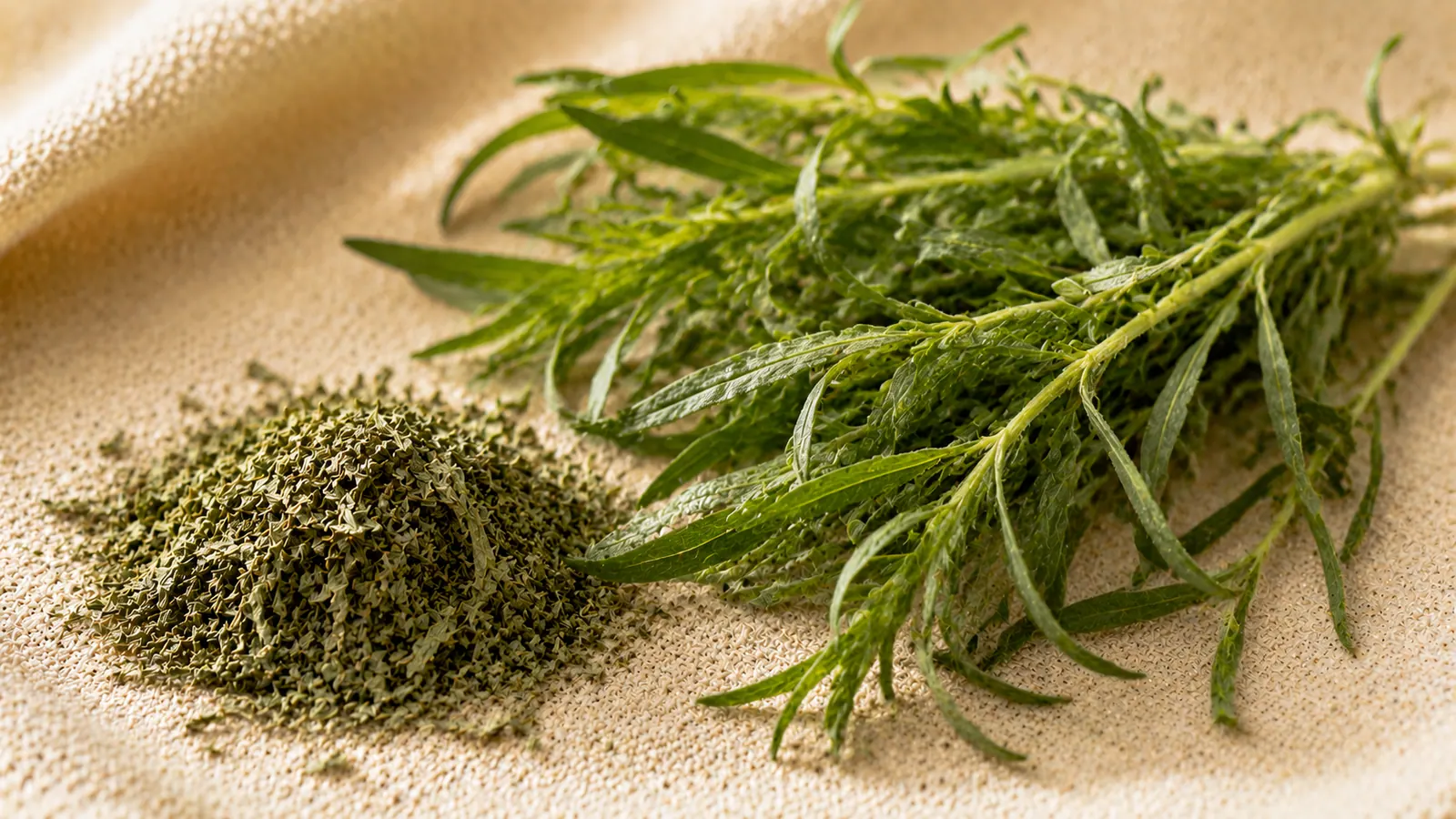
Tarragon at a glance
- Botanical name
- Artemisia dracunculus
- Family
- Asteraceae
- Part used
- Leaf
- ITC-HS
- 1211 90 99
- Spices Board schedule
- #51
What is Tarragon and how is it exported from India?
Tarragon is Artemisia dracunculus, an anise-scented herb of French cuisine. It is scheduled in India with minimal commercial cultivation.
Overview
Tarragon is Artemisia dracunculus, a slender perennial of the daisy family (Asteraceae), which sets it apart botanically from the Lamiaceae herbs (thyme, oregano, sage) it sits beside on the seasoning shelf. It is defined by a distinctive sweet, anise-like aroma driven largely by estragole (methyl chavicol) in its volatile oil. The prized culinary type is French tarragon, a sterile clone propagated vegetatively rather than from seed, as opposed to the coarser, less aromatic Russian tarragon; this propagation quirk is central to why good tarragon is a specialty rather than a bulk crop.
Tarragon is a cornerstone of French cuisine, the defining herb of béarnaise sauce and fines herbes and a classic partner to chicken, egg and fish dishes. In the India trade it is carried on the Spices Board schedule but grown only marginally, so it is best understood as a real but minor-cultivation, specialty line. A buyer sourcing tarragon from India should treat provenance, type (French vs Russian) and continuity of supply as the key questions, since availability is likely to depend on small-scale or contract growing rather than a standing bulk crop.
Because French tarragon is clonally propagated and aroma-sensitive, and because Indian cultivation is thin, there are no verified Indian trade specs to quote; the depth for a buyer is in botany, the French-vs-Russian distinction, character and how the herb is specified. Quality on dried tarragon turns on aroma retention (the estragole note fades readily), green colour and cleanliness, and gentle drying is essential because the delicate leaf browns and loses its anise character quickly.
Forms & export grades
Dried tarragon leaf for the seasoning trade, graded on aroma and colour.
Tarragon essential oil for flavour and fragrance, in small quantity.
Varieties & types
- French tarragon
- The prized aromatic culinary clone, sterile and vegetatively propagated; the type buyers usually mean by "tarragon".
- Russian tarragon
- A coarser, seed-grown, less aromatic type; hardier to grow but a weaker culinary substitute for the French clone.
Growing regions
Tarragon is scheduled in India but scarcely grown commercially, so there is no established Indian growing-region or seasonality story to quote. As a temperate perennial the French clone must be propagated vegetatively rather than from seed, which limits how quickly cultivation can scale, and any Indian supply is more likely to rest on small-scale or contract growing than on a standing bulk crop.
Uses & applications
- Dried leaf as the defining herb of béarnaise and other classic French sauces
- Fines herbes and French-style seasoning blends
- Seasoning for chicken, egg, fish and cream-based dishes in food service and manufacturing
- Herb-vinegar and dressing flavouring (tarragon vinegar)
- Tarragon essential oil for flavour and fragrance
- Specialty and gourmet retail herb packs
Sourcing & export considerations
- Available mainly as dried leaf, with tarragon essential oil in smaller quantity; Indian commercial cultivation is minimal, so continuity is a key question.
- Specify type: French tarragon is the aromatic culinary clone, Russian tarragon is a coarser, weaker substitute; the two are not interchangeable for buyers who want true tarragon character.
- Graded on anise-like aroma retention, green colour and cleanliness; there are no verified Indian trade specs, so grade is described qualitatively.
- Delicate, aroma-sensitive leaf browns and loses its estragole note quickly, so gentle drying and cool, light-protected storage are important and fresh stock is preferable.
- Where microbial reduction is required, steam treatment can be coordinated with vetted third parties to protect the fragile aroma.
- Reports under herb/plant lines, so it lacks separable bilateral spice-trade data; describe supply qualitatively rather than by tonnage.
- Order sizes and any MOQ are trade practice; because cultivation is thin, expect availability to depend on contract growing. On the contract specify type (French/Russian), form, aroma/colour target and provenance.
ITC-HS classification
- 1211 90 99 — Plants/parts used in perfumery/pharmacy — other (culinary herbs)
Frequently asked
What is the difference between French and Russian tarragon?
French tarragon is a sterile clone propagated vegetatively, prized for its sweet anise aroma and the type meant in cooking. Russian tarragon is seed-grown, hardier but coarser and much less aromatic, a weaker substitute. Buyers who want true tarragon character should specify French.
Why is tarragon a specialty rather than a bulk crop in India?
The prized French type is a sterile clone that must be propagated vegetatively, not from seed, which limits scaling, and Indian cultivation is marginal. The delicate aroma also fades readily. Availability is likely to rest on small-scale or contract growing, so confirm provenance and continuity.
What this page does not tell you
- Volume
- Negligible Indian production.
Related spices
Sources
- Spices Board of India — Export statistics· Tier 1, retrieved 2026-07-16
- Spices Board Act, 1986 — Schedule of spices· Tier 1, retrieved 2026-07-16