Sweet Flag export from India
Acorus calamus · Araceae · Rhizome
A scheduled aromatic rhizome used mainly medicinally — with regulated safety limits on β-asarone.
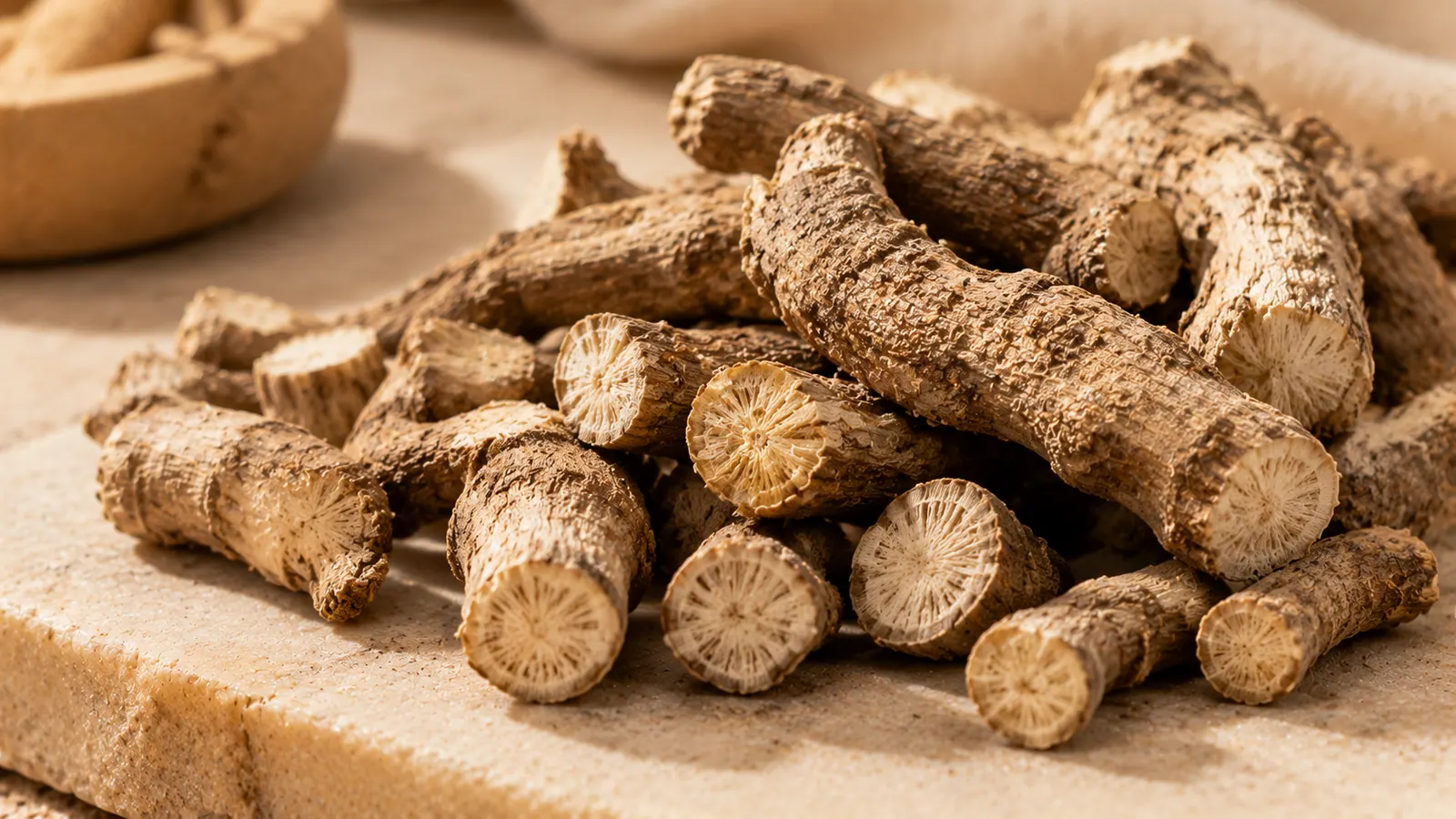
Sweet Flag at a glance
- Botanical name
- Acorus calamus
- Family
- Araceae
- Part used
- Rhizome
- Also known as
- Vach, Calamus
- ITC-HS
- 0910 99 99
- Spices Board schedule
- #29
What is Sweet Flag and how is it exported from India?
Sweet flag is the rhizome of Acorus calamus, an aromatic used in traditional medicine and perfumery. Food use is constrained by β-asarone limits in several markets.
Overview
Sweet flag is the aromatic rhizome of Acorus calamus, a wetland plant known in India as vach, and it is a scheduled spice used far more in traditional medicine and perfumery than as a culinary seasoning. The horizontal underground rhizome is dug, cleaned and dried into pale, jointed pieces carrying a warm, spicy-bitter, slightly camphoraceous aroma. Its character comes from an essential oil in which asarones (including β-asarone) are prominent, and it is that chemistry, not a food-flavour role, that defines both its uses and its regulatory constraints.
The dominant honest fact about sweet flag is that its food use is restricted in many markets because of β-asarone, a compound of toxicological concern; several jurisdictions cap β-asarone in food and beverages or discourage its food use altogether. As a result sweet flag trades predominantly as a medicinal, aromatic and perfumery raw material rather than as a table spice, and a responsible buyer treats destination-market rules on β-asarone as the first question, not an afterthought.
Quality is judged on the rhizome's aroma, colour, dryness, and freedom from mould and adulteration, and, for buyers who need it, on chemotype/asarone profile. Different geographic chemotypes of Acorus vary in β-asarone content, so origin and chemotype can matter for any buyer working within a legal limit. It is a niche item reporting under the residual HS 0910 99 basket, with no separable bilateral trade data.
For an export buyer the practical picture is a predominantly non-food botanical: confirm the destination's β-asarone/food-use rules, specify whether whole rhizome, cut/dried pieces or oil is wanted, and require the appropriate testing and documentation given its regulated status.
Forms & export grades
Whole dried sweet-flag (vach) rhizome for the herbal and traditional-medicine trade.
Cut/sliced dried rhizome pieces for medicinal and aromatic use.
Calamus/sweet-flag essential oil for the fragrance trade, subject to regulatory limits on asarones.
Growing regions
Acorus calamus grows in marshes, pond margins and slow watercourses across wetland and hill regions of India, including the Himalayan foothills and parts of the Northeast, the eastern states and other wetland pockets. Rhizomes are dug from established stands (wild-collected and semi-cultivated) typically after the growing season, then cleaned and dried; it is a gathered wetland crop rather than a field-sown annual.
Uses & applications
- Traditional-medicine (Ayurvedic and allied) formulations that use vach rhizome
- Perfumery and fragrance raw material for calamus aroma
- Calamus/sweet-flag essential oil for the fragrance and aroma trade (subject to regulatory limits on asarones)
- Herbal and ethnobotanical trade in dried whole and cut rhizome
- Insect-repellent and traditional grain-protectant preparations
- Incense and ritual/aromatic applications
- Speciality botanical supply where destination rules permit
Sourcing & export considerations
- Available as whole dried rhizome, cut/sliced dried pieces, powder, and calamus/sweet-flag essential oil
- Graded on aroma, colour, dryness and freedom from mould and adulteration; for regulated buyers, chemotype/β-asarone profile can be specified
- The overriding compliance flag is β-asarone: food use is restricted in many markets, so confirm the destination's food-use rules and limits before contracting for any food-adjacent application
- Predominantly a medicinal, perfumery and aromatic raw material rather than a culinary spice; represent its use accordingly
- Reports under residual HS 0910 99 and is predominantly non-food, so it lacks separable bilateral trade data
- Packed dry in lined bags or cartons with moisture barriers to protect aroma and prevent mould; oil in food/industrial-grade drums as applicable
- Cleaning, cutting, drying and any decontamination or distillation are coordinated with vetted third-party processors; require β-asarone and, where relevant, microbial and heavy-metal testing
- Specify intended use, form, chemotype/asarone requirement, destination regulatory basis and testing on the contract
ITC-HS classification
- 0910 99 99 — Spices — other, not elsewhere specified (residual basket line)
Frequently asked
Can sweet flag be sold as a food spice?
Its food use is restricted in many markets because of β-asarone, a compound of toxicological concern that several jurisdictions cap or discourage in food. Sweet flag trades mainly as a medicinal, aromatic and perfumery raw material; confirm the destination's food-use rules before any food application.
Why does chemotype matter for sweet flag?
Different geographic chemotypes of Acorus calamus vary in β-asarone content. For any buyer working within a legal limit, origin and chemotype affect compliance, so the asarone profile can be specified and tested rather than assumed.
What this page does not tell you
- Volume
- HS 0910 99; predominantly non-food use.
Related spices
Sources
- Spices Board of India — Export statistics· Tier 1, retrieved 2026-07-16
- Spices Board Act, 1986 — Schedule of spices· Tier 1, retrieved 2026-07-16