Poppy Seed export from India
Papaver somniferum · Papaveraceae · Seed
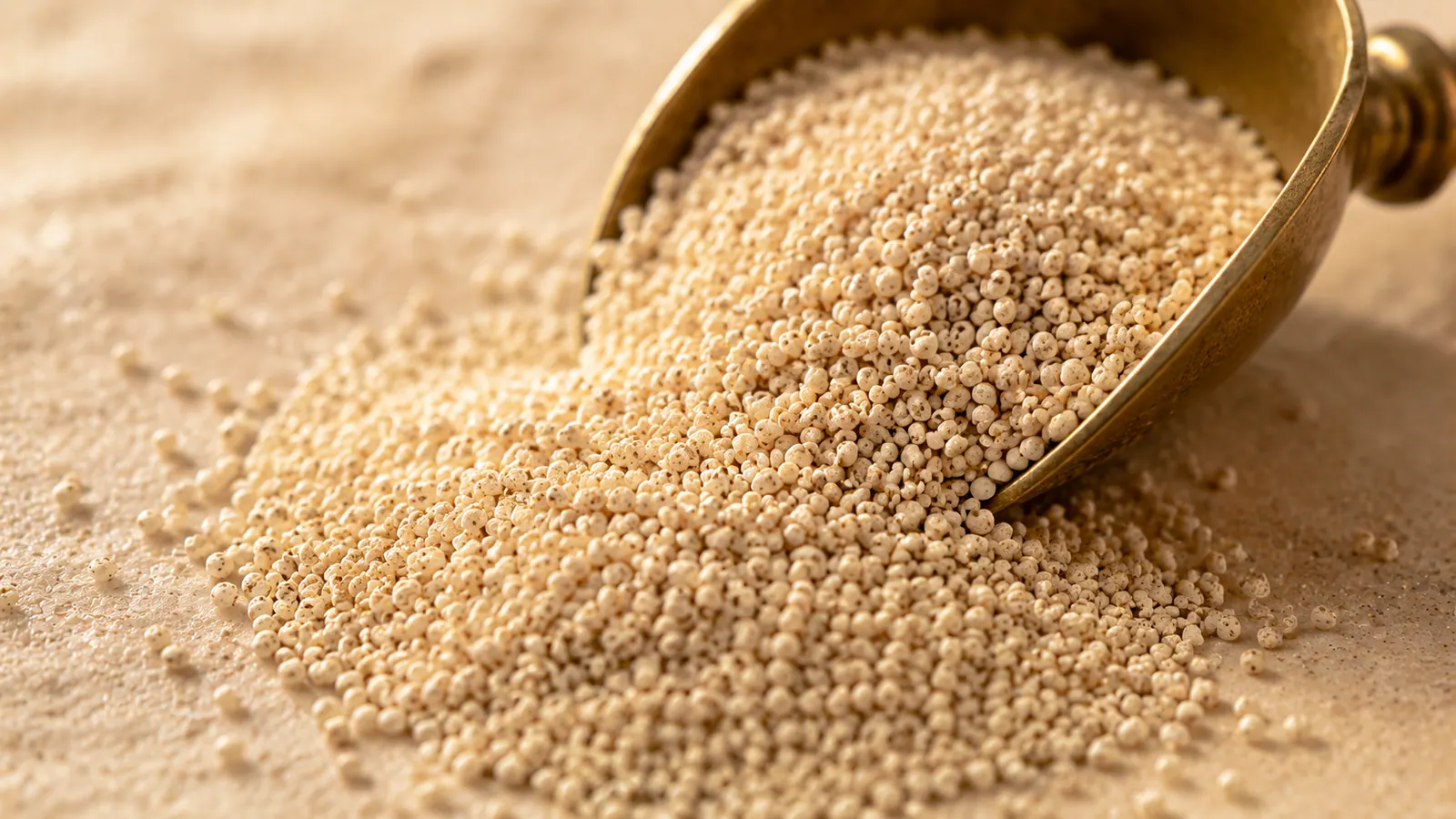
White poppy seed (khus khus) — a thickener and topping, tightly controlled as a licensed crop.
Poppy Seed at a glance
- Botanical name
- Papaver somniferum
- Family
- Papaveraceae
- Part used
- Seed
- Also known as
- Khus khus
- ITC-HS
- 1207 91 00
- Spices Board schedule
- #44
What is Poppy Seed and how is it exported from India?
Poppy seed (khus khus) is the seed of Papaver somniferum, used as a thickener and topping. Indian cultivation is licensed and narcotics-regulated; the seed itself is opiate-free.
Overview
Poppy seed, khus khus, is the tiny ripe seed of Papaver somniferum, the opium poppy, in the family Papaveraceae. The Indian trade seed is the white/cream type rather than the blue-grey European baking poppy, and it is valued as a culinary thickener and a topping. The crucial distinction for buyers is that although the plant is the opium poppy, the mature seed itself is essentially opiate-free: the alkaloids sit in the latex of the unripe pod, not in the ripe seed, so the food seed is a legitimate, widely traded ingredient even though the crop that produces it is tightly controlled.
That control is the defining feature of the trade. Cultivation of Papaver somniferum in India is licensed and administered under narcotics regulation, with poppy grown under permit for the pharmaceutical opium programme and the seed recovered as a by-product of that licensed cultivation. As a result poppy-seed supply is administered rather than free-market, and a large part of India's culinary poppy seed is met by regulated imports. Buyers should understand that quantities, licensing and provenance documentation matter here in a way they do not for an ordinary seed spice.
Sensory and functional character is subtle: white poppy seed has a mild, nutty flavour and, more importantly, a high oil content that lets it grind into a rich paste that thickens and enriches sauces without adding colour. In the India food trade it is prized precisely for this colourless thickening and for its texture as a topping. Quality turns on the seed being clean, uniform, bright cream-white, free of grit and of rancidity, since the oil content that makes it useful also makes it prone to going off if stored warm.
Forms & export grades
Whole cleaned white/cream poppy seed, the culinary standard, sold on colour and cleanliness.
Cold-pressed poppy-seed oil for culinary and specialty use.
Varieties & types
- White / cream poppy seed (khus khus)
- The type dominant in Indian cooking, valued as a colourless thickener; graded on whiteness, cleanliness and freshness.
- Blue / grey poppy seed
- The European baking type used mainly as a topping and filling; distinct in colour and market from the white culinary seed.
Growing regions
Because Papaver somniferum is a licensed narcotic crop, Indian cultivation is confined to permitted districts under the central opium programme rather than grown freely wherever climate allows, and it is a cool-season (rabi) crop harvested in the dry months. Licensed domestic output is limited, so much of the culinary white poppy seed moving through Indian trade is regulated import rather than local harvest. Provenance and licensing documentation, not a growing-region story, are what define availability.
Uses & applications
- Ground into paste as a colourless thickener and enricher for korma, gravies and regional curries
- Topping and inclusion on breads, buns, bakery products and confectionery
- Sweet-making (Indian mithai and fillings) where ground poppy seed adds body and nuttiness
- Seasoning and coating applications in the food-manufacturing and bakery supply chain
- Cold-pressed poppy-seed oil for culinary and specialty use
- Diaspora and retail grocery packs where white khus khus is a staple pantry item
Sourcing & export considerations
- Trade is administered, not free-market: cultivation of the opium poppy is licensed and narcotics-regulated, so provenance, permits and documentation govern availability and quantities.
- The ripe seed itself is opiate-free (alkaloids are in the unripe pod latex), which is why the food seed trades legitimately even though the crop is controlled; buyers should still expect regulatory paperwork.
- Available as whole clean seed and as cold-pressed poppy-seed oil; the white/cream type is the culinary standard for Indian buyers.
- Graded on colour (bright cream-white), uniformity, cleanliness and freedom from grit; sortex/cleaning removes stone, dust and foreign matter.
- High oil content makes the seed prone to rancidity, so cool, dry storage and fresh stock are important; shelf life is shorter than for low-oil seed spices.
- Packaging in food-grade lined bags with moisture protection; the fine seed needs dust-controlled handling.
- Order sizes and any MOQ are trade practice and are shaped by the administered nature of supply rather than by open-market volume.
- On the contract specify seed type (white vs blue), cleanliness/whiteness target, moisture and the regulatory/provenance documentation required at destination.
ITC-HS classification
- 1207 91 00 — Poppy seeds
Frequently asked
Is poppy seed a narcotic or does it contain opiates?
The ripe seed is essentially opiate-free; the opium alkaloids are in the latex of the unripe pod, not the mature seed. The plant is the opium poppy and is narcotics-regulated, but the food seed is a legitimate, widely traded ingredient.
Why is poppy-seed supply described as administered rather than free-market?
Cultivation of Papaver somniferum in India is licensed under the central opium programme, so output is capped and permitted districts are limited. Much culinary white poppy seed is met by regulated import, and provenance documentation governs quantities.
What is the difference between white and blue poppy seed?
White/cream khus khus is the Indian culinary type, prized as a colourless thickening paste. Blue-grey poppy seed is the European baking type used mainly as a topping and filling. They differ in colour, flavour emphasis and market, so specify which is required.
What this page does not tell you
- Trade controls
- Poppy seed trade is subject to narcotics-control licensing; volumes are administered, not free-market.
Related spices
Sources
- Spices Board of India — Export statistics· Tier 1, retrieved 2026-07-16
- Spices Board Act, 1986 — Schedule of spices· Tier 1, retrieved 2026-07-16