Pomegranate Seed export from India
Punica granatum · Punicaceae · Seed
Anardana — dried wild-pomegranate seed used as a tangy souring spice.
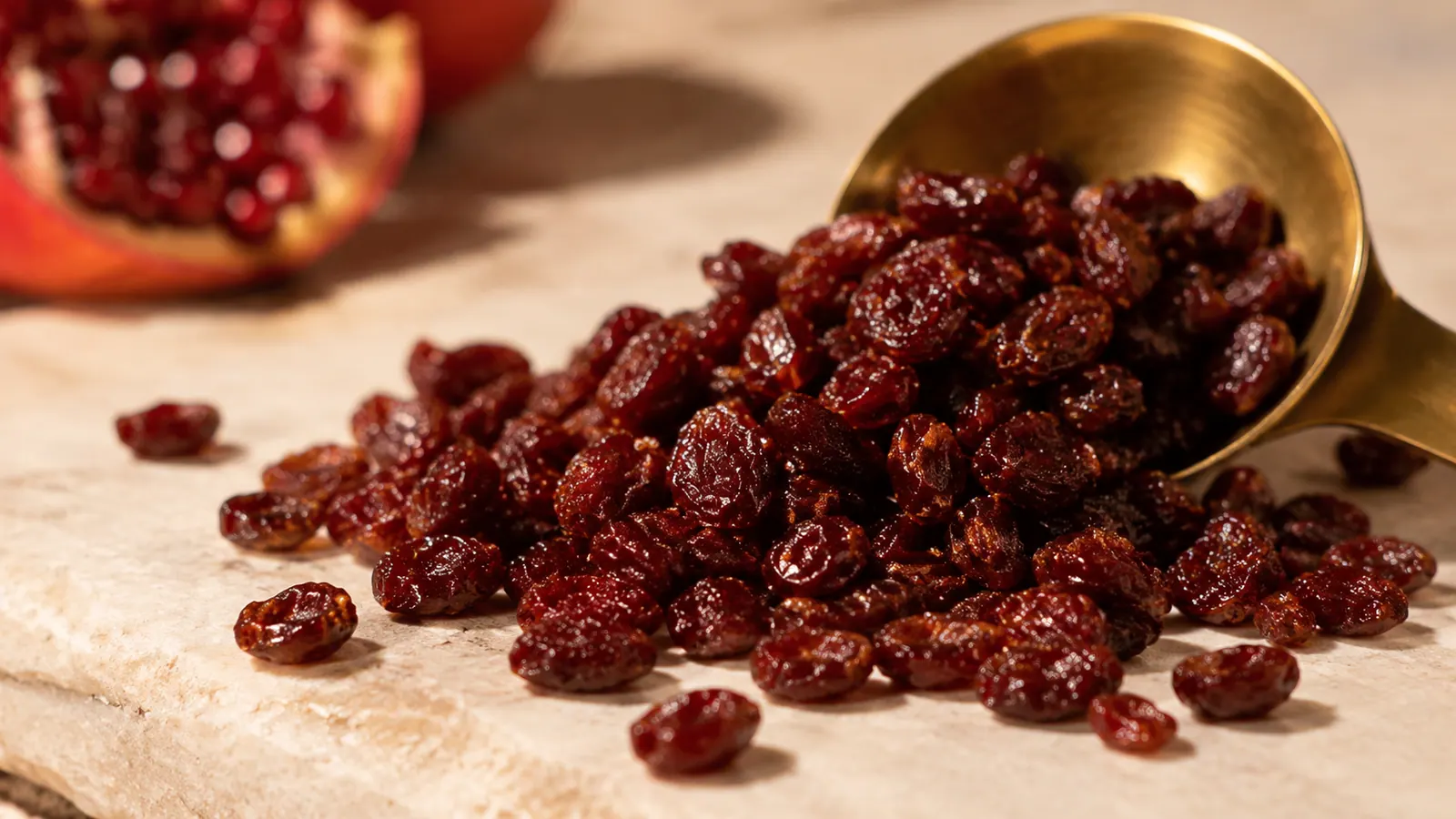
Pomegranate Seed at a glance
- Botanical name
- Punica granatum
- Family
- Punicaceae
- Part used
- Seed
- Also known as
- Anardana
- ITC-HS
- 0910 99 99
- Spices Board schedule
- #23
What is Pomegranate Seed and how is it exported from India?
Pomegranate seed (anardana) is the dried seed/aril of Punica granatum, especially wild Himalayan types, used as a souring spice in North Indian cooking.
Overview
Anardana is the dried seed-and-aril of the pomegranate, Punica granatum, used as a tangy, sour-sweet souring spice in North Indian and Punjabi cooking. The prized material comes from wild or semi-wild Himalayan (daru) pomegranates, whose fruit is too sour to eat fresh but whose seeds, sun-dried, concentrate a sharp, fruity acidity valued in chutneys, curries and dry rubs. What a buyer sources is the dried aril: sticky, dark reddish-brown when good, carrying a distinctive tart-astringent tang.
Quality is judged on colour, stickiness/moisture, seed-to-aril integrity, and the depth of sour-fruity flavour, alongside freedom from added sugar, grit and mould. Because the drying is largely sun-based and small-scale, lot consistency and moisture control are the recurring challenges, and darker, cleaner, aromatic anardana grades above pale, dusty or over-dried material. The best-known origins are the wild-pomegranate belts of the western Himalaya.
Anardana is used both whole and coarsely ground; ground anardana powder is a convenient souring agent for spice-blend and ready-meal manufacturers. Its acidity offers a fruit-based alternative to amchur (dried mango) or tamarind, with a distinct berry note. As a niche spice it reports under the residual HS 0910 99 basket and carries no separable bilateral trade data.
For an export buyer the practical concerns are moisture and mould control on a sticky dried fruit, honest origin (true daru anardana versus cheaper cultivated-pomegranate seed or adulterated material), and whether whole or powdered form is wanted, with powder demanding tighter storage against caking.
Forms & export grades
Whole dried anardana (seed and aril), the traditional traded form, best for shelf life and origin verification.
Anardana powder for chaat-masala, dry-rub and spice-blend manufacturing; needs moisture-barrier packing against caking.
Growing regions
The premium wild-pomegranate (daru) belts lie in the western Himalaya, notably parts of Himachal Pradesh, Jammu and the Uttarakhand hills, where sour hill pomegranates are gathered and sun-dried. Fruit is harvested in the autumn window and dried thereafter, so new-crop anardana appears in the post-monsoon and winter months; cultivated-pomegranate seed from other regions also enters the market at lower grades.
Uses & applications
- Whole dried anardana as a souring agent in North Indian and Punjabi curries, chutneys and chana dishes
- Ground anardana powder for spice-blend, chaat-masala and dry-rub manufacturing
- Souring component in samosa, kachori and stuffed-bread fillings for the food-service and diaspora trade
- Natural fruit-acid seasoning as an alternative to amchur or tamarind in savoury blends
- Ayurvedic and traditional formulations that use dried pomegranate seed
- Retail-pack whole and ground anardana for the diaspora grocery trade
- Speciality and gourmet spice ranges featuring wild Himalayan pomegranate
Sourcing & export considerations
- Available whole (dried seed/aril) and as ground anardana powder
- Graded on colour (darker, redder-brown preferred), stickiness/moisture, aroma and sourness, and freedom from grit, sugar-dusting and mould
- Moisture and mould control are the central quality challenge on a sticky, sun-dried fruit; specify maximum moisture and require it to be free of live infestation and mould
- Honest origin is a key flag: true wild-Himalayan (daru) anardana commands a premium over cultivated-pomegranate seed or adulterated lots, so specify origin if it matters
- Whole material stores better than powder; ground anardana cakes and loses aroma faster, so it needs moisture-barrier packing and shorter shelf-life planning
- Reports under residual HS 0910 99, so it lacks separable bilateral trade data
- Cleaning, sieving and any decontamination are coordinated with vetted third-party processors; pesticide-residue and, for its stickiness, appropriate microbial/mould testing should accompany food-use lots
- Specify form (whole vs powder), origin/grade, moisture ceiling and packaging on the contract
ITC-HS classification
- 0910 99 99 — Spices — other, not elsewhere specified (residual basket line)
Frequently asked
What is anardana and how is it different from pomegranate arils?
Anardana is the dried seed-and-aril of sour (often wild Himalayan) pomegranates, used as a tart souring spice. It is not the sweet fresh arils of table pomegranate; the fruit used is deliberately sour and dried to concentrate its acidity.
How do I ensure genuine wild Himalayan anardana?
Specify daru/wild-Himalayan origin and grade on the contract, since cheaper cultivated-pomegranate seed and adulterated lots exist. Look for dark reddish-brown, aromatic, genuinely sour material with controlled moisture, and require origin documentation where it matters.
What this page does not tell you
- Volume
- Niche; HS 0910 99.
Related spices
Sources
- Spices Board of India — Export statistics· Tier 1, retrieved 2026-07-16
- Spices Board Act, 1986 — Schedule of spices· Tier 1, retrieved 2026-07-16