Juniper Berry export from India
Juniperus communis · Cupressaceae · Berry
A Himalayan-highland berry used for flavouring — a minor scheduled spice.
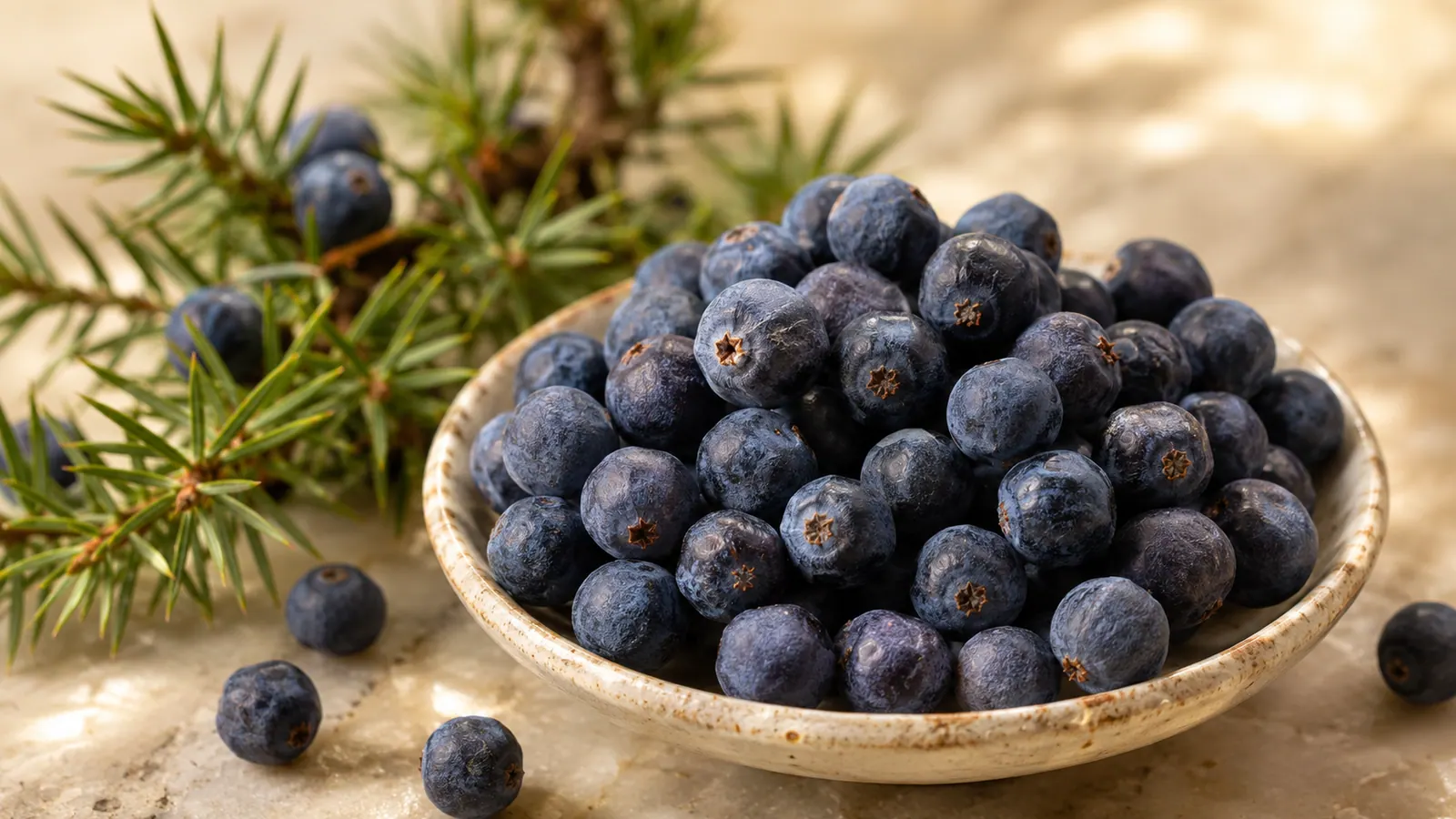
Juniper Berry at a glance
- Botanical name
- Juniperus communis
- Family
- Cupressaceae
- Part used
- Berry
- ITC-HS
- 0910 99 99
- Spices Board schedule
- #37
What is Juniper Berry and how is it exported from India?
Juniper berry is the female cone of Juniperus communis, used to flavour spirits and game. India’s harvest is small and Himalayan.
Overview
The juniper berry is not a true berry but the fleshy female seed cone of Juniperus communis, a hardy conifer of the Cupressaceae. The cones take two to three years to ripen from green to a dusty blue-black, and the harvest picks the ripe dark cones while leaving unripe green ones on the same bush. The aroma is resinous, piney and faintly citrus-sweet, driven by a terpene-rich oil in which alpha-pinene dominates, and it is this profile that makes juniper the defining botanical of gin and a classic partner to game and cabbage.
Quality in the dried berry is judged on ripeness and colour uniformity, plumpness rather than shrivelling, aroma strength, and freedom from stalk, unripe green cones and mould. Because the fruit is soft and resinous, careful drying matters: over-drying strips volatile oil, under-drying invites mould. As a distilling and flavour botanical it is often qualified on essential-oil content.
Indian juniper is a small, highland harvest. Juniperus grows wild in the high Himalaya, and any collection is from wild stands at altitude rather than an organised plantation crop, so volumes are minor and irregular. Much juniper in international flavour and beverage supply comes from European and other temperate sources, so a sourcing desk should be clear about whether a lot is Himalayan wild-collected or re-exported.
Forms & export grades
Dried whole ripe cones (berries) for distilling and culinary use.
Steam-distilled juniper-berry oil for flavour and fragrance.
Growing regions
Juniper in India is a wild-collected highland resource, gathered from natural Juniperus stands in the high Himalayan belt rather than cultivated on farms. Collection follows the multi-year ripening cycle, taking the dark mature cones as they come, which makes supply small and irregular. India is a marginal origin against the temperate-zone sources that supply most of the world beverage and flavour trade.
Uses & applications
- The signature botanical in gin distillation and other juniper-flavoured spirits
- A marinade and seasoning for game, venison, pork and rich meats
- Flavouring for sauerkraut, brines, pickles and cabbage dishes
- Pate, terrine and charcuterie seasoning in the delicatessen trade
- Essential-oil production for flavour, fragrance and beverage use
- Herbal, tea and traditional preparations
- Aromatic component in savoury spice blends for Northern-European cuisine
Sourcing & export considerations
- Available as dried whole berries (cones) and, from oil supply, as essential oil; India is a minor source for either
- Grading turns on ripeness/colour uniformity, plumpness, aroma strength and freedom from stalk, unripe cones and mould
- Careful drying is central; the soft resinous fruit loses oil if over-dried and moulds if under-dried
- Cleaning and sizing are coordinated with vetted third-party processors; sorting removes green cones, stalk and dust
- Packaging: moisture- and aroma-barrier lined sacks or cartons; the terpene oil is volatile and fades with air, heat and light
- Shelf life is aroma- and moisture-driven rather than a fixed figure; whole dried berries kept cool, dry and sealed hold best
- Reports under residual HS 0910 99, so there is no separable bilateral juniper trade figure
- Specify on contract: whole berry vs oil, ripeness/colour expectation, oil-content expectation for distillers, and origin status (Himalayan wild vs re-export)
ITC-HS classification
- 0910 99 99 — Spices — other, not elsewhere specified (residual basket line)
Frequently asked
Are juniper berries actually berries?
No. They are the fleshy female seed cones of a conifer that take two to three years to ripen from green to blue-black. The harvest takes only the ripe dark cones, which is why colour uniformity is a quality signal in a dried lot.
Is Indian juniper a reliable bulk origin?
No. Indian juniper is small, wild-collected from high-Himalayan stands, and irregular in supply. Most juniper in world beverage and flavour trade is temperate-zone grown, so we confirm whether a lot is Himalayan wild-collected or re-exported.
What this page does not tell you
- Volume
- Negligible export.
Related spices
Sources
- Spices Board of India — Export statistics· Tier 1, retrieved 2026-07-16
- Spices Board Act, 1986 — Schedule of spices· Tier 1, retrieved 2026-07-16