Caraway export from India
Carum carvi · Apiaceae · Fruit
A cool-climate Apiaceae seed grown in the Indian hills and Kashmir for the spice and rye-bread trade.
Caraway at a glance
- Botanical name
- Carum carvi
- Family
- Apiaceae
- Part used
- Fruit
- Also known as
- Shahi jeera (black caraway, adjacent)
- ITC-HS
- 0909 61 00
- Spices Board schedule
- #13
What is Caraway and how is it exported from India?
Caraway is the fruit of Carum carvi. India grows it in temperate zones; it is used whole and is sometimes conflated in the market with black caraway (Bunium/Elwendia).
Overview
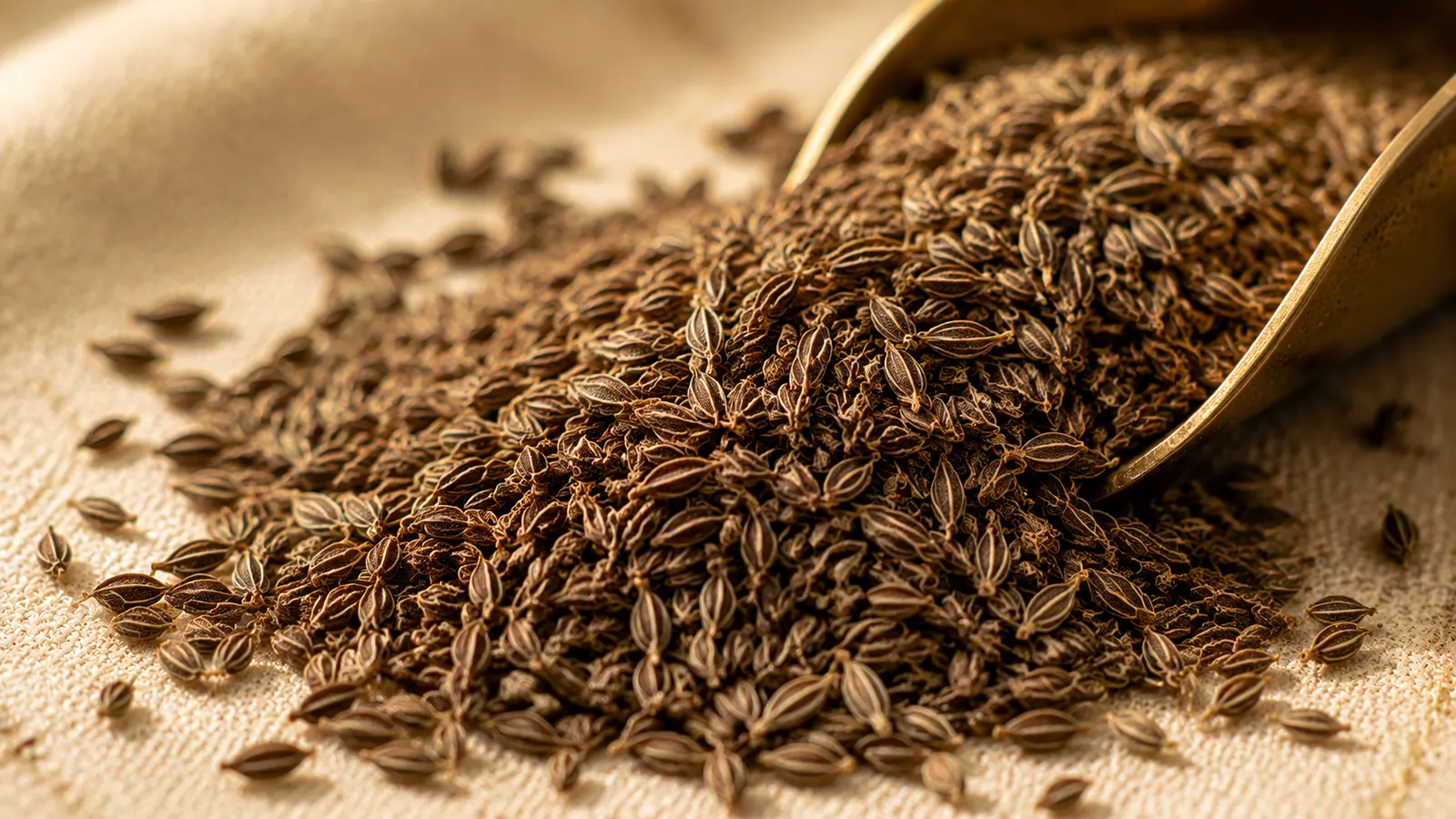
Caraway is the fruit of Carum carvi, an umbellifer, and its character is defined by carvone, which gives the seed its warm, faintly minty, rye-bread aroma quite distinct from the anethole sweetness of fennel or the thymol punch of ajowan. The fruit is small, curved, ridged and dark brown, splitting into two crescents; a good lot is clean, uniform and carries a strong, fresh carvone note. It is a temperate-climate crop, so within India it belongs to the cooler hill and high-plateau zones rather than the plains seed-spice belt.
A recurring point of confusion in this trade is the name. In parts of the Indian market "shahi jeera" or "black caraway" is used for the seed of Bunium/Elwendia (a different genus with a thinner, darker fruit), which is not true caraway, and buyers sometimes conflate the two. For any defined product the contract should name Carum carvi and, if wanted, distinguish it from black caraway, because the aroma, appearance and price differ.
India is a comparatively minor caraway origin against the European producers, and the crop shares a tariff line with fennel, anise and star anise, so it carries no separable bilateral trade series. It moves mainly to the bakery, seasoning and blend trade, with a smaller extraction stream for caraway oil, and it is graded on cleanliness, colour and, for aroma buyers, on carvone and volatile-oil strength.
Forms & export grades
Whole cleaned/sortex caraway fruit, the mainstream bakery and seasoning form.
Milled powder for blends, milled close to use to hold carvone aroma.
Steam-distilled caraway oil, carvone-rich, for the flavour and beverage trade.
Varieties & types
- True caraway (Carum carvi)
- The genuine article: a curved brown carvone-rich fruit, the type meant by "caraway" in the Western bakery and seasoning trade.
- Black caraway / shahi jeera
- A market name used for Bunium/Elwendia seed, thinner and darker; botanically not Carum carvi and traded separately, so specify which you want.
- Extraction grade
- High-oil fruit bought by distillers and flavour houses on carvone and volatile-oil content.
Growing regions
True caraway is a temperate crop, so within India it is grown in cooler hill and high-elevation zones, including Kashmir and Himalayan pockets, rather than in the hot plains seed-spice belt. Volumes are modest and variable, and much caraway in Indian trade is supplemented by imports, so origin should be verified rather than assumed. Growing altitude, season and drying influence the carvone strength that aroma buyers value.
Uses & applications
- Rye-bread, sourdough and continental-bakery seed, its best-known Western use
- Sauerkraut, cabbage, sausage and charcuterie seasoning in central and northern European cuisine
- Cheese flavouring (for example Havarti and some Dutch styles) and savoury-cracker blends
- Pickling and brining spice for the vegetable-processing trade
- Whole seed for South Asian blends and for the diaspora spice trade
- Liqueur and spirit flavouring (for example kummel and akvavit styles)
- Digestive and carminative preparations in the herbal and nutraceutical trade
- Caraway oil and oleoresin for flavour houses as a concentrated carvone note
Sourcing & export considerations
- Available as whole cleaned/sortex seed, as ground powder, and as caraway oil and oleoresin through the extraction trade
- Cleaning by air-screen, gravity and colour sorting to remove stalk, chaff and weed seed; specify cleaned vs sortex grade
- Confirm the species is Carum carvi and, where it matters, that it is not black caraway (Bunium/Elwendia) sold under the "shahi jeera" name
- Aroma buyers should specify a carvone or volatile-oil floor and a fresh crop, since the rye-bread note fades with age
- Whole seed stores well in cool, dry, barrier packaging; ground caraway loses aroma quickly and is best milled close to use
- Packed in food-grade lined bags, palletised for sea freight; MOQ by trade practice, sample lots around 50-100 kg, private-label from about 100 kg (cbi)
- For EU and US buyers, specify pesticide-residue and microbial testing; steam-based microbial reduction is coordinated with vetted third-party facilities
- Caraway shares HS 0909 61 with fennel, anise and star anise, so a stand-alone bilateral caraway volume is not separately published
- Because Indian supply is thin, clarify grown-in-India versus re-exported/imported origin on the contract if origin is material
ITC-HS classification
- 0909 61 00 — Seeds of anise, badian, caraway or fennel — neither crushed nor ground
Frequently asked
Is caraway the same as cumin?
No. They look broadly similar as curved brown umbellifer seeds and the names are confused in some languages, but cumin (Cuminum cyminum) is warm and earthy while caraway (Carum carvi) is carvone-forward and rye-bread-like. They are different species and not interchangeable.
What is "black caraway" or shahi jeera, and is it real caraway?
Black caraway or shahi jeera usually refers to Bunium or Elwendia seed, a thinner, darker fruit that is botanically not Carum carvi. It is a distinct spice traded under its own name, so specify which you actually want.
Does India grow enough caraway to supply true Carum carvi?
Indian caraway is a modest temperate hill crop and supply is thin and variable, often supplemented by imports. If grown-in-India origin matters to you, confirm it on the contract rather than assuming it.
What this page does not tell you
- Volume
- Shares HS 0909 61; not separable.
Related spices
Sources
- Spices Board of India — Export statistics· Tier 1, retrieved 2026-07-16
- Spices Board Act, 1986 — Schedule of spices· Tier 1, retrieved 2026-07-16
- CBI — Entering the European market for spices and herbs· Tier 2, retrieved 2026-07-16
- UN Comtrade — reporter India, Chapter 09· Tier 1, retrieved 2026-07-16