Asafoetida export from India
Ferula assa-foetida · Apiaceae · Oleo-gum-resin
India consumes most of the world’s hing but grows almost none of the raw resin — it compounds and re-exports it.
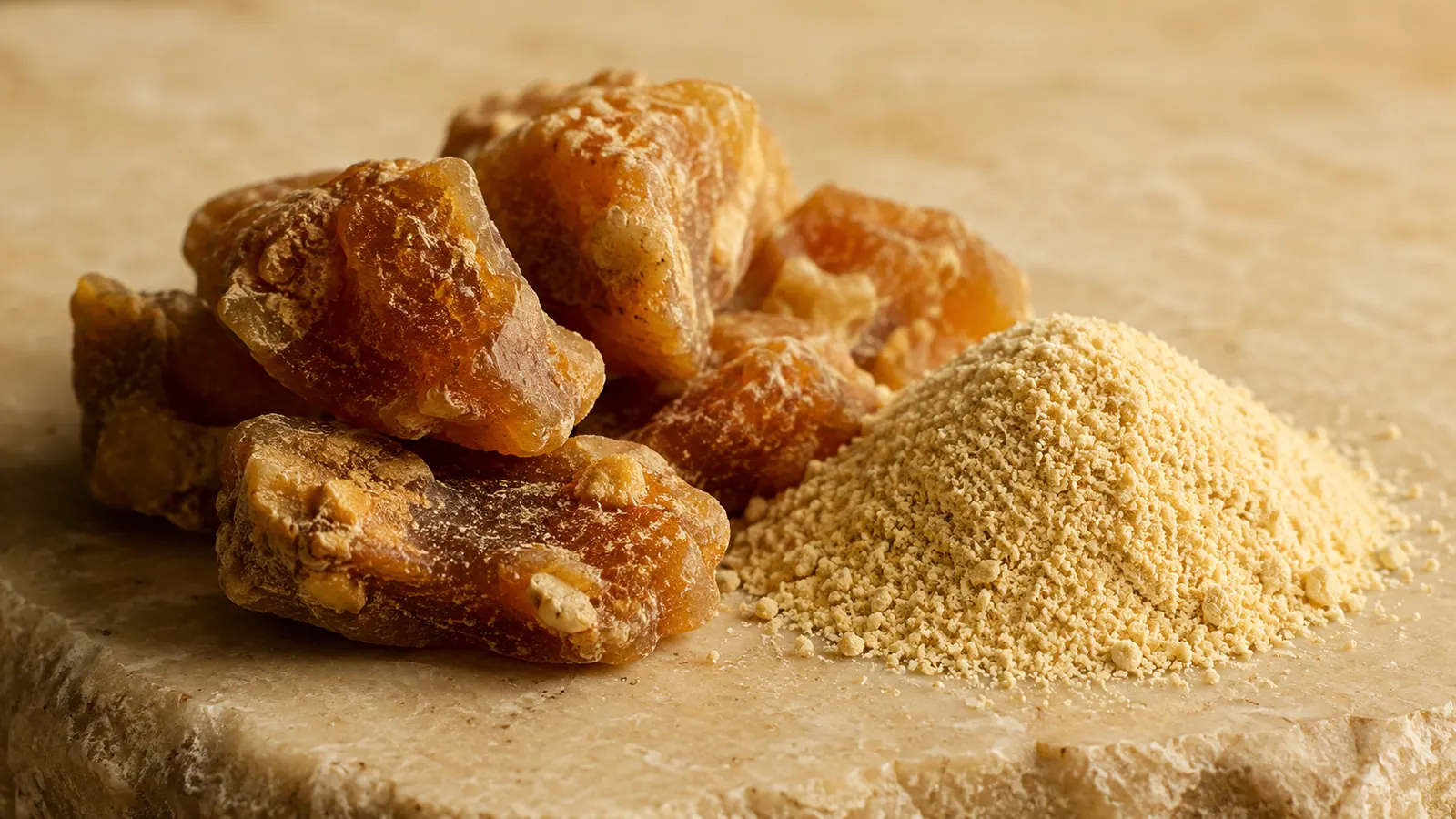
Asafoetida at a glance
- Botanical name
- Ferula assa-foetida
- Family
- Apiaceae
- Part used
- Oleo-gum-resin
- Also known as
- Hing
- ITC-HS
- 1301 90 13
- Spices Board schedule
- #34
What is Asafoetida and how is it exported from India?
Asafoetida (hing) is the dried oleo-gum-resin of Ferula species. India is the largest consumer and a major compounder/processor, importing raw resin (mainly from Afghanistan/Iran) and blending compounded hing; Hathras is a GI processing centre.
Overview
Asafoetida, or hing, is the dried oleo-gum-resin tapped from the living taproot of giant Ferula species (principally Ferula assa-foetida), an Apiaceae relative of fennel and cumin. Incisions in the exposed root exude a milky latex that hardens into resin lumps. In its raw state it is intensely, almost repellently sulphurous, but heated in oil it mellows into the savoury, allium-like, umami depth that anchors much of Indian vegetarian cooking. The active aroma comes from organosulphur compounds; the pure resin is graded on aroma strength, colour and how little grit and dirt it carries.
The critical trade fact is that India consumes the overwhelming majority of the world hing supply but grows almost none of the raw resin. Ferula is a cold-desert plant of Afghanistan, Iran and Central Asia, and India historically imported the raw resin and then compounded it. Compounded hing, the form virtually all consumers actually buy, blends a small fraction of pure resin with edible gum (gum arabic), starch (wheat or rice flour) and edible oil to tame the potency and make it pourable or tablet-able. Pure resin (hing kabuli/hadda) and compounded powder/lump are therefore genuinely different products at very different resin strengths.
Because the value India adds is compounding and re-processing rather than farming, a sourcing desk must describe hing accurately: raw resin is imported, and what ships as branded Indian hing is compounded and often re-exported. Hathras in Uttar Pradesh is the historic compounding centre and carries a GI for its hing. Recent domestic Ferula cultivation trials in the cold deserts of Himachal Pradesh exist but remain at an early, non-commercial stage, so India-grown raw resin is not yet a supply reality.
Forms & export grades
Compounded hing powder, the mainstream retail and food-service form.
Raw or bandhani lump/cake hing for buyers who grind or compound themselves.
Varieties & types
- Hing kabuli (white/pure resin)
- Higher-grade pale resin, milder and cleaner; the premium raw material for compounding.
- Hing hadda / red resin
- Darker, stronger, often grittier raw resin; a lower raw grade.
- Compounded hing (powder)
- The mainstream retail form: a small share of resin cut with edible gum, flour and oil.
- Bandhani / lump hing
- Compounded hing set into a firm lump or cake rather than free-flowing powder.
- Strong / double-strength compounded
- Higher-resin compounded grades marketed on aroma intensity per gram.
Growing regions
The raw oleo-gum-resin is not an Indian field crop: Ferula is a cold-desert perennial harvested in Afghanistan, Iran and Central Asia, from where India imports it. The processing geography inside India is what matters, centred on Hathras in Uttar Pradesh (GI-registered for its hing) and other compounding towns that blend imported resin into finished hing. Cultivation pilots in Himachal Pradesh cold deserts have begun but are early-stage and not yet a commercial source of Indian resin.
Uses & applications
- Tempering (tadka) for dals, sambar, rasam and vegetable dishes as a savoury, allium-substitute base note
- Compounded hing powder for retail and food-service seasoning
- Pickle and papad manufacturing, where hing is a traditional flavour and preservative aid
- Spice-blend and masala manufacturing needing an umami, sulphurous depth
- Onion- and garlic-free (Jain / satvik) product formulation as the go-to savoury note
- Ready-meal and snack seasoning for authentic South Asian flavour
- Digestive, carminative and traditional Ayurvedic and Unani preparations
Sourcing & export considerations
- Two distinct product classes: imported pure/raw resin (lumps) and compounded hing (powder or bandhani lump); confirm which is being bought
- Compounded hing carries edible gum, flour (wheat/rice) and oil, so wheat/gluten is a material allergen-declaration point for many markets
- Resin strength varies widely; specify resin content or aroma-strength grade rather than assuming powder equals pure resin
- Cleaning and grading of raw resin (removing grit, sand and bark) and compounding are coordinated with vetted third-party processors, not owned lines
- Packaging: airtight, aroma-barrier containers and lined pouches; hing is powerfully odorous and will taint co-loaded cargo if not sealed
- Shelf life is aroma-driven; kept airtight and cool the volatile character holds, but powder in poor packaging fades and cross-contaminates
- HS classification is 1301 90 (gums and resins), not Chapter 9, so it does not sit with the seed-spice lines and separable data is limited
- Specify on contract: pure resin vs compounded, resin/aroma grade, binder and flour composition, gluten status, and origin of the raw resin
ITC-HS classification
- 1301 90 13 — Asafoetida (natural gum-resin)
Frequently asked
Is Indian hing grown in India?
Almost none of it. The raw resin comes from Ferula grown in Afghanistan, Iran and Central Asia; India imports it and compounds it. What ships as Indian hing is compounded and often re-exported. We state this rather than implying an India-grown resin.
What is compounded hing versus pure resin?
Pure resin is the raw tapped gum, intensely strong. Compounded hing blends a small fraction of that resin with edible gum, wheat or rice flour and oil to make a usable powder or lump. Most retail hing is compounded, which affects strength and gluten status.
Does hing contain gluten?
Compounded hing often uses wheat flour as a carrier, so it commonly contains gluten. Rice-flour or gluten-free compounded grades exist. If gluten-free is required, specify it and require declaration and testing, because the default carrier is frequently wheat.
Why does Hathras matter for hing?
Hathras in Uttar Pradesh is India’s historic hing compounding hub and holds a GI for its hing. The regional value is in processing and blending imported resin into finished grades, not in growing the raw material.
What this page does not tell you
- Raw-resin origin
- Most raw asafoetida is imported; "Indian hing" is typically compounded, not India-grown. Claims must reflect this.
Related spices
Sources
- Spices Board of India — Export statistics· Tier 1, retrieved 2026-07-16
- Spices Board Act, 1986 — Schedule of spices· Tier 1, retrieved 2026-07-16
- Geographical Indications Registry, India — Registered GIs· Tier 1, retrieved 2026-07-16