Aniseed export from India
Pimpinella anisum · Apiaceae · Fruit
True anise — distinct from star anise — supplied for confectionery, liqueur and pharmaceutical flavouring.
Aniseed at a glance
- Botanical name
- Pimpinella anisum
- Family
- Apiaceae
- Part used
- Fruit
- ITC-HS
- 0909 61 00
- Spices Board schedule
- #11
What is Aniseed and how is it exported from India?
Aniseed is the dried fruit of Pimpinella anisum, an Apiaceae seed with a sweet liquorice note. It is distinct from star anise (Illicium verum), a different botanical family.
Overview
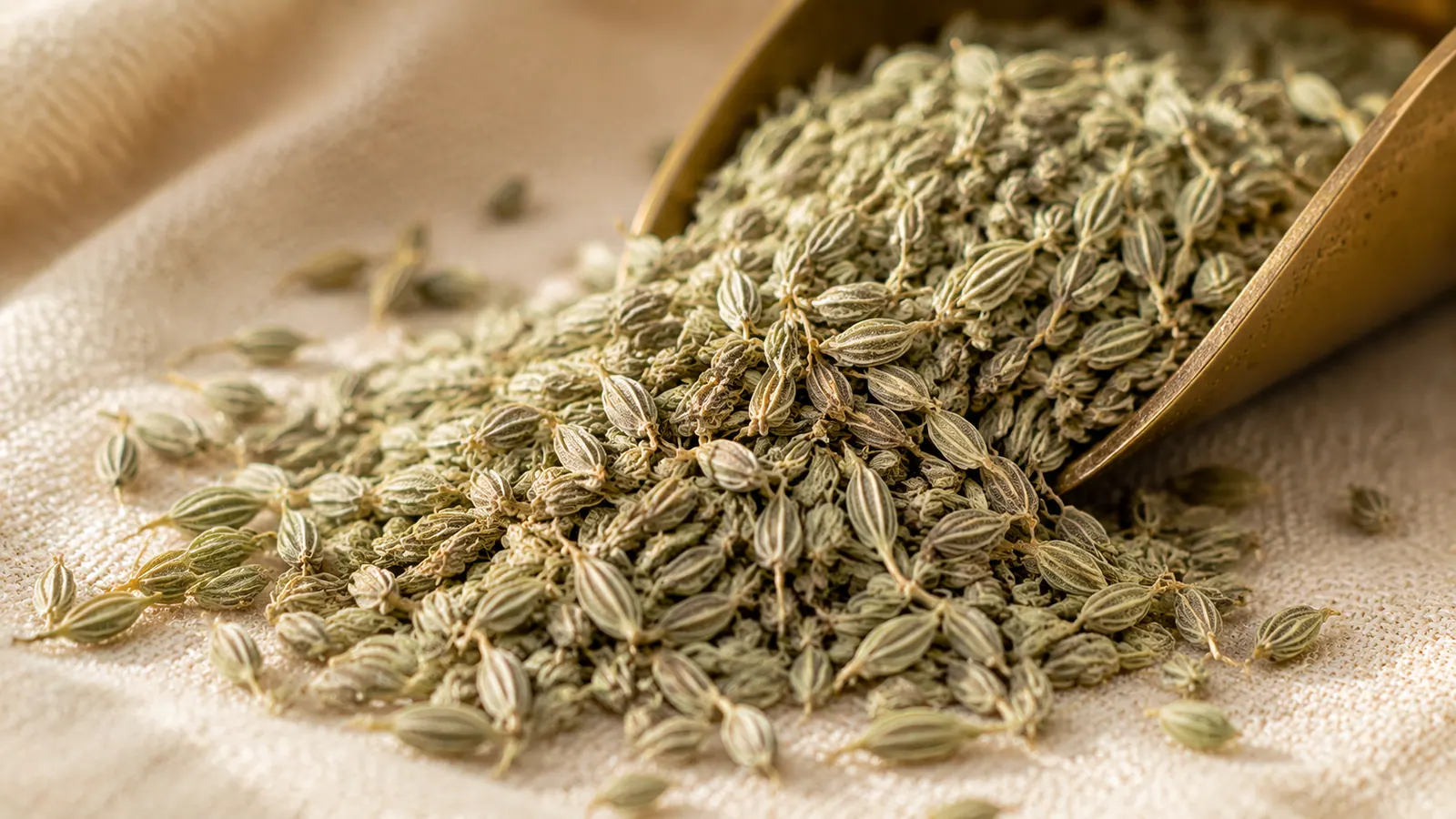
Aniseed is the dried fruit of Pimpinella anisum, an umbellifer, and its defining character comes from a high content of anethole, the same sweet, liquorice-like aroma compound found in fennel and star anise. It is important to keep the three apart in sourcing: aniseed is a small oval greyish-brown fruit from an Apiaceae herb, whereas star anise is the woody star-shaped fruit of Illicium verum, an entirely different botanical family, and fennel is a larger, greener seed. Buyers who specify simply "anise" invite substitution, so the species should be pinned on the contract.
Commercially the fruit is graded on cleanliness, colour and, for aroma buyers, on anethole and volatile-oil strength. A good lot is well-cleaned, low in stalk and chaff, and carries a strong sweet top note; a tired or poorly dried lot flattens out. Because anethole crystallises and the oil is prone to loss, aniseed is usually traded whole and ground close to use, and the extraction trade values freshly cured, high-oil fruit.
India both grows aniseed and, alongside fennel and star anise, participates in the wider anise-flavour trade that feeds confectionery, liqueurs and pharmaceutical flavouring. It is a comparatively minor seed-spice crop against the giants of the basket, and it shares a tariff line with fennel and other umbellifer fruit, so there is no clean stand-alone trade series for it.
Forms & export grades
Whole cleaned/sortex fruit, the mainstream confectionery and blend form.
Milled powder for bakery and blend use, milled close to use to hold aroma.
Steam-distilled anise oil for the flavour and beverage trade, sold on anethole strength.
Solvent-extracted oleoresin for a concentrated, standardised sweet-anise note.
Varieties & types
- Whole cleaned seed
- The mainstream export form, graded on cleanliness, colour and aroma rather than a named cultivar.
- Extraction grade
- High-oil, freshly cured fruit bought by distillers and oleoresin houses on anethole and volatile-oil content.
Growing regions
Aniseed is grown as a cool-season crop in parts of the north and centre of India, following the winter rabi cycle with sowing after the monsoon and harvest in late winter to spring. It is a smaller crop than fennel, which shares much of the same seed-spice belt and growing calendar, so aniseed supply is thinner and more variable year to year. Post-harvest curing and drying materially affect the anethole strength that flavour buyers pay for.
Uses & applications
- Confectionery and bakery flavouring, including aniseed balls, comfits, biscuits and breads
- Liqueur and spirit flavouring for anise-forward drinks such as pastis, ouzo, arak and anisette
- A sweet-spice note in savoury and pickling blends and in some garam-masala-adjacent mixes
- Mouth-freshener and mukhwas mixes, and digestive after-meal preparations
- Pharmaceutical and cough-preparation flavouring where a sweet liquorice note masks bitterness
- Herbal-tea and tisane blends for a sweet, digestive character
- Anise oil and oleoresin extraction for flavour houses and the beverage trade
- Whole seed for the diaspora retail and HORECA spice trade
Sourcing & export considerations
- Available as whole cleaned/sortex seed, as ground powder, and as anise oil and oleoresin through the extraction trade
- Cleaning by air-screen, gravity and colour sorting to strip stalk, chaff and weed seed; specify cleaned vs sortex grade
- Aroma buyers should specify an anethole or volatile-oil floor and a fresh crop, since the sweet top note fades with age
- Best traded whole and milled close to use, because ground aniseed loses aroma and the crystallising anethole complicates powder handling
- Packed in food-grade lined bags, palletised for sea freight
- MOQ follows trade practice: sample lots around 50-100 kg, private-label from about 100 kg, larger blend and extraction contracts by tonnage (cbi)
- For EU and US buyers, specify pesticide-residue and microbial testing; steam-based microbial reduction is coordinated with vetted third-party facilities
- Aniseed shares HS 0909 61 with fennel, star anise and caraway, so a stand-alone bilateral volume for true anise is not separately published
- Insist the contract names Pimpinella anisum to avoid substitution with fennel or star anise (Illicium verum)
ITC-HS classification
- 0909 61 00 — Seeds of anise, badian, caraway or fennel — neither crushed nor ground
Frequently asked
What is the difference between aniseed and star anise?
Aniseed is the small seed-spice fruit of Pimpinella anisum, an umbellifer. Star anise is the woody star-shaped fruit of Illicium verum, a different botanical family. Both are anethole-rich and taste of liquorice, but they are not interchangeable on a contract.
Can aniseed substitute for fennel, or vice versa?
They share the anethole liquorice note but differ in body and sweetness, and they trade at different prices. Formulators sometimes swap them, but for a defined product you should specify the species you actually want and test against it.
Why is aniseed usually sold whole?
Its aroma sits in a volatile oil that fades once the fruit is milled, and its anethole tends to crystallise. Whole seed keeps far better, so most buyers take whole aniseed and grind close to use.
What this page does not tell you
- Volume
- Shares HS 0909 61 with fennel/caraway; not separable.
Related spices
Sources
- Spices Board of India — Export statistics· Tier 1, retrieved 2026-07-16
- Spices Board Act, 1986 — Schedule of spices· Tier 1, retrieved 2026-07-16
- CBI — Entering the European market for spices and herbs· Tier 2, retrieved 2026-07-16
- UN Comtrade — reporter India, Chapter 09· Tier 1, retrieved 2026-07-16